Table of Contents
Ethereum (ETH) finds itself at a complex crossroads. As the market navigates a post-bull cycle environment, investors are left questioning whether the asset’s recent performance is a temporary setback or a permanent shift in its growth trajectory. By examining on-chain fundamentals, valuation metrics, and the evolution of the L2 roadmap, we can better understand where Ethereum sits in the current cycle and what it must prove to remain a core portfolio holding.
Key Takeaways
- Ethereum has entered a "fair value" zone, with several key indicators mirroring historical cycle lows.
- The transition to an L2-centric scaling roadmap has disrupted Ethereum’s traditional fee-capture model, contributing to anemic performance relative to previous cycles.
- Stablecoin supply remains a critical bullish indicator, with Ethereum maintaining a dominant 60% share of the total market.
- Future growth for ETH depends on whether the network can successfully balance L1 scaling with L2 ecosystem growth to drive organic fee demand.
The Evolution of Ethereum Cycles
To understand the current state of Ethereum, one must look at the history of its boom-and-bust cycles. In its first major cycle, ETH delivered an astounding 175x gain from trough to peak. The second cycle, culminating in 2021, saw a 61x increase. However, the most recent cycle yielded only a 5.6x gain, leading many investors to wonder if we are witnessing diminishing returns or a systemic "skipped cycle."
ETH has to prove itself to me. I think of Bitcoin as the asset we anchor our portfolio in, while Ethereum requires ongoing underwriting to justify its place as a second-tier holding. — Michael Nato
Critically, Ethereum’s recent price action has remained largely tethered to the 2021–2022 range. While traditional network metrics—such as developer activity, stablecoin integration, and tooling—have improved, these gains have not been mirrored by price action. This dissonance is largely attributed to the "L2 roadmap," which effectively caused Ethereum to disrupt itself to achieve scale.
Valuing an L1: The Nation State Framework
Valuation remains a point of contention for ETH holders. Does one value the asset as a store of value, a high-growth tech stock, or a digital nation state? Current metrics highlight a massive disparity in perspective, with some valuation models suggesting a fair value of $2 while others point to $24,000.
The "Nation State" model suggests we treat L1 blockchains like sovereign nations. In this view, the native token serves as the currency required to access the network's infrastructure, legal rules, and security. By taxing users via transaction fees and maintaining monetary policy, Ethereum functions as a digital economy. The strength of this currency is ultimately dictated by capital flows, rule of law, and the underlying economic activity built on the chain.
The Impact of the L2 Roadmap
The implementation of "blobs" and the broader L2 scaling strategy significantly reduced the friction of using Ethereum. However, this upgrade also drastically reduced L1 fee revenue. While this is objectively good for the end-user, it has created a temporary challenge for value accrual at the base layer.
Is the L2 Strategy a Failure?
Critics argue that the L2 roadmap has cannibalized L1 value. However, proponents suggest this is a necessary "Amazon-style" strategy—operating at lower margins in the short term to capture massive network effects and scale the ecosystem for the long term. If Ethereum can successfully pivot to L1 scaling in parallel with L2 growth, it may regain its momentum.
Current Cycle Metrics and Fair Value
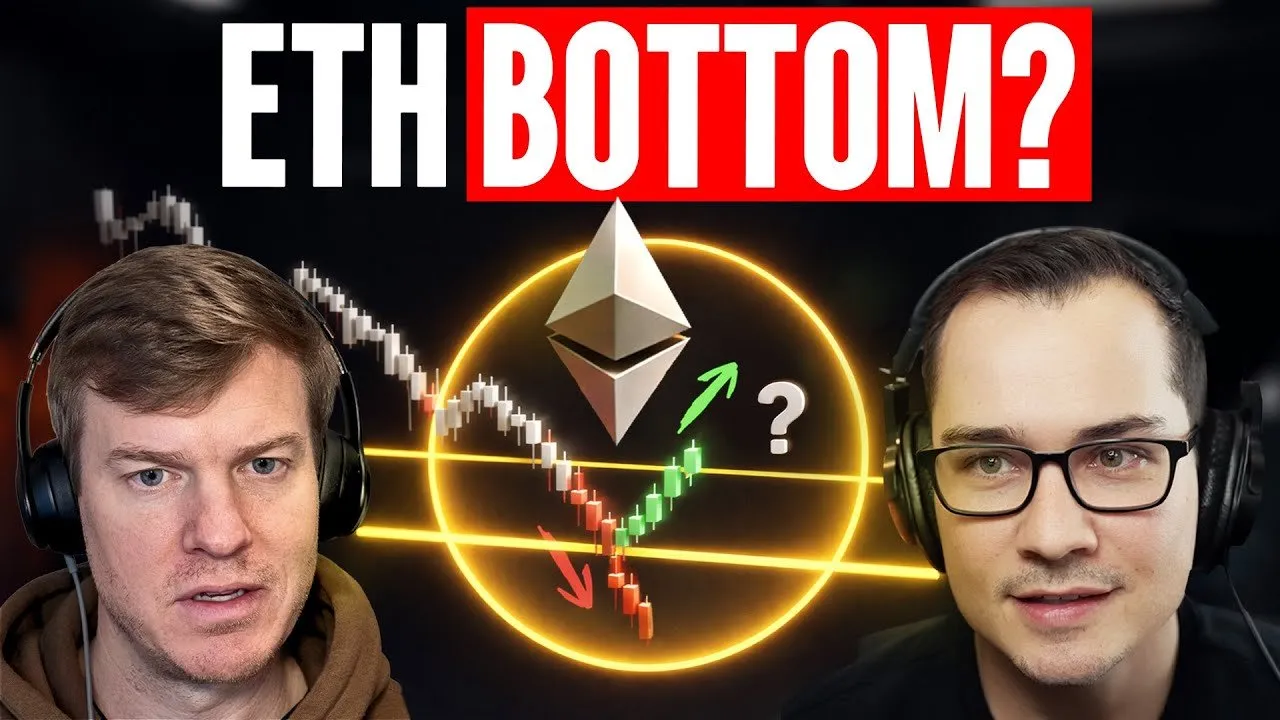
Market structure analysis provides a clearer, more data-driven picture of where we stand. Many key performance indicators (KPIs), such as MVRV (Market Value to Realized Value) and the percentage of supply in profit, are currently trading at levels consistent with previous market bottoms.
- MVRV Z-Score: ETH is currently trading near levels that historically marked the bottom of previous bear markets.
- Supply in Profit: With roughly 39% of ETH holders in profit, current levels are lower than the 2022 market bottom, signaling significant capitulation.
- ETH/BTC Ratio: April 2025 marked a historic low for the ETH/BTC ratio, suggesting that the asset may have been significantly oversold compared to the broader crypto market.
It is possible for ETH to bottom before Bitcoin. While rare, we have seen this divergence in previous cycles when the selling pressure reaches a climax. — Michael Nato
Looking Ahead: The Path to Outperformance
For Ethereum to earn its place in high-conviction portfolios, it must move beyond simply being in the "fair value" zone. The market is waiting for evidence of a breakout app or a shift in fee-capture dynamics that proves the L2 roadmap is a net benefit to the L1. While the stablecoin supply—now totaling over $180 billion—proves that Ethereum remains the premier settlement layer for global finance, the network must now convert that usage into sustainable economic growth for the ETH token.
Investors should continue to monitor the regulatory landscape, particularly the upcoming clarity on digital assets, which will likely act as a catalyst for institutional participation. Until then, the focus remains on accumulating in these value zones while remaining disciplined about which assets hold the highest potential to outperform Bitcoin in the next expansion cycle.