Table of Contents
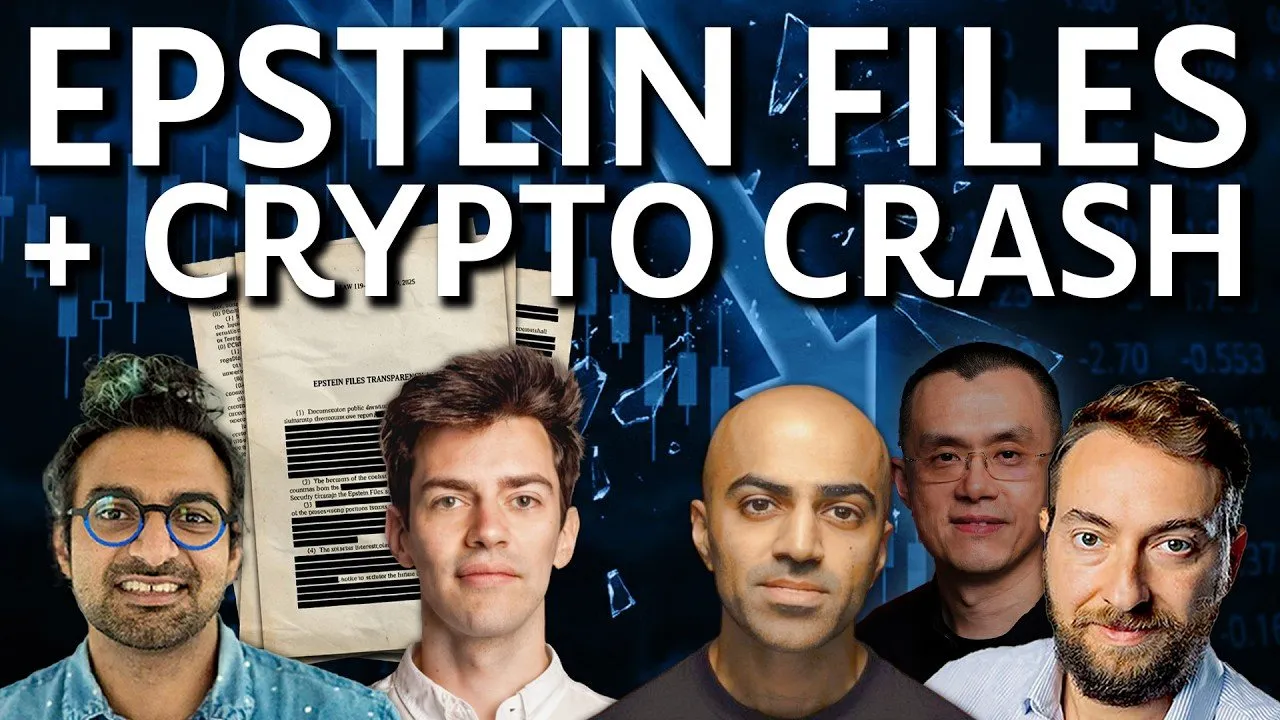
The crypto markets are currently balancing on a razor’s edge. With Bitcoin hovering near critical psychological thresholds and alts bleeding, the industry sentiment has shifted from exuberant to solemn. In this edition of The Chopping Block, the panel—Haseeb Qureshi, Tom Schmidt, Robert Leshner, and Tarun Chitra—dissects the current market volatility, the escalating feud between exchange titans, the controversial ethics of founder liquidity, and the bizarre resurfacing of Jeffrey Epstein’s connections to the crypto industry.
From fears of quantum computing breaking Bitcoin to the "karmic justice" of a market downturn, the conversation offers a candid look at what insiders are actually discussing in their group chats.
Key Takeaways
- Market fragility and "Quantum" fears: Bitcoin’s stagnation has given rise to exotic bearish narratives, including institutional selling driven by fears of quantum computing breaking cryptography.
- The CZ vs. Star feud: A public spat has erupted between OKX and Binance leadership regarding the causes of the "10/10" liquidation cascade, signaling a search for villains in a downtrending market.
- Founder secondaries debate: The panel debates the morality of founders selling shares before a product succeeds, arguing that small amounts of liquidity can actually be positive-sum for investors.
- Epstein’s crypto web: New files reveal Jeffrey Epstein’s surprising reach into crypto, from early Coinbase cap tables to Blockstream developers and Quora algorithms.
The Market on a Razor’s Edge
The market is currently characterized by a distinct lack of narrative. With Bitcoin dipping below $75k and Ethereum struggling to maintain momentum, the "up only" euphoria of previous months has evaporated. The panel notes that the volatility isn't just price action; it is a reflection of deep uncertainty regarding the rest of the year.
According to prediction markets like Polymarket, the probability of Bitcoin hitting $45k is roughly equal to it hitting $130k. This symmetry suggests the market is at a pivotal junction—a coin flip between a disastrous year and a legendary one.
The "Quantum Risk" Narrative
In the absence of clear bullish catalysts, bearish narratives often fill the void. A notable topic of discussion was the recent Galaxy earnings call, which revealed a client sold $9 billion worth of Bitcoin citing fears of quantum computing. While crypto-natives often dismiss quantum threats as distant sci-fi problems, the fear is palpable among traditional finance (TradFi) allocators.
The panel contrasted Bitcoin’s approach to this existential threat with Ethereum’s.
Ethereum had the exact right answer which is... just create a pile of money, create a committee. Do the thing that every government does about a risk... 'Here is $5 million and a council.' That is the perfect answer to the objection.
By failing to offer a unified "security theater" or concrete roadmap regarding post-quantum cryptography, Bitcoin leaves itself open to these high-level objections from non-technical institutional investors who need a box to check before allocating capital.
The Blame Game: CZ vs. Star
When markets bleed, participants look for someone to blame. This week, a significant conflict erupted between Star (founder of OKX) and CZ (founder of Binance). Star publicly alleged that the massive liquidation event on October 10th ("10/10")—which broke the correlation between crypto and the NASDAQ—was caused by Binance incentivizing users to loop leverage on the Ethena protocol.
CZ pushed back, noting that the timeline of Binance’s promotion unwind occurred after the market had already bottomed, suggesting the accusation was factually incorrect. However, the squabble highlights a deeper trend: the demonization of industry leaders during downturns.
The panel observed that CZ, once the darling of the retail crypto world, is increasingly being painted as a villain, particularly within Asian trading communities. The consensus among the hosts, however, is that there is no mono-causal explanation for the 10/10 crash. The market’s fragility is likely a compound result of liquidation engine nuances, API downtimes, and leveraged positioning, rather than the machinations of a single actor.
The Ethics of Founder Secondaries
A recent viral debate centered on Dan Romero of Farcaster and the broader ethics of founders selling shares (secondaries) before their company achieves a massive exit or token launch. The criticism suggests that selling early is a sign of low conviction or moral failing.
The hosts offered a nuanced defense of early liquidity, arguing that "founder starvation" is not a virtue.
The "Grocery Money" Defense
Robert Leshner argued that small amounts of secondary sales are net positive for venture capitalists. If a founder has $500,000 in the bank, they stop worrying about rent and groceries, allowing them to take bigger risks and swing harder for a massive outcome.
I think it actually takes brain cells away from the cost of living... and it actually enables a founder to swing harder at the thing they're supposed to be building.
The Power Law Reality
Haseeb Qureshi provided the VC perspective, explaining that venture capital relies on power laws. Investors expect most companies to fail and a few to return 100x. In this probabilistic environment, it is actually economically rational for a founder to take some money off the table, even if the company eventually goes to zero.
The panel generally agreed on a threshold:
- Good Secondary: <$5 million. Removes life stress, keeps the founder focused.
- Bad Secondary: >$30 million. Signals the founder is "checking out" or changing their lifestyle significantly before value is delivered to shareholders.
Unearthing the Epstein Crypto Connections
The recent release of the unredacted Jeffrey Epstein files revealed a surprising number of intersections with the crypto industry. The "Dark Forest Gump" of the financial world seemed to be everywhere, including early crypto cap tables.
The "Quora Digest" Connection
In a moment of levity, host Tarun Chitra discovered his name in the Epstein files—not due to any personal meeting, but because Epstein was subscribed to the "Quora Digest," which emailed him Chitra’s technical posts on homomorphic encryption. This highlights the sheer breadth of Epstein's digital footprint.
Serious Implications and "Blast Radius"
More seriously, the files allege connections between Epstein and early Coinbase funding rounds (via Brock Pierce), as well as meetings with Blockstream developers like Adam Back. The discussion turned to the concept of "blast radius"—how the industry determines guilt by association.
The panel concluded that while direct involvement with Epstein after his initial convictions is inexcusable, the industry must be careful about "witch hunts" regarding tenuous connections. The reality of high-level networking is that you often meet powerful people without knowing their full background. However, diligence on business partners remains a critical moral obligation.
Conclusion
Whether it is the fear of quantum computers, the infighting between exchange founders, or the moral policing of secondary sales, the crypto industry remains a space dominated by strong narratives and stronger emotions. As the market teeters on a razor's edge, the search for clarity—and culprits—will likely intensify until a new catalyst emerges to drive the next cycle.