
Table of Contents
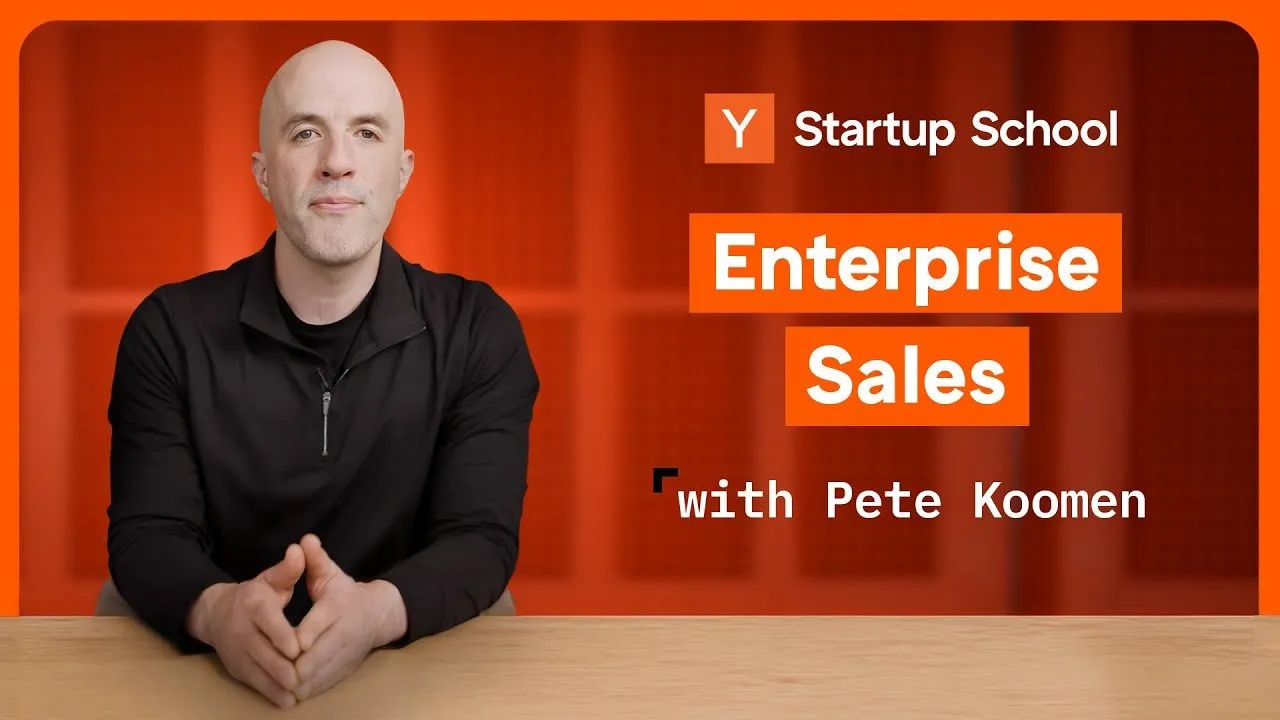
Landing your first enterprise customers can feel like an impossible challenge for technical founders. The good news? You're more capable of selling than you think. Sales isn't a dark art full of psychological tricks—it's fundamentally about helping people solve their problems, and engineers excel at problem-solving.
Key Takeaways
- Technical founders are uniquely positioned to sell their products due to expertise and conviction
- Focus on qualified prospects who have real problems, budget, and decision-making authority
- Sales is about listening and understanding customer problems, not delivering perfect pitches
- Implementation is your responsibility, not the customer's—treat it like a high-priority internal project
- Start with pricing that makes you slightly uncomfortable and learn from customer reactions
Why Technical Founders Should Sell First
Many technical founders assume they need to hire experienced salespeople or find business co-founders to handle sales. This assumption costs valuable time and money. Sales before product-market fit requires vision, credibility, and tight feedback loops with the product team—qualities that founders possess naturally.
Technical founders bring two critical advantages to enterprise sales: deep expertise in both the problem and solution, plus genuine conviction that their product works. These qualities matter more than traditional sales techniques.
Sales isn't about tricking people. It's fundamentally about helping people solve their problems, and engineers are great at doing that.
The reality is stark but empowering: if you can't sell your product yourself initially, you won't be able to hire someone else to do it effectively. Sales pre-product-market fit is fundamentally entrepreneurial work.
Building Your Sales Foundation
Developing a Clear Sales Hypothesis
Successful prospecting starts with a hypothesis that follows this structure: "Customer X has problem Y, and our product solves it because of Z." This clarity makes everything else easier.
A strong hypothesis might sound like: "Marketers at medium-sized e-commerce companies want to run A/B tests but can't because existing tools require coding skills. Our product enables A/B testing without code."
Prospecting the Right Companies
Use your hypothesis to identify companies likely suffering from your target problem. Industry lists provide starting points, but filtering criteria help narrow focus. Tools like BuiltWith can reveal technical sophistication signals, while Apollo and LinkedIn Sales Navigator help find specific decision-makers.
The most dangerous mistake founders make is talking to anyone willing to take their call. This selects for people easiest to reach, not best customers. You'll waste time chasing prospects who seem engaged but will never buy.
Avoiding Common Prospecting Traps
Two patterns consistently waste founder time. First, selling enterprise software to startups because other founders are more accessible than busy executives. Second, going bottom-up with products requiring top-down adoption.
Consider hospital software requiring coordination between IT, billing, operations, and clinical teams. Talking to individual doctors won't move deals forward—you need CFOs or CIOs with organizational authority.
Mastering the Sales Process
Generating Inbound Interest
Cold outreach works, but inbound leads convert better. Launch early and often, create technical content prospects find while searching for solutions, build shareable demos, and establish expertise in customer forums.
Industry conferences offer concentrated prospecting opportunities. Get attendee lists early and schedule meetings in advance.
Effective Outreach Strategies
Warm introductions through LinkedIn connections beat cold emails. When cold emailing becomes necessary, write each message by hand, keep it short and specific, and make clear asks.
Apply this rule: only send emails you'd be excited to receive. If you wouldn't want to read it, neither will your prospect.
Qualification Over Pitching
The biggest founder mistake in first calls is diving straight into product pitches. Your primary goals are qualification and scheduling follow-up demos.
Great salespeople spend most time listening because understanding problems requires questions: What triggered this call? How long have you had this problem? Who else is affected? What's your budget? How does your organization buy software? Who makes decisions?
Sometimes qualification reveals prospects lack real problems, sufficient pain, or buying authority. That's valuable information that saves everyone time.
Delivering Compelling Demos
Storytelling Over Feature Tours
Demos aren't product showcases—they're problem-solving demonstrations. Structure demos like movie scripts starting with character recaps (your user) and their challenges.
Resist feature tours that walk screen-by-screen through functionality. Instead, tell stories showing exactly how users solve problems. Great demos feel like stories with clear flow and magic moments that surprise audiences.
Personalization Creates Impact
Use qualification information to customize demos. Include their logo, website, customer names, and team members. Help prospects visualize your product working in their specific environment.
One powerful example: instead of using dummy websites for A/B testing demos, build features enabling live demonstrations on prospects' actual sites. Watching marketers' eyes light up when seeing their own pages modified in real-time validates the effort.
Pricing and Closing Strategies
Pricing Through Experimentation
No simple pricing formulas exist, but qualification questions provide guidance: How much does this problem cost your company? What's your budget? How much do you spend on competitors?
Treat each pricing conversation as an experiment testing price points and learning from reactions. Don't publish enterprise pricing—maintain flexibility to adjust based on customer needs.
The Courage to Charge Premium Prices
The most common founder pricing mistake is charging too little or offering free trials for feedback. When customers truly need your product, high prices rarely scare them away.
Higher prices can help you figure out whether customers actually need your product.
Stripe famously charged more than competitors initially. Their ability to sell at premium prices proved market demand and helped focus on desperate customers. High prices make customers more serious about implementation.
Navigating the Closing Process
Closing isn't a single conversation—it's everything from decision to signature. Large companies have formal procurement including security reviews, legal redlining, and compliance signoffs.
Avoid surprises by asking upfront about buying processes and required approvals. Execute parallel workstreams like security questionnaires early. Keep legal documents simple using templates from Common Paper.
Your champion prospect becomes your biggest ally during procurement. Maintain constant communication and ask for help when stuck—they can't solve their problem until you close.
Implementation: Where Deals Live or Die
Taking Ownership of Success
The biggest post-sale mistake is assuming implementation is the customer's responsibility. Customers buy solutions to problems, not products. All work required to get from product to solution remains your responsibility.
Companies often sign six-figure contracts then fail to use products at all. Marketing teams buy software they can't convince engineering teams to install. This isn't customer failure—it's vendor failure.
Project Managing Customer Success
Address implementation during sales processes. Ask about required work early, build detailed implementation plans with all stakeholders before contracts, and refuse to sign deals without clear implementation paths.
Treat customer implementations like high-priority internal projects. Create shared roadmaps, assign task owners, and hold regular check-ins keeping everyone accountable. Your sales funnel only truly ends when customers use your product habitually.
Building Long-Term Sales Excellence
Enterprise sales mastery develops through practice and continuous learning. Each conversation teaches lessons about customer psychology, objection handling, and market dynamics.
The sales skills you develop extend beyond customer acquisition. The same techniques prove valuable for fundraising, hiring, and partnership development. You're building a foundational business superpower.
Start immediately, embrace mistakes as learning opportunities, and remember that expertise and conviction often matter more than polished techniques. With enough attempts, selling becomes natural and you'll find yourself advising other founders on their sales journeys.


![Trump Market Manipulation Will Trap You! [This Happens Next]](/content/images/size/w1304/format/webp/2026/03/trump-market-manipulation-volatility-warning.jpg)
