Table of Contents
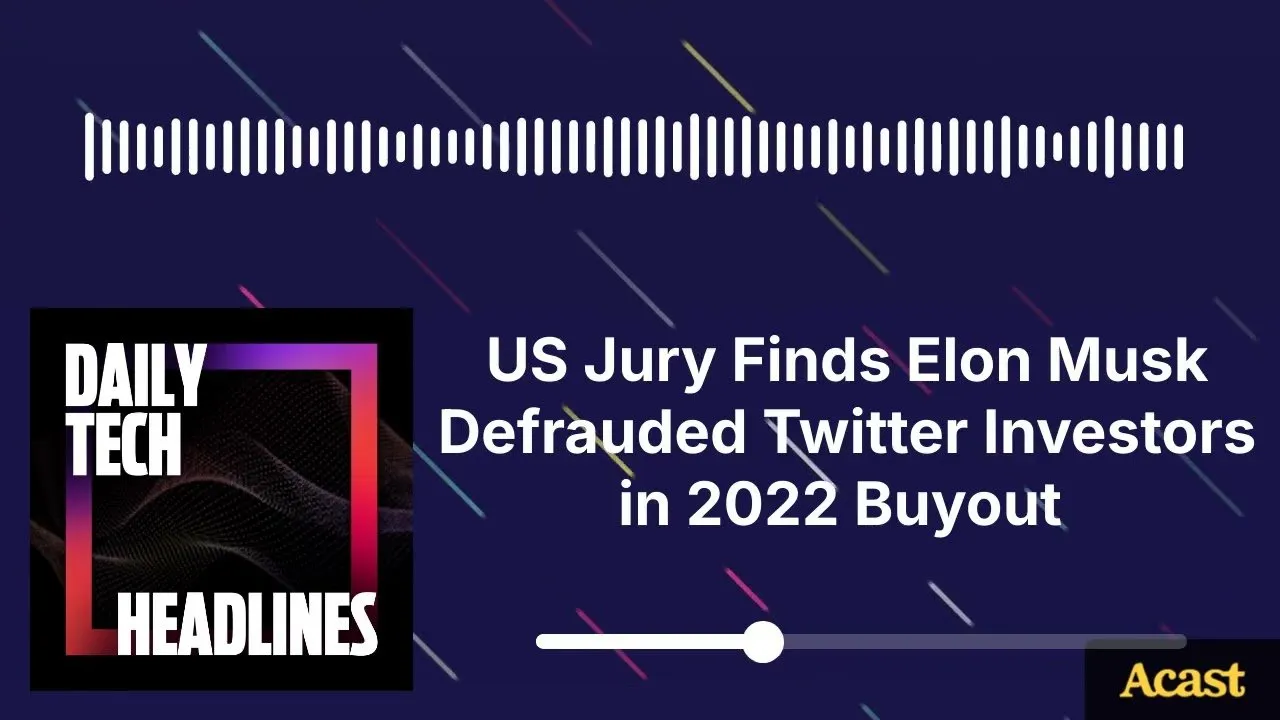
A federal jury has ruled that Elon Musk defrauded Twitter investors during his 2022 acquisition of the social media platform. Jurors determined that Musk made intentional misstatements regarding the number of fake accounts on the site to drive down the company's stock price during his efforts to renegotiate the $44 billion buyout. While the jury rejected two of the four fraud claims brought against the billionaire, the verdict opens the door for potential damages totaling billions of dollars, with Musk’s legal team already signaling plans to appeal the decision.
Key Points
- Elon Musk found liable for investor fraud during the 2022 Twitter acquisition.
- Jurors concluded misleading comments about bot accounts were used to suppress share prices.
- Super Micro Computer shares plummeted 33% following federal charges regarding illegal exports of Nvidia-powered servers to China.
- Pinterest CEO Bill Ready joined a growing list of global leaders calling for social media bans for users under 16.
- Microsoft responded to user backlash by announcing major feature rollbacks and performance updates for Windows 11.
Market Volatility and Regulatory Crackdowns
The tech sector faced significant headwinds this week as legal and regulatory pressures intensified. Super Micro Computer saw its market valuation suffer a sharp decline after federal prosecutors charged three associates, including a co-founder, with orchestrating a scheme to route high-end Nvidia AI chips to China. According to court filings, the group utilized shell companies and falsified paperwork to bypass US export controls, generating approximately $2.5 billion in illicit sales since 2024. The company has since suspended the individuals, stating their actions violated corporate policy.
In the consumer tech space, Microsoft acknowledged persistent user frustration regarding Windows 11. Pavon Davaluri, head of the Windows division, confirmed that upcoming preview builds will address complaints regarding glitchy updates, intrusive Copilot AI integrations, and excessive advertisements. The company aims to restore user trust through increased taskbar customization, improved system memory management, and enhanced control over automatic updates.
Expert Analysis: The Debate Over Youth Safety and AI
Industry leaders are increasingly vocal regarding the societal impact of their platforms. Pinterest CEO Bill Ready authored a timely op-ed in Time, advocating for a federal ban on social media access for children under 16. Drawing comparisons to 20th-century tobacco industry regulation, Ready argued that the data linking unrestricted access to anxiety and depression is insurmountable.
The research links unrestricted access to higher rates of depression, anxiety, and reduced focus; we must treat the safety of our youth as a non-negotiable priority in the digital age. — Bill Ready, Pinterest CEO
Meanwhile, the evolution of artificial intelligence continues to test existing legal frameworks. Anthropic is currently locked in a legal battle with the Department of Defense, which designated the company’s Claude AI a supply chain risk. Anthropic maintains that its models cannot be manipulated or disrupted once deployed, and they are seeking temporary relief in a federal hearing scheduled for March 24th.
What's Next
Looking ahead, the fallout from the Musk verdict will proceed to a damages phase, likely keeping the billionaire at the center of financial headlines for months to come. On the infrastructure front, the US Department of Energy is moving forward with a $33.3 billion investment to transform the former Portsmouth Gaseous Diffusion Plant in Ohio into a massive 10-gigawatt data center campus. The project, funded largely by Soft Bank and AP Ohio, signals a continued massive pivot toward dedicated power infrastructure to support national AI research and security requirements.