Table of Contents
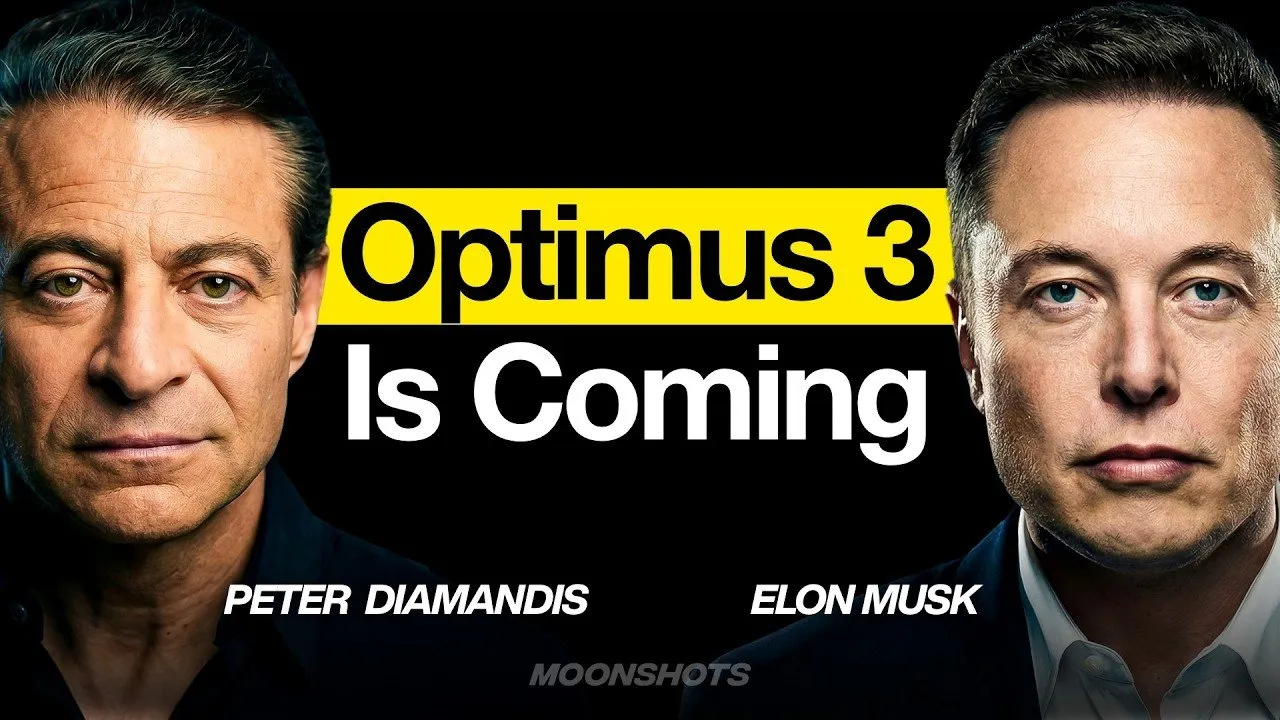
The boundary between human capability and machine potential is dissolving. As artificial intelligence advances through recursive self-improvement, the prospect of a technological singularity—a point where progress becomes incomprehensible to current human cognition—is no longer a distant sci-fi trope. During a recent discussion on the acceleration of innovation, Elon Musk shared his perspectives on the inevitable convergence of AI, robotics, and the future of human prosperity.
Key Takeaways
- Recursive Self-Improvement: AI systems are increasingly building their successors with minimal human intervention, signaling an ongoing "hard takeoff."
- Economic Transformation: Advancements in robotics and AI are projected to grow the global economy by tenfold within the next decade, potentially leading to a post-capitalist era of "universal high income."
- Technological Milestones: Optimus 3, Tesla’s advanced humanoid robot, is slated for initial production this year, with designs evolving annually to achieve high-volume manufacturing.
- Solving Biological Limits: The future of AI and robotics extends beyond industrial productivity to health, with the potential to cure chronic ailments like back pain and drastically extend healthy lifespans.
The Era of Recursive Self-Improvement
We are currently witnessing a shift where machines contribute directly to the creation of their own upgrades. Musk notes that we have effectively entered a phase of recursive self-improvement where the role of the human in the loop is steadily diminishing. Every new model is increasingly designed by its predecessor, a process that is becoming fully automated.
A Hard Takeoff
Rather than waiting for a distant future, Musk suggests that the "hard takeoff" is already happening. When asked about the pace of innovation, he remarked on the frequency of breakthroughs occurring overnight. As systems like Grok continue to evolve, their ability to predict information—a core metric of intelligence—is expected to surpass human capability across all sectors, including complex tasks like software engineering.
"I think we've been in recursive improvement for a while here. Humans are gradually getting less and less in the loop."
Economic Abundance and the End of Scarcity
Musk’s vision for the next decade is one of explosive growth. By leveraging AI and robotics, he predicts the global economy could increase by a factor of ten. This shift represents a transition toward sustainable abundance, where the output of goods and services is generated so efficiently that the traditional scarcity-based economic model will likely break down.
From Currency to Energy
In this future, human-centric financial systems may become secondary to the fundamental requirements of advanced intelligence. As productivity skyrockets, money may lose its relevance, replaced by a focus on "wattage and tonnage"—the raw power and physical mass required to fuel an intelligence-driven society. This shift points toward a post-capitalist framework where basic needs are met through high-output automation.
The Future of Robotics: Optimus 3
Tesla’s humanoid robot program, Optimus, remains central to this vision of automation. Musk describes the upcoming Optimus 3 as the most advanced robot currently in existence, far exceeding the capabilities of anything currently seen in the public domain. The manufacturing strategy involves a classic "S-curve" ramp, starting with limited production before hitting high-volume scale by next year.
Human-Robot Synergy
Despite the immense potential for automation, Musk clarifies that this is not a strategy focused on replacing human labor through layoffs. Instead, the goal is to increase the output per person to unprecedented levels. By delegating dangerous or repetitive tasks to humanoid robots, the human workforce can focus on higher-level problem solving, effectively elevating the entire species' quality of life.
Solving the Human Condition
Beyond economics, Musk highlights the potential for AI to solve biological limitations that have plagued humanity for centuries. He specifically points to the burden of chronic pain, noting that even simple issues like back pain significantly impact human happiness and productivity. With the fusion of AI-driven medical diagnostics and breakthroughs in longevity science, the goal is to move beyond mere survival into an era of thriving health spans.
"If you've got humanoid robots that have very high dexterity and are incredibly smart, it means that everyone on Earth will have access to better medical care than the richest person on earth."
Navigating the Singularity
The concept of the singularity—where the future becomes impossible to fully predict due to the intensity of intelligence—is a recurring theme in Musk’s outlook. While institutions and traditional governance may struggle to keep pace with this "supersonic tsunami" of change, the focus remains on directing these tools toward positive outcomes. By embracing a strategy of optimism and rigorous problem-solving, humanity is moving toward a future that is not only automated but vastly more entertaining and capable than the world of today.
Ultimately, the trajectory we are on suggests that the challenges of the present—budget deficits, biological aging, and labor shortages—are merely temporary hurdles. As we move closer to the integration of AGI and widespread robotic utility, the potential for a world of universal high income and radical health improvements moves from the realm of speculation to the horizon of reality.