
Table of Contents
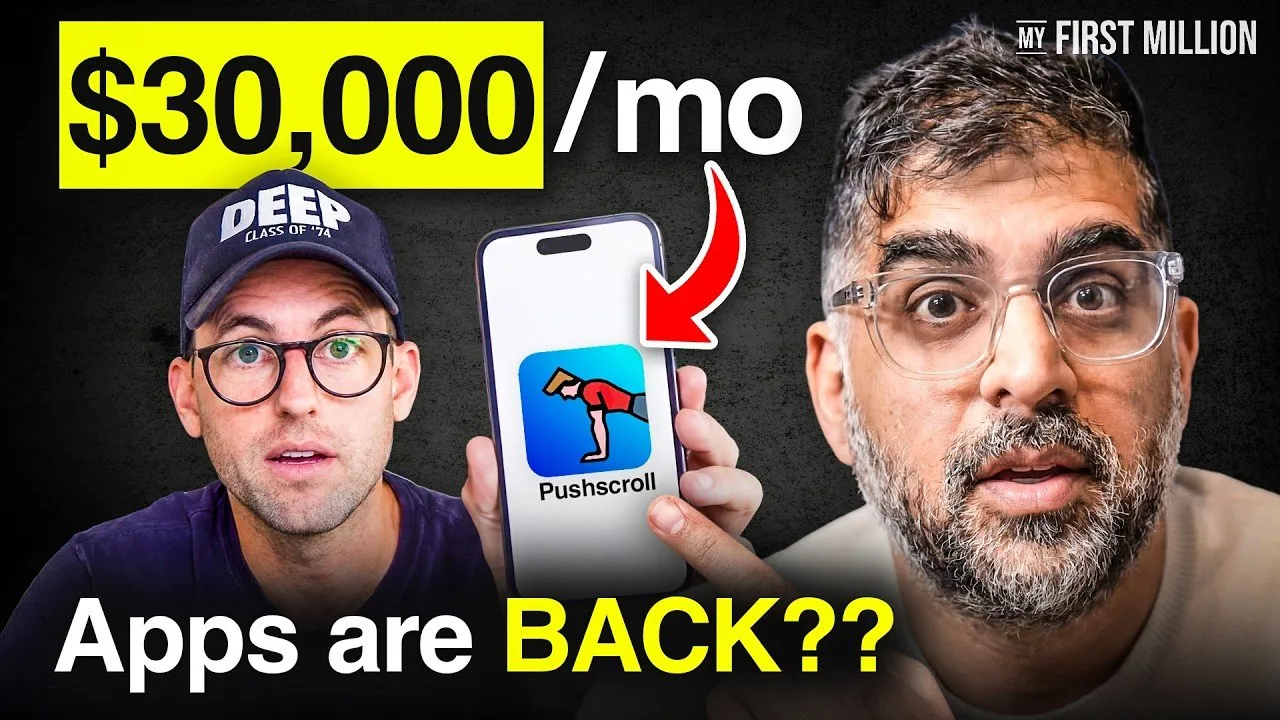
The landscape of digital entrepreneurship is undergoing a massive shift that feels remarkably like a throwback to 2010. While many founders are distracted by complex SaaS models or high-overhead ventures, a new wave of entrepreneurs is generating significant wealth through what some might call "dumb" iPhone apps. These lean, often single-feature tools are proving that simplicity, when combined with modern distribution channels like TikTok and AI-driven development, is a faster path to $30,000 per month than almost any other current business model.
Key Takeaways
- Validation precedes development: Successful founders are now creating viral social media content to test app ideas before writing a single line of code.
- AI has collapsed the cost of entry: Tools that previously required a four-person team and a six-figure budget can now be built by solo founders using AI coding assistants.
- Discovery has shifted to TikTok: The "Lollapalooza effect" of easier development and algorithmic discovery via short-form video has reopened a window of opportunity that was previously considered closed.
- Systems manage headaches, focus creates growth: Transitioning from a plateaued side project to a major exit requires a "Think Week" to eliminate "ego businesses" and double down on what works.
The Return of the App Gold Rush
For the past several years, the common wisdom was that the "app gold rush" was over. The App Store was seen as saturated, and the cost of user acquisition was deemed too high for independent developers. However, the data coming from Starter Story suggests a different reality. Founders are currently "crushing it" with simple utility apps that solve very specific, often niche problems.
The "Dumb" App Advantage
One notable example is an app that forces users to do push-ups before they can scroll through social media. By utilizing the iOS API to screen-block distracting apps, the founders have built a business generating over $30,000 per month. These apps aren't complex platforms; they are gimmick-adjacent productivity tools that resonate instantly on social media.
The Lollapalooza Effect
The sudden resurgence of app profitability is driven by what Charlie Munger called a "Lollapalooza effect"—multiple factors converging to create a massive opportunity. These factors include:
- Low-friction development: AI tools allow founders to move from idea to product in days rather than months.
- Algorithmic discovery: TikTok and Instagram Reels allow niche products to find their audience without a massive ad spend.
- Niche utility: A growing demand for specialized tools in health, wealth, and relationships.
Validating Ideas with a "Reverse Field of Dreams"
The traditional "Field of Dreams" approach—build it and they will come—is a recipe for failure in the modern App Store. Instead, the most successful founders are reversing the process. They create the marketing hook first, often through a viral video, to see if the market actually wants the solution.
"They created the viral video first... They pretended that the app exists... When it did, it got some hundreds of thousands of views. They went and scrambled to create the app."
By validating through TikTok, founders avoid the "year-long mistake" of building a product no one wants. This strategy allows for rapid experimentation. You can test ten different app concepts with ten different videos in a fraction of the time it takes to build a single MVP. If a video goes viral, the market has essentially given you a green light to start coding.
Apps as the New Info Products
Historically, solo entrepreneurs turned to info products—courses, ebooks, and communities—because they were low-overhead and high-margin. Today, apps have taken that place. Because AI coding tools have lowered the technical barrier, an app is now essentially a functional info product.
The Solo Founder’s Tech Stack
Ten years ago, building a high-quality iOS app required a designer, a product manager, a frontend engineer, and a backend engineer. Today, that entire team is replaced by a single founder using AI. This shift makes small, weird apps economically viable. A "stop vaping" app or a "prayer blocker" app wouldn't have survived the overhead of a four-person salary, but for a solo founder, it is a high-margin cash machine.
High-Demand Niches
The categories that historically dominated info products are the same ones currently dominating the App Store:
- Health: Nicotine cessation, fitness trackers, and specialized diet tools.
- Wealth: Crypto tracking, budgeting, and trading signals.
- Productivity: Screen-time blockers and gamified habit trackers.
The B2B Video Strategy Opportunity
Beyond the App Store, there is a massive vacuum in the B2B sector for high-quality video content. While most companies have solved design, engineering, and sales, very few have a functional "video" department. This creates a lucrative opportunity for agencies that can provide strategy and "packaging" for corporate YouTube channels.
The "Shame" Barrier
One of the primary reasons this opportunity remains untapped is the "shame" factor. Most executives and founders are intimidated by the camera or find the process of filming in public embarrassing. This psychological barrier creates a moat for those willing to do the work. Critics argue that AI video will soon take over, but evidence suggests that authentic, human-led video remains the native tongue of the internet.
Agency Models for Video
Entrepreneurs are currently charging between $50,000 and $100,000 per month to provide "done-for-you" video strategy for large corporations like Microsoft or Figma. These agencies focus on the "packaging"—the titles and thumbnails—rather than just the production, ensuring that the content actually reaches an audience.
Scaling via Systems and Focus
A recurring theme among founders who successfully exit their businesses is the transition from "doing everything" to building "asynchronous systems." Pat from Starter Story highlights that "busy people are the biggest losers," emphasizing that high-level success requires a rejection of "urgency culture."
"I realized that Starter Story was the business I should be going all in on... I’m putting 20% of my effort into 80% of the revenue. Let's just drop everything else."
The "Think Week" Breakthrough
Many entrepreneurs find themselves plateaued because they are distracted by "ego businesses"—projects they think they should build rather than those that are actually making money. Pat’s breakthrough came during a "Think Week," where he realized that his $8,000-per-month side project was actually his billion-dollar opportunity if he could only commit to it 100%.
The Operating System (EOS)
To manage growth without increasing personal stress, many top-tier founders use a modified version of the Entrepreneurial Operating System (EOS). This involves:
- Scorecards: Tracking key metrics weekly to ensure the business is healthy.
- Rocks: Setting 6-week goals to maintain momentum without the stagnation of quarterly planning.
- L10 Meetings: A structured format to solve issues quickly and keep teams aligned.
Conclusion
The opportunity in "dumb" apps and B2B video isn't just about the technology; it's about the democratization of tools. When the cost of production drops to near zero, the value shifts entirely to ideation, validation, and distribution. Whether you are building a habit-tracking app or a high-level video agency, the winning formula remains the same: validate with the market first, automate your systems, and focus ruthlessly on the 20% of activities that drive 80% of your results.

)