Table of Contents
The Evolution of Digital Media and Public Discourse
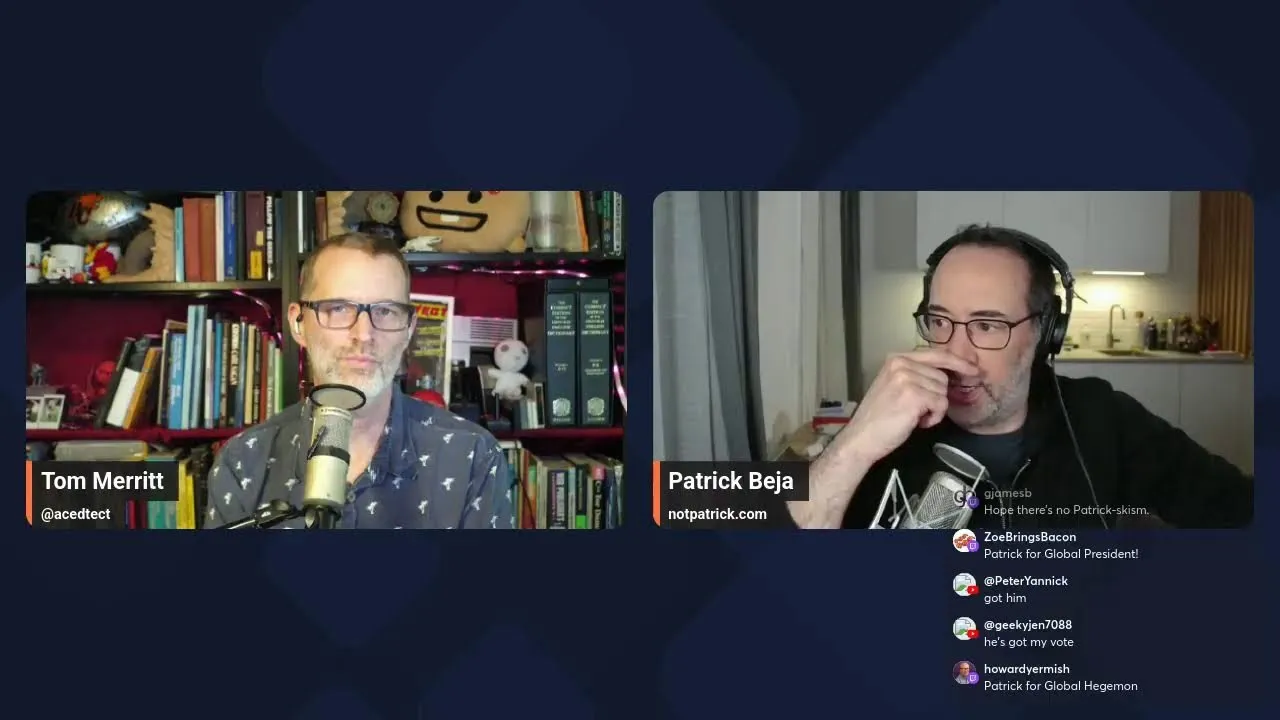
In a recent wide-ranging discussion on the Daily Tech News Show, veteran podcaster Tom Merritt hosted Patrick Beja to discuss the shifting landscape of digital media, the challenges of modern political discourse, and how personal life changes influence the way content creators approach their work. The conversation highlighted a growing trend among veteran creators: stepping back from the "doom-scrolling" cycle in favor of more intentional, curated information gathering.
Key Points
- Shift in Consumption: Both Merritt and Beja advocate for moving away from algorithmic, outrage-driven social media toward high-quality, paid publications like the Financial Times and the Wall Street Journal for reliable reporting.
- The "Phileas Club" Format: Beja has relaunched his long-running project, The Phileas Club, moving from a complex global panel format to a more personal, letter-based structure that focuses on individual perspectives rather than polarizing group debates.
- The Paradox of Participation: The hosts debated whether "speaking out" on social media actually helps or hinders democratic stability, with Beja noting that increasing polarization in Europe mirrors previous trends observed in U.S. media.
- Local vs. Global Agency: Both agreed that while national and global political issues are pressing, individuals often find more genuine efficacy by focusing on local actions and personal responsibilities rather than attempting to solve systemic global crises through performative online engagement.
The Burden of Modern Discourse
The dialogue between Merritt and Beja touched on a fundamental frustration shared by many in the digital space: the difficulty of maintaining nuanced conversation in a binary, polarized environment. Beja reflected on the hiatus of his show, admitting that his initial goal of fostering cross-partisan dialogue felt increasingly ineffective as the political climate shifted toward bad-faith actors and extreme populism.
"I felt like I was part of a trend in society that was saying, 'Let’s understand each other,' with a political opponent that had no interest in that... it felt to me like the world is going in a bad place, and I felt like the show was not doing what I was hoping it would do." — Patrick Beja
Merritt pushed back on the idea that "speaking out" on every trending topic is the most effective way to address these societal shifts. He argued that naming individuals or engaging with inflammatory content often feeds the very algorithms that thrive on outrage, providing the subjects of that outrage with the attention they seek.
Curating Trust in an Age of Information Overload
As both hosts move further away from the rapid-fire, often unreliable stream of social media platforms like Twitter (now X), they emphasized the importance of returning to professional journalism. Merritt highlighted that subscription-based outlets often provide a depth of technical and economic context that is impossible to replicate in short-form, ad-supported media.
Beja noted that even as a creator, he has had to refine his own consumption habits, relying on a mix of curated newsletters and measured outlets to stay informed without compromising his mental well-being. He praised his transition to working from a dedicated studio space, which has helped separate his personal life—specifically the challenges of raising young children—from his professional output.
Moving Forward: A Call for Intentionality
Looking ahead, both Merritt and Beja agreed that the solution to a fragmented society is not necessarily more shouting at the national level, but a renewed commitment to individual integrity and local engagement. While they acknowledged that the global political landscape remains precarious—influenced by everything from post-COVID instability to the rise of populist media—they believe that the most potent form of change comes from living by example and supporting, rather than destroying, established civic institutions.
Beja plans to continue evolving The Phileas Club, aiming to diversify the voices in his audience-led format while keeping the focus on thoughtful, long-form reflection. The pair concluded that while the digital age has provided unparalleled access to information, the true challenge lies in the discipline required to use those tools wisely.