
Table of Contents
Transforming Your Life: Insights from a World-Renowned Cancer Surgeon
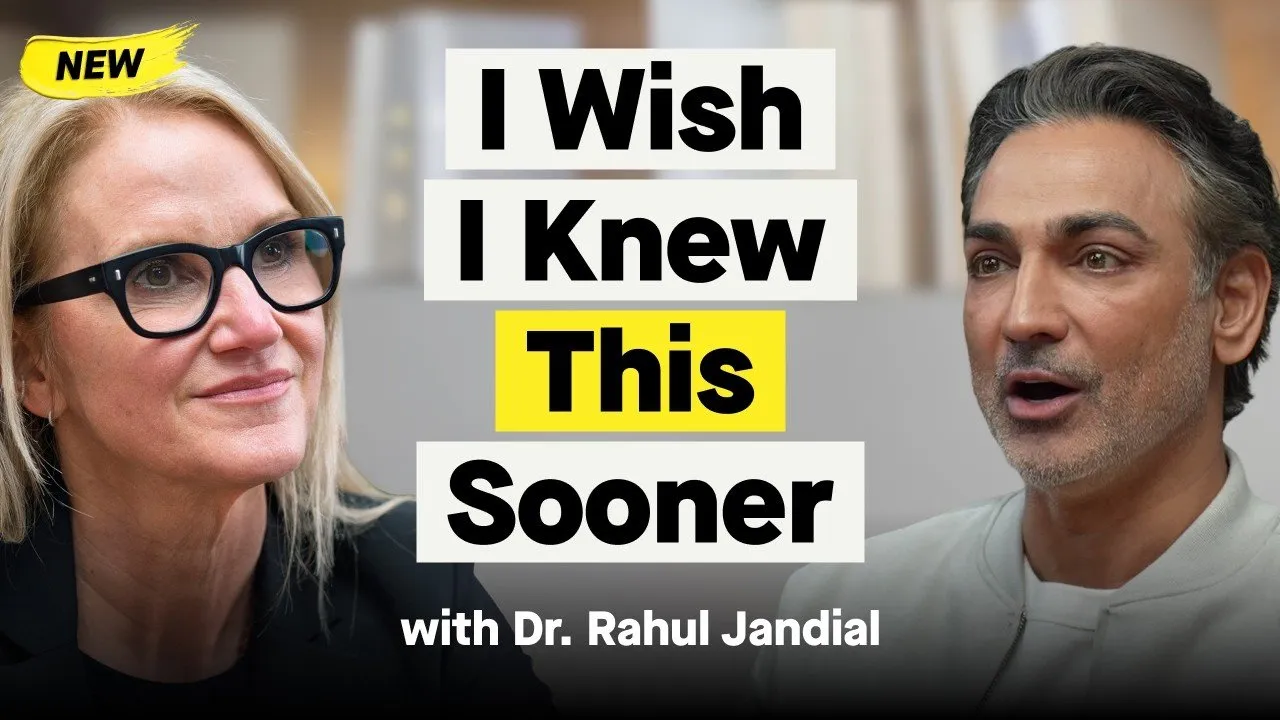
Life rarely follows a linear, predictable path. It is a series of cycles—periods of intense growth and spring-like renewal, punctuated by inevitable storms and crises. Dr. Raul John, a distinguished neuroscientist and cancer surgeon who has operated on thousands of patients, offers a profound perspective on how to navigate this reality. By shifting our focus from outcomes to opportunities, we can cultivate the resilience needed to survive our darkest moments and truly thrive during our best ones.
Key Takeaways
- Crisis Management: When facing an overwhelming challenge, survival requires narrowing your focus and "amputating" non-essential distractions to protect your most critical resources.
- Attentional Power: Learning to control your breath is not just a relaxation technique; it is a neurological tool to regulate your brain’s chemistry and keep your focus during high-stakes moments.
- Reframing the Past: Replacing the regret-filled narrative of "I wish I had" with the empowering perspective of "I’m glad I did" helps transform even painful experiences into essential lessons.
- Neural Efficiency: You do not need to regrow your brain to change your life; consistent, small, and intentional efforts allow your brain to build "myelin" that makes new, positive habits automatic.
The Anatomy of a Crisis: Why You Must Choose Your Battles
In our modern world, we are often encouraged to multitask and balance endless commitments. However, Dr. John argues that there are times in life when this "everything matters" mentality becomes a liability. Drawing from his own experience at age 19—when he had to drop out of Berkeley to support his mother through breast cancer and protect his family from an escalating threat next door—he explains the concept of amputation.
When to Amputate
Amputation, in this context, is the strategic removal of a commitment that is preventing you from surviving a crisis. When you are drowning, you cannot be a student, a high-achiever, and a caregiver all at once. By choosing to step away from school, Dr. John was able to direct 100% of his psychological energy toward what actually kept his family afloat. This was not a failure; it was a bold, intelligent act of self-preservation.
The reason it's a difficult choice is because it's an unclear path. But as long as it makes sense to you and you’ve given it thought and you know what’s important to you... don’t let other people laughing at you change what you’re about to do.
Directing Your Psychological Energy
Our attention is a limited resource. Dr. John posits that we often squander this energy by obsessing over external outcomes or living to please others. The key to breaking free from this cycle is "attentional power"—the intentional steering of your focus.
The Practice of Paced Breathing
The simplest way to train your attentional power is through your breathing. When a crisis hits—an unexpected layoff, a breakup, or a difficult medical diagnosis—the body’s natural instinct is to hyperventilate, which triggers panic. By consciously slowing your breath (in through the nose for 3-4 seconds, holding, and exhaling slowly), you engage your parasympathetic nervous system and trigger the release of GABA, a neurotransmitter that naturally calms brain activity.
This is not a "woo-woo" concept; it is biology. By practicing this when life is calm, you build a "muscle" that remains accessible when the storm arrives. If you don't practice the drill during an average Tuesday, the skill will not be there for you when you need it most.
Reframing: From "I Wish" to "I’m Glad"
Even among patients facing stage 4 cancer, there is a clear divide between those who are "coping well" and those who remain stuck in misery. The difference rarely lies in the diagnosis itself, but in the story they write about their lives.
The Power of Narrative
Those who struggle most often become fixated on what they lost or what they failed to do. They lament, "I wish I had gotten screened earlier" or "I wish I had taken a different path." Those who adapt best, however, shift their internal narrative to "I’m glad I did."
This reframing is an active, cognitive-behavioral process. It requires you to look back at your past—the failed relationships, the career changes, the detours—and actively extract the lesson or the opportunity that was uniquely forged in that crucible. It is a way to reclaim ownership of your life story, ensuring that you are the author, not a victim of circumstance.
Neuroplasticity and the Myth of "Rewiring"
We often hear the term "rewiring the brain," but Dr. John offers a more precise perspective based on his work in neurosurgery. Change does not happen through magical growth; it happens through myelination. When you repeat an action, your brain wraps the neural pathway in fatty sheets (myelin), effectively creating a "groove" that makes that behavior faster and more efficient.
This is why change is better achieved through 15 minutes of daily practice than one massive, unsustainable effort. By committing to small, consistent changes—what Dr. John calls "minus one, plus one"—you slowly shift the topography of your own mind. You aren't replacing who you are; you are simply making the path of your best self the path of least resistance.
Conclusion: The Beauty of the Unscripted Life
Dr. John’s life, from his arrival at LAX as a child to the operating rooms of top hospitals, has been anything but engineered. His ultimate takeaway is that there is no final "moment of arrival." Life is not a destination to be reached, but a series of transitions to be managed. When you stop counting wins and start embracing the "shocks" as opportunities for growth, you begin to live with greater freedom. Life is beautiful specifically because it is difficult, and in the recognition of that struggle, we find the strength to keep going.




)