Table of Contents
Trauma is frequently misunderstood as simply a "bad event" or a negative memory. However, according to Dr. Paul Conti, a Stanford-trained psychiatrist and expert in trauma treatment, true trauma is defined by its ability to overwhelm our coping mechanisms and fundamentally alter the way our brains function. When we experience trauma, we don't just remember it; we become different. These changes manifest in our mood, anxiety levels, sleep patterns, and physical health, often lingering for years beneath the surface.
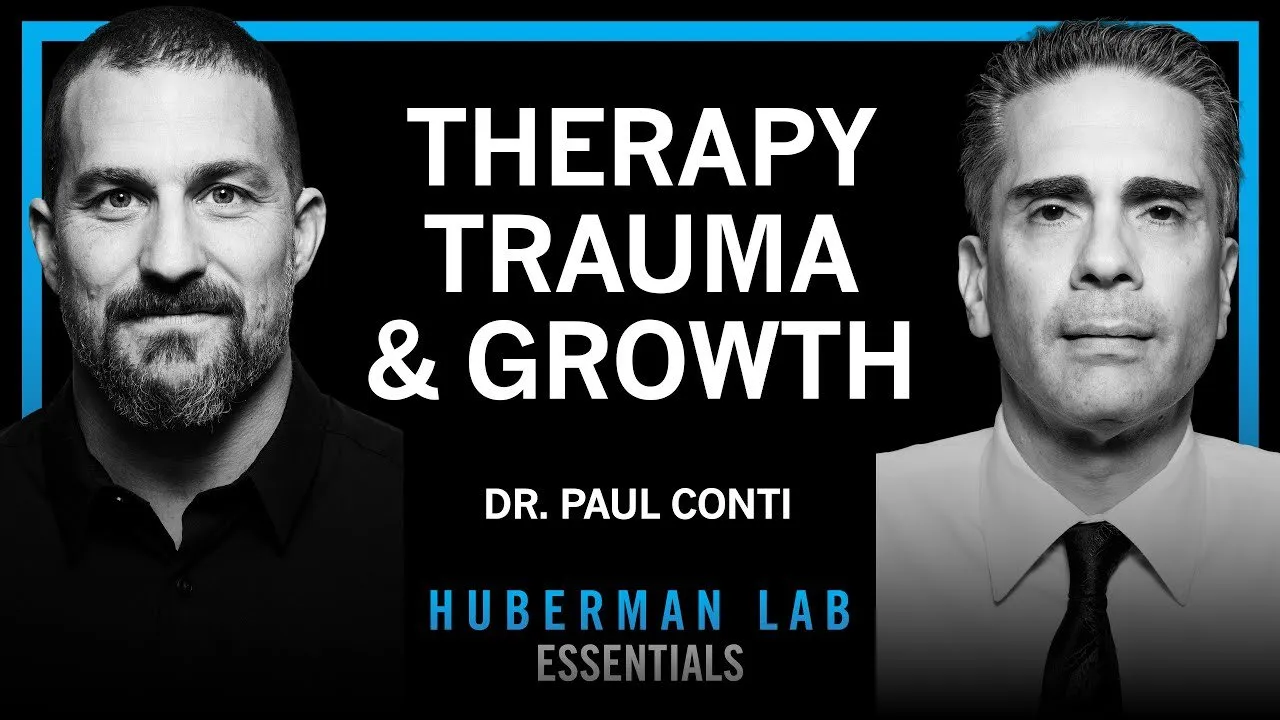
In conversation with Dr. Andrew Huberman, Dr. Conti deconstructs the complex mechanisms of trauma, explaining why we feel shame for things that were done to us, why we subconsciously repeat abusive patterns, and how specific therapeutic and pharmaceutical interventions can help us reclaim our lives. This deep dive explores the neuroscience of healing and the practical steps necessary to move from survival mode to true living.
Key Takeaways
- Trauma alters brain function: It is not merely a psychological scar but a physiological change that heightens vigilance and alters how we process the world.
- Shame is an evolutionary reflex: We are wired to internalize negative events for survival, but this mechanism becomes maladaptive in the context of modern, chronic trauma.
- The repetition compulsion: The brain often attempts to "fix" past trauma by subconsciously recreating similar situations in the present, driven by the limbic system rather than logic.
- Rapport drives recovery: The most critical factor in therapy is not the specific modality (CBT, psychodynamic, etc.) but the level of trust and safety established with the therapist.
- Self-care is structural, not optional: meaningful recovery requires a baseline of physiological health, including sleep, nutrition, and sunlight, which are often neglected during high-stress periods.
The Neuroscience of Guilt and Shame
One of the most perplexed reactions to trauma is the immediate onset of guilt and shame. Logically, it makes little sense for a victim of abuse or a survivor of a tragedy to feel responsible for events beyond their control. However, Dr. Conti explains that these emotions are hardwired evolutionary adaptations that have gone awry in the modern context.
The Evolutionary Roots of Shame
Throughout human history, survival depended on remembering negative outcomes vividly. If you ate a poisonous berry or were attacked by a predator, your brain needed to encode that experience deeply to ensure you never repeated the mistake. This survival mechanism creates a powerful, reflexive affect—shame—that is designed to control behavior and ensure group cohesion.
In a tribal setting, shame prevented individuals from hoarding food or acting deeply selfishly. However, when applied to complex emotional trauma, this mechanism misfires. The brain tries to "learn" from the trauma by internalizing it, leading the individual to believe, "I caused this," or "I am bad."
"The traumatic things that are sort of emblazed in our brain are built to last... Things that are positive will generate some emotion inside of us, but things that are profoundly negative are much more likely to stay with us. And I think that that was adaptive when all of that was about survival."
This reflexive guilt creates a barrier to healing. Because the trauma is linked to shame, we bury it. We avoid talking about it to avoid the physiological arousal it triggers, effectively walling off the infection rather than treating it.
The Repetition Compulsion: Why We Replay the Past
A common and tragic phenomenon in trauma survivors is the tendency to enter into repeated cycles of abuse or dysfunction. Freud termed this the "repetition compulsion." From the outside, it seems illogical that someone leaving an abusive partner would find another one, yet this pattern is clinically pervasive.
Logic vs. The Limbic System
Dr. Conti argues that we often make the mistake of viewing humans as primarily logical creatures. In reality, the limbic system—the brain's emotional center—always trumps logic when the two conflict. The limbic system does not understand time; it does not recognize the clock or the calendar. To the emotional brain, the past is still happening.
When a person repeats a trauma, they are unconsciously attempting to rewrite the ending. The limbic system seeks relief from the original suffering by recreating the scenario with the hope that this time, they can make it right. If they can solve the problem in the present, the emotional brain believes it can solve the problem of the past.
"I can't tell you how many times I've sat with someone... and a person will say my last seven relationships have been abusive... I think what you're going to tell me is you've kind of had the same relationship seven times... I have had one that I have repeated seven times and now we start getting to what's really going on."
Healing requires bringing this unconscious drive to the surface. By recognizing that the brain is trying to solve an unsolvable past event, patients can begin to detach from the compulsion to repeat it.
Navigating Treatment: Therapy and Pharmacology
Addressing trauma requires a multi-faceted approach that often involves talk therapy and, in some cases, pharmacological support. However, the efficacy of these treatments depends heavily on how they are applied.
The Power of the Therapeutic Alliance
When seeking a therapist, many people get caught up in specific modalities—whether to choose Cognitive Behavioral Therapy (CBT), Dialectical Behavior Therapy (DBT), or psychoanalysis. Dr. Conti suggests that while tools matter, the single most important variable is rapport.
Trauma thrives in isolation and silence. The antidote is a trusting relationship where the patient feels safe enough to externalize the trauma. When a patient speaks their truth to a trusted other who does not recoil, the shame begins to dissolve. This process allows the patient to develop an "observing ego"—the ability to look at themselves with the same compassion they would offer a stranger/child.
Rethinking Medication and Psychedelics
The modern medical system often over-relies on prescriptions, using medication to "polish the hood when there is a problem in the engine." While antidepressants can improve distress tolerance, they rarely solve the root cause of trauma.
However, emerging research into psychedelics (such as psilocybin) and MDMA offers promising new avenues for treatment when used in clinical settings:
- Psychedelics (Psilocybin): These compounds appear to quiet the "chatter" of the prefrontal cortex—the parts of the brain obsessed with planning, worrying, and defense. This shifts consciousness toward the insular cortex, facilitating a state of deep connection and truth-seeking that allows patients to view their trauma without the usual defensive barriers.
- MDMA: Unlike classic psychedelics, MDMA floods the brain with positive neurotransmitters. This creates a state of radical "permissiveness," allowing patients to approach terrifying memories without the overwhelming fear response that usually shuts down processing.
"We so often try and change the trauma of the past in order to control the future. And what that really adds up to is the trauma of the past dominates our present."
The Non-Negotiable Basics of Self-Care
In the discourse of mental health, "self-care" is often dismissed as a luxury or a superficial indulgence. Dr. Conti reframes self-care as a fundamental physiological requirement for resilience. The brain is an organ that requires specific inputs to function; without them, emotional regulation becomes impossible.
Trauma survivors often neglect self-care as a form of self-punishment or because their sense of worth is tied to hyper-productivity and self-denial. Dr. Conti notes that ignoring these basics is a way of maintaining the "edge" that survival mode provides.
True recovery begins with the basics:
- Sleep Hygiene: Chronic sleep deprivation keeps the brain in a heightened state of threat reactivity.
- Nutrition: Stabilizing blood sugar is essential for stabilizing mood.
- Sunlight and Nature: Regulating circadian rhythms through natural light exposure.
- Community: Curating a social circle that is supportive rather than draining.
Conclusion
Trauma leaves us different, altering the very architecture of our thought patterns and biological responses. However, it is not a life sentence. By understanding the biological roots of shame, recognizing the subconscious drive to repeat the past, and utilizing trusted therapeutic relationships, we can dismantle the power trauma holds over the present. Whether through introspection, therapy, or physiological self-care, the goal is to move from a state of constant survival to a place of agency and peace.