Table of Contents
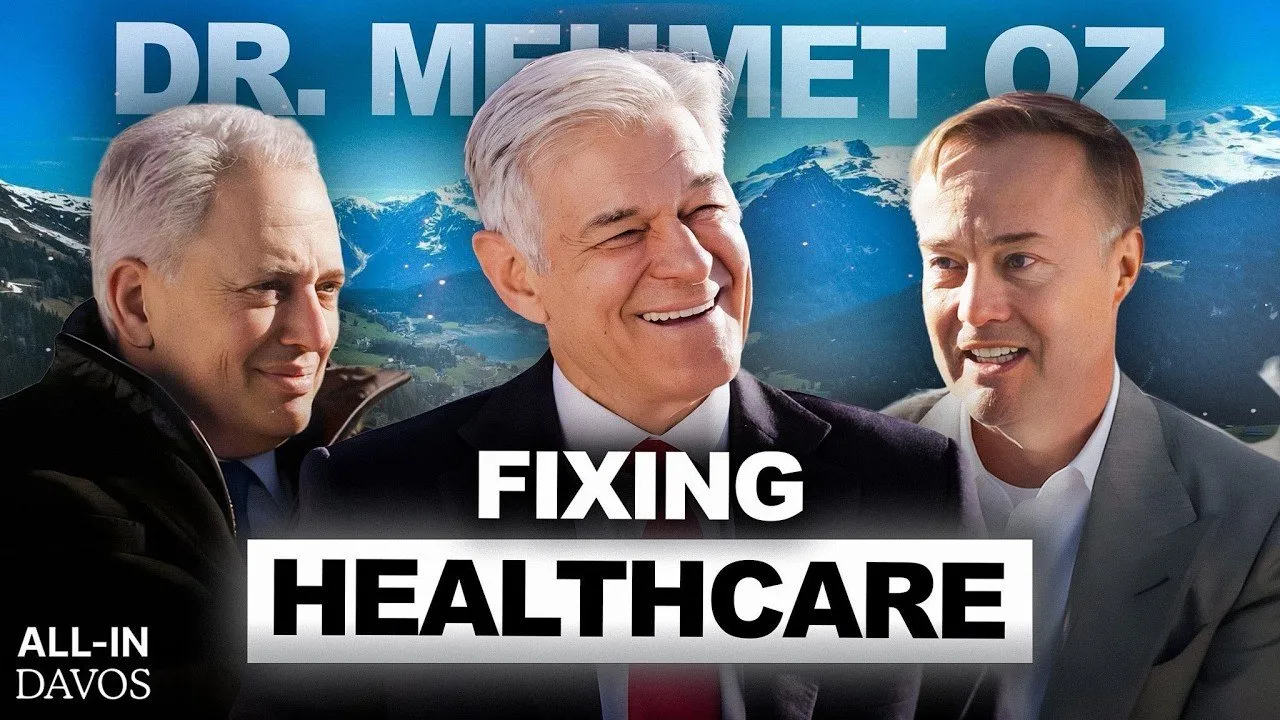
In a candid conversation at Davos, Dr. Mehmet Oz, the newly appointed Administrator for the Centers for Medicare & Medicaid Services (CMS), outlined a radical vision for the future of American healthcare. transitioning from his role as "America’s Doctor" on television to a federal administrator, Dr. Oz brings a distinct "founder mentality" to the agency. His discussion with the "All-In" podcast hosts revealed a strategy centered on aggressive fraud reduction, the integration of artificial intelligence to democratize access, and a fundamental shift in how the government negotiates drug pricing. What follows is a deep dive into how CMS plans to leverage technology and fiscal discipline to overhaul a system often criticized for its inefficiency.
Key Takeaways
- Reframing Healthcare as Investment: Dr. Oz argues that extending the average American's working life by just one year could inject $3 trillion into the economy, shifting the narrative from cost containment to value creation.
- Most Favored Nation Drug Pricing: The administration intends to benchmark US drug prices against European standards, aiming to drastically reduce costs—including dropping the price of GLP-1 weight loss drugs to the $150–$200 range.
- AI as the Great Equalizer: CMS plans to utilize AI to handle administrative burdens, allowing doctors to focus on patients, and to deploy technology like drones and robotic ultrasounds to address rural healthcare deserts.
- Zero-Tolerance for Fraud: A "cancel the credit cards" approach is being adopted to combat rampant fraud in Medicaid and hospice care, which Oz suggests is being exploited by organized criminal elements.
- Data Interoperability: A push to break down proprietary data silos will allow patients to own their medical records and use consumer AI tools to interpret their own health metrics.
The Economics of Health: From Expense to Investment
One of the central tenets of Dr. Oz’s philosophy at CMS is a paradigm shift in how the federal government views healthcare spending. Historically, healthcare has been treated purely as an expense line item to be managed. Oz argues this is a mistake. By focusing on preventative care and extending the health span of the workforce, the economic upside is massive.
He posits that if the healthcare system can keep Americans healthy enough to work a single year longer, the resulting productivity adds approximately $3 trillion to the US economy. This perspective drives the administration's push for "Most Favored Nation" drug pricing. The goal is to stop the United States from subsidizing pharmaceutical innovation for the rest of the world while paying significantly higher prices domestically.
The most important message is don't think about healthcare like an expense. Think of it as an investment.
While European nations often pay less than half of what the US pays for identical drugs, Oz noted that this often comes at the cost of delayed access to cutting-edge treatments. The CMS strategy involves "bending but not breaking" the pharmaceutical industry—using the immense purchasing power of the US government to demand fair pricing without stifling the innovation that produces life-saving medications.
Democratizing Care Through Artificial Intelligence
A significant portion of the discussion focused on the role of technology in solving structural problems within the American healthcare system, particularly the shortage of general practitioners and the lack of access in rural areas.
Solving the Rural Access Crisis
With a shortage of primary care physicians and mental health professionals in rural America, CMS is betting big on technology. Oz detailed plans to utilize $50 billion in rural health transformation funds to deploy innovative solutions. These include drones delivering prescriptions to remote locations, such as the North Slope of Alaska, and AI-supported robotic systems capable of performing ultrasounds in areas lacking obstetricians.
Furthermore, the administration is encouraging the use of "micro-hospitals" and telemedicine to bring top-tier care to underserved populations. By allowing AI to handle diagnostics and paperwork, the existing workforce of pharmacists and nurse practitioners can operate at the top of their licensure, effectively multiplying the available points of care for patients.
Patient Agency and Data Ownership
Dr. Oz emphasized the necessity of true data interoperability. Historically, medical records have been locked in proprietary formats by health information companies, making it difficult for patients to access or transfer their data. CMS has secured pledges from 600 companies to support transparency and interoperability.
The vision is for patients to easily aggregate their data—from blood panels to wearable metrics—and use consumer AI tools to understand their health. This moves the system toward a "smarter patient" model, where individuals can perform preliminary research and data analysis before stepping into a doctor's office.
Combating the Obesity Epidemic with Affordable GLP-1s
Perhaps the most immediate consumer impact discussed was the pricing of GLP-1 agonists (drugs like Ozempic and Mounjaro). These medications, which effectively treat obesity, are currently prohibitively expensive for many, often costing upwards of $1,200 per month.
Dr. Oz identified obesity as a driver for the "four horsemen" of chronic disease: heart disease, kidney failure, liver disease, and dementia. Treating obesity is therefore seen as a fiscal imperative to save Medicare and Medicaid from future insolvency. He announced that through negotiations and the introduction of pill-based form factors, the target price for these drugs is expected to drop to roughly $150 to $200 per month.
This pricing strategy aims to make these drugs accessible to vulnerable populations on Medicaid and Medicare, democratizing access to treatments that are currently restricted to wealthy demographics.
Confronting Systemic Fraud and Waste
Dr. Oz did not mince words regarding the scale of fraud within the CMS infrastructure. He described the current state of Medicaid and Medicare billing as a target for sophisticated, organized criminal elements, including foreign nationals.
The "Cancel the Credit Cards" Approach
Drawing inspiration from private sector efficiency strategies, CMS is adopting a zero-trust mindset toward billing. Oz highlighted egregious examples of fraud, such as a 700% increase in hospice centers in California—many of which do not have patients dying—and "learning centers" in Minnesota billing millions for children who do not attend them.
The proposed solution involves rigorous audits and a willingness to halt payments to providers who cannot verify their services. This "cancel the credit cards" method puts the burden of proof back on the biller to demonstrate that services were rendered, rather than on the government to prove fraud occurred.
If you don't take care of the fraud, you will kill the system. Eventually, you will destroy Medicaid.
Friction with State Governments
The discussion also touched on political friction regarding audits. Oz expressed frustration with state governors who have vetoed legislation requiring stricter audits of state spending, particularly regarding funds allocated for undocumented immigrants. CMS is taking a hard line, refusing to reimburse states for non-emergency services provided to individuals outside the legal framework of the entitlement programs. The agency has already identified and contested over $1.5 billion in improperly billed funds from California alone.
Conclusion
Dr. Oz’s tenure at CMS appears to be defined by a blend of technological optimism and fiscal hawkishness. By treating healthcare as a national investment, integrating AI to solve logistical shortages, and aggressively policing fraud, the administration hopes to correct the trajectory of a system that consumes nearly a fifth of the US GDP.
The approach mirrors the "founder mentality" attributed to the administration: moving fast, breaking established bureaucratic norms, and prioritizing outcomes over process. Whether these ambitious reforms can be fully implemented remains to be seen, but the strategy represents a distinct departure from the status quo of American healthcare administration.