Table of Contents
For centuries, humanity has accepted aging as an inescapable destination—a slow, inevitable decline that ends in frailty and death. Dr. David Sinclair, a distinguished Harvard professor, is challenging this long-held fatalism. With over three decades of research into longevity and age reversal, Sinclair argues that aging is not a biological mandate, but rather a solvable medical condition. His latest breakthroughs, including experiments that successfully rejuvenated tissues in mice and monkeys, suggest that we are approaching a turning point in history where "getting old" may soon become a choice rather than a biological certainty.
Key Takeaways
- Aging as an Information Crisis: Dr. Sinclair posits that aging is essentially an "identity crisis" for cells, caused by a loss of epigenetic information rather than damage to the DNA molecule itself.
- The Possibility of Reversal: Through the use of specific genes, researchers have successfully reset the age of tissues in animal models, effectively curing conditions like blindness in mice.
- Lifestyle is Destiny: While genetic factors play a role, roughly 80% to 90% of your aging rate is determined by lifestyle choices such as nutrition, exercise, and stress management.
- The Power of Adversity: Incorporating "hormetic" stressors—such as fasting, heat exposure, and intense exercise—can trigger cellular repair mechanisms that slow the aging process.
- A New Era of Medicine: We are transitioning from a world of treating individual diseases like cancer or Alzheimer's to a future where we treat the underlying cause of all these diseases: aging itself.
The Information Theory of Aging
To understand Dr. Sinclair’s work, one must rethink what aging actually is. He describes the body like a complex computer. When we are young, the "software"—our epigenetic information—is pristine. These epigenetic markers act as conductors, telling each cell whether to function as a nerve, skin, or liver cell. Over time, these markers become corrupted, causing cells to lose their identity and function.
The epigenome is the information we get transferred from cell to cell... the information theory of aging states that the information that's in a cell... is pristine when we're young, but as we get older, we lose that epigenetic information.
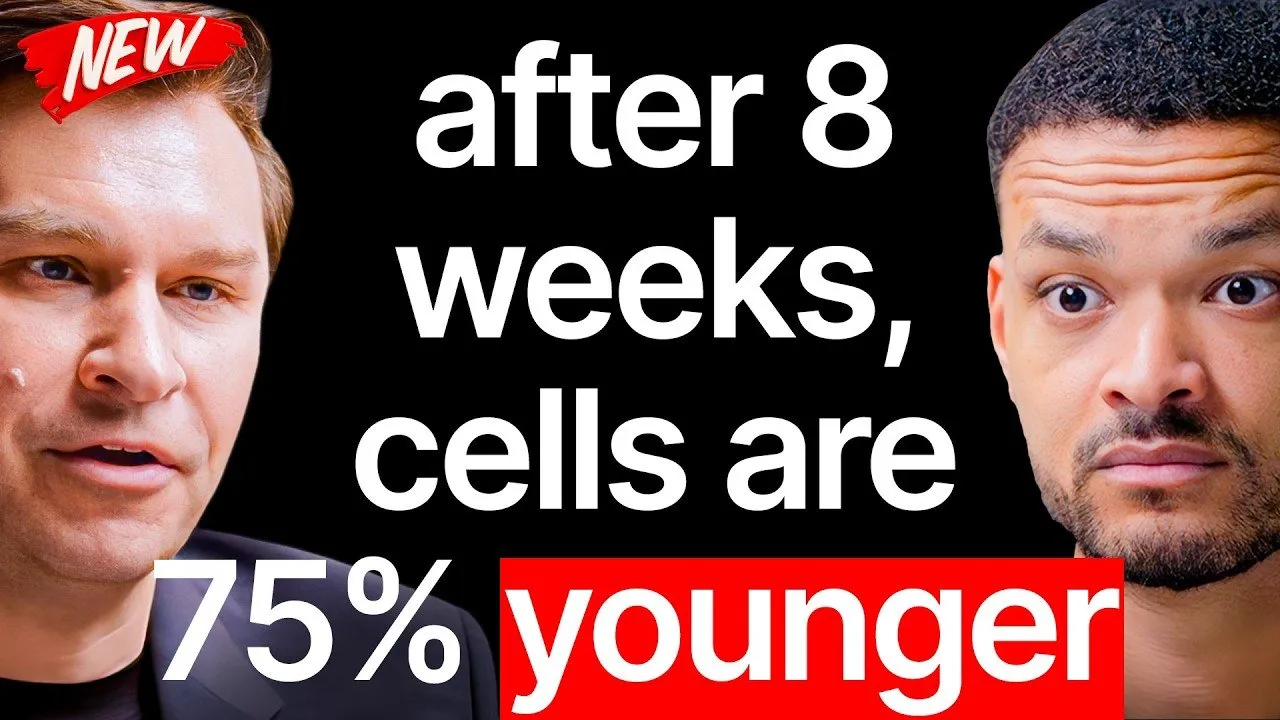
Sinclair believes that every cell in an old person still possesses a "backup copy" of its youthful state. By using specific gene therapies, his lab has shown it is possible to "reinstall" this youthful software, effectively resetting the cellular age and allowing tissues to regain their original, healthy function.
Lifestyle Choices as Biological Intervention
While lab-grown gene therapies are the future, current life extension is largely in our own hands. Dr. Sinclair emphasizes that while we cannot change our DNA, we have significant control over our epigenome through daily habits. He suggests that we are currently living in an "abundance world"—characterized by constant food access, sedentary lifestyles, and comfort—which causes our cellular repair systems to become dormant.
The Benefits of Fasting
Fasting is one of the most accessible tools for triggering the body's repair mechanisms. By skipping breakfast or extending the window between meals, you initiate "hormesis"—a biological state of mild adversity that forces cells to prioritize repair, recycling, and DNA maintenance. Sinclair notes that this isn't just about weight loss; it is about keeping the cellular "conductors" active and efficient.
Exercise and Hormetic Stress
Aerobic exercise, specifically activities that leave you short of breath, is vital. This type of stress signals the body to bolster its defenses. Similarly, practices like saunas provide heat stress, which activates heat-shock proteins that help maintain cellular stability. These activities should be viewed not just as fitness habits, but as essential "maintenance" for the human computer.
The Future of Age Reversal
Dr. Sinclair’s lab at Harvard is currently preparing for human clinical trials aimed at treating blindness by resetting the age of the optic nerve. By introducing specific genes that reset cellular function, they hope to demonstrate that age-related vision loss can be reversed in humans, just as it has been in primates.
It’s not a question of if, it’s a question of when this is going to happen.
This is only the beginning. The goal is to develop standardized delivery systems that can be applied to other organs, such as the heart, liver, and brain. Sinclair envisions a future where medicine is proactive rather than reactive, focusing on preventing the decline of health long before terminal diseases have the chance to take hold.
Conclusion
Dr. David Sinclair’s vision is not merely about extending the human lifespan; it is about extending the "healthspan"—the number of years we live in a state of vitality and independence. By viewing aging as a biological process that can be managed, we shift our perspective from passive observers of our own decline to active participants in our cellular maintenance. As research continues to accelerate, we may well find that the technology to reset our biological clocks is not just a dream of the future, but a practical reality for the coming decades.