Table of Contents
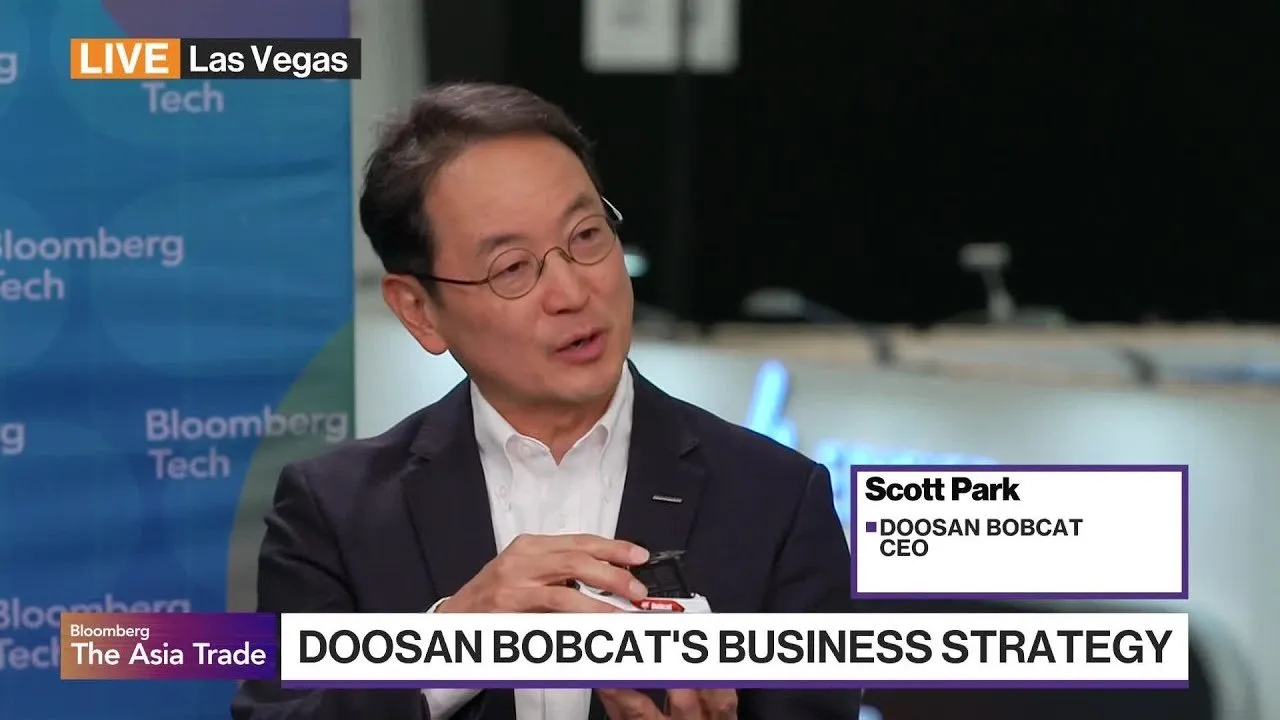
Doosan Bobcat CEO Scott Park has announced the imminent deployment of AI-powered voice interfaces for construction machinery, a strategic move designed to bridge the widening global gap in skilled labor. In a wide-ranging discussion regarding the company’s future, Park also confirmed reports of acquisition discussions with German manufacturer Wacker Neuson and addressed ongoing patent litigation with rival Caterpillar.
Key Points
- AI Deployment: The new "Jobsite Companion" allows operators to control machine settings and access technical support via voice commands, specifically targeting unskilled laborers.
- M&A Confirmation: Park confirmed leaked reports that Doosan Bobcat is currently in talks regarding a potential acquisition of Wacker Neuson.
- Market Strategy: The company is pivoting from "hardware tool carriers" to "software tool carriers," relying on partnerships with startups to integrate autonomous technology.
- Legal Defense: Addressing the patent dispute with Caterpillar, Park emphasized the necessity of protecting intellectual property despite claims regarding national security risks.
Bridging the Skills Gap with AI
As the construction industry faces a critical shortage of qualified personnel, Doosan Bobcat is turning to artificial intelligence to lower the barrier of entry for new operators. The company is set to release its "Jobsite Companion" this year, a tool designed to assist novice users operating complex machinery such as mini excavators and loaders.
The technology functions as an in-cab voice assistant. Operators can verbally command the machine to start the engine, query specific operational functions, or reset power settings for different attachments without needing extensive manual training. According to Park, this innovation is a direct response to the bifurcation of the global labor crisis: while the U.S. and Europe face a shortage of bodies, the broader global issue is a shortage of skills.
"There's going to be a lot of customer demand because we have an issue with unskilled workers. We have an issue with people that need to learn how to use equipment quickly. So for people that are newbies, they can actually go in there and start talking to the machine. They can actually be operational very quickly."
Market Resilience and Strategic Shift
With approximately 70% of its revenue generated in the United States, Doosan Bobcat views the American market as highly resilient. Park noted that demand for infrastructure, commercial builds, and residential housing remains strong, though supply chains continue to struggle to keep pace due to labor constraints.
To address these economic realities, the company is fundamentally altering its product philosophy. Park described a strategic evolution where heavy machinery is no longer viewed merely as "pieces of steel," but as platforms for software integration. This shift relies heavily on an ecosystem of partnerships. Rather than developing every solution in-house, Doosan Bobcat is actively pursuing joint ventures and equity positions in startups to integrate autonomous mowing and tractor technologies.
"Scale matters and size matters when it comes to our industry... If I can get as many of these pieces of steel out in the workplace in customer's hands and working, the next step is actually transforming these things into software tool carriers, and that's where AI and digital comes in."
Navigating M&A and Legal Battles
Beyond technological innovation, Doosan Bobcat is navigating significant corporate maneuvers. Park addressed recent leaks regarding a potential acquisition of Wacker Neuson, a leading manufacturer of light and compact equipment. While he could not provide a timeline or certainty of the outcome, he officially confirmed that discussions are underway.
Simultaneously, the company is entrenched in a high-stakes legal battle with Caterpillar. Doosan Bobcat alleges patent infringement and is seeking import bans on specific rival equipment. Critics, including some U.S. lawmakers and Caterpillar representatives, have argued that such bans could threaten American jobs and national security. Park dismissed these concerns, pointing to Doosan Bobcat's significant domestic footprint.
"We have seven manufacturing plants in the United States. So we should be able to work with Caterpillar and come to a conclusion there... clearly the reason why we have patents is to protect our intellectual property [and] our capabilities."
Looking ahead, the industry will be watching closely to see if the Wacker Neuson deal materializes and how quickly the market adopts the new voice-activated interfaces. As the U.S. construction sector continues to demand higher efficiency from a shrinking workforce, Doosan Bobcat’s pivot to software-defined heavy equipment could set a new standard for industrial automation.