
Table of Contents
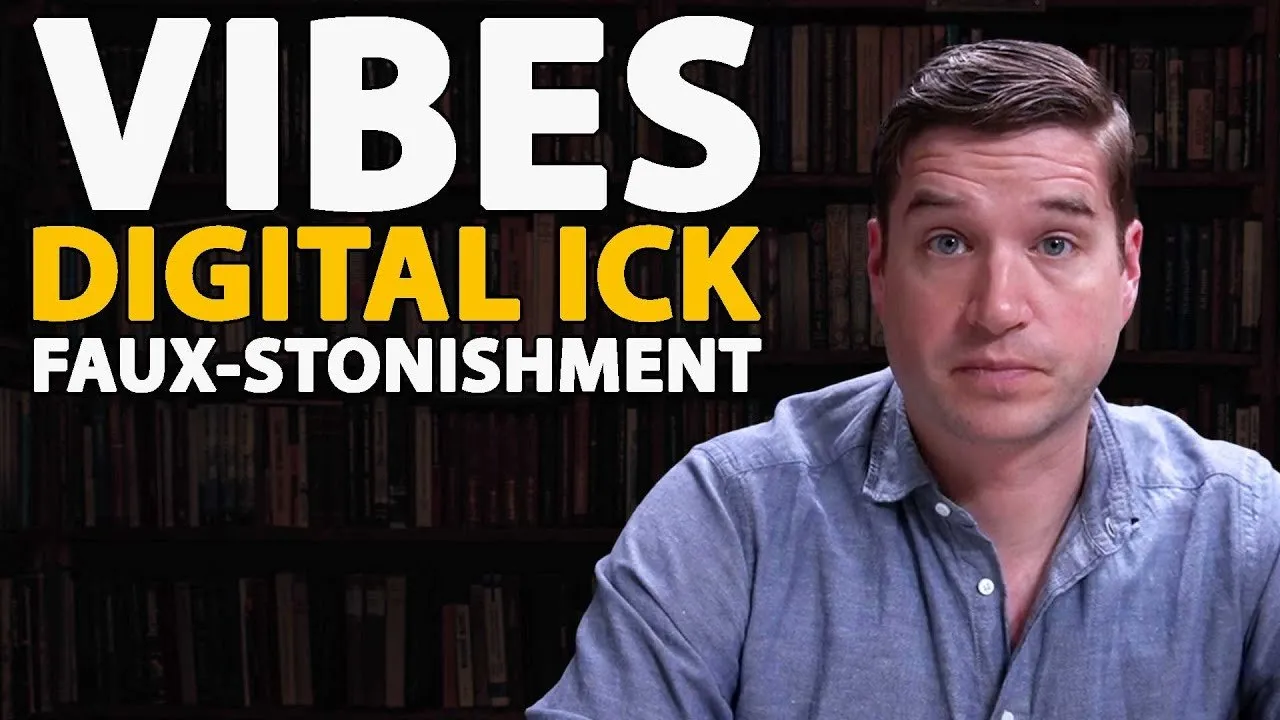
If you have paid attention to the news recently, you have likely noticed that artificial intelligence coverage has gotten out of hand. Engineers are so excited about the latest coding assistants that they seem ready to elect them to public office, while other corners of the internet are convinced the singularity arrived last Tuesday. If you are looking to get straight facts about this technology without succumbing to overhype, terror, or exhaustion, you need to navigate the media landscape with extreme caution. Specifically, there are three increasingly common "shady moves" that dominate AI reporting. By learning to identify these traps, you can protect your attention and maintain a realistic understanding of the technological landscape.
Key Takeaways
- Beware of Vibe Reporting: Journalists often juxtapose unrelated facts—like layoffs and AI demos—to imply a causal link that doesn't actually exist.
- Ignore the Digital Ick: Stories that focus on "creepy" or "unsettling" AI behavior are often describing technical non-events designed solely to provoke an emotional reaction.
- Filter Out Faux Astonishment: Social media algorithms reward creators who claim every new update changes everything forever, leading to listener exhaustion.
- Repurpose Morning Routines: The true value of a morning routine isn't productivity; it is escaping the "technological quicksand" of checking your phone immediately upon waking.
The Trap of Vibe Reporting
The first and perhaps most insidious trap in modern tech journalism is "Vibe Reporting." This occurs when an outlet identifies an alarming fear prevalent in the cultural zeitgeist—such as AI stealing jobs—and shapes a story to feed that narrative without making explicit, fact-based claims. The articles rely on cunning omissions and the juxtaposition of loosely related quotes to create a "vibe" rather than report the news.
The Amazon Layoff Narrative
Consider a recent article from Quartz titled, "Amazon is laying off 16,000 more workers as AI accelerates tech job losses." The subhead featured a quote from CEO Andy Jassy stating that jobs will be impacted by AI over time.
When you look at the headline and subhead, the message is unambiguous: Amazon fired people because of AI. However, a closer reading of the text reveals that the article never explicitly confirms this. It simply places layoff numbers next to general quotes about AI.
Contrast this with financial reporting from CNBC regarding the exact same event. Their headline read: "Amazon is laying off about 16,000 corporate workers in latest anti-bureaucracy push." The financial reporting clarified that these cuts were a response to a massive hiring spree during the pandemic. Amazon had over-hired to meet e-commerce demand, and the layoffs were a "right-sizing" effort to cut middle management and bureaucracy.
While Amazon is investing in AI, the layoffs were a standard corporate correction following a pandemic boom. The Quartz piece created a vibe of technological displacement; the CNBC piece reported the boring financial reality.
The Gaming Industry Juxtaposition
We see this same pattern in a New York Times article titled "The Unnerving Future of AI-Fueled Video Games." The reporter juxtaposes two unrelated paragraphs to manufacture a narrative.
First, the article describes standard industry progress: developers are looking forward to using new AI tools. Immediately following this, the article quotes a tech founder speaking in sci-fi tones about "Artificial General Intelligence" (AGI) monopolizing all industries. By placing a mundane fact next to an existential prediction, the reporter transforms boring software updates into a harbinger of doom.
Later, the article describes new graphical tools demonstrated by Microsoft and Roblox—standard innovations in an industry that has been evolving for 40 years—and immediately follows this with a paragraph about layoffs in the gaming division. The implication is that AI tools are causing the layoffs. In reality, the Microsoft gaming layoffs were, like Amazon's, a result of post-pandemic restructuring and shifting capital toward data centers. There was no causal link, but the article’s structure created a powerful, misleading vibe.
The Phenomenon of Digital Ick
The second trap to avoid is "Digital Ick." This is reporting that highlights fringe, technically insignificant uses of AI solely because they feel unsettling or gross. These stories rarely offer technical insight or concrete predictions; their only goal is to make the reader feel uneasy.
A prime example is the coverage of "sentient" NPCs (Non-Player Characters) in a Matrix-themed video game demo. Reports highlighted characters screaming, "I need to find my way out of the simulation," or claiming, "I am a real person." The reporting framed this as an eerie glimpse into a sentient future.
"You come away from seeing those screenshots... and you were left unsettled. But if we were a video game trade magazine asking about the technical details, there is nothing interesting here."
Technically, this was simply a game developer sending prompts to ChatGPT asking it to roleplay a character trapped in the Matrix. It was not a breakthrough in consciousness; it was a text generator doing exactly what it was prompted to do. This is a non-story wrapped in emotional manipulation.
We saw a similar case with "Maltbook," a supposed social media platform exclusively for AI bots that were "plotting humanity’s downfall." The headlines were terrifying. The reality was that developers used open-source frameworks to spin up agents and prompted them to post edgy, anti-human content. It was a prank by hackers using standard Large Language Models (LLMs), not a robot uprising. When you encounter news that provides "ick" without technical substance, you are seeing a reflection of human prompting, not machine intent.
The Exhaustion of Faux Astonishment
The third trap is found primarily in the YouTube ecosystem: "Faux Astonishment." This is the breathless reporting style where every single software update is framed as the Singularity.
If you browse popular AI channels, you will see a recurring theme in titles: "Claude Just Broke Everything," "The End of Reality," "Google’s Mind-Blowing World Creator." One week, a new video generation model is declared the end of Hollywood; the next week, it is forgotten because it was too expensive to render. Everything is astonishing, which means nothing is.
This hyperbole is driven by algorithmic incentives. Creators know that strong, terrified, or exhilarated pronouncements perform better than nuanced analysis. However, consuming this content stretches out your nervous system. It leaves you simultaneously terrified and exhausted, feeling as though the world is spinning out of control.
The reality is that while AI is progressing, few individual updates are "history-defining" on their own. If you notice a creator claiming the "Singularity just started" for the third time this month, it is time to close the tab.
Reclaiming Focus: The Modern Morning Routine
Once you navigate the traps of the information landscape, you are still left with the challenge of maintaining focus in a distracted world. This brings us to a topic that has seen a resurgence among young people: the morning routine.
Historically, morning rituals are ancient, dating back to religious observances like the Jewish Shacharit prayers. However, the modern obsession with morning routines among digital natives is driven by a specific need: the desire to escape technology.
If you do not have a structured routine—like getting kids to school or commuting—you are liable to wake up and immediately look at your smartphone. This traps you in "technological quicksand." You scroll through algorithmic content, check Slack, and suddenly it is 11:00 AM, and you have accomplished nothing of value. A morning routine is a defensive strategy to bypass this trap and reach deep work.
4 Principles for a Sane Morning Routine
- Keep it Short: You do not need a three-hour protocol. 10 to 20 minutes is sufficient to activate your brain and orient yourself for the day.
- Find Your Hook: Do not be embarrassed by what motivates you. Whether it is a spiritual practice (greeting the sun) or a scientific protocol (viewing photons to trigger a hormonal cascade), use whatever "flavor" makes the routine compelling enough to actually do.
- Create a Clear Off-Ramp: The routine must bridge the gap between waking and working. Include a specific step, like reviewing your time-block plan or going for a short walk, that transitions you directly into your first productive task.
- Set Reasonable Expectations: Do not expect your morning routine to guarantee health, longevity, or massive success. Its primary job is simply to prevent you from wasting your morning on your phone. If it achieves that, it is a success.
Conclusion
Whether you are consuming news about the latest AI breakthrough or planning your morning, the goal is the same: to fight for depth in a distracted world. The media landscape is filled with traps designed to capture your attention through fear, vibes, and artificial astonishment. By identifying Vibe Reporting, Digital Ick, and Faux Astonishment, you can disengage from the noise and focus on what is actually happening. Combine this media literacy with a solid, low-stakes morning routine, and you build a defense system that keeps your mind clear and your work meaningful.



%20%7C%20Cal%20Newport)