Table of Contents
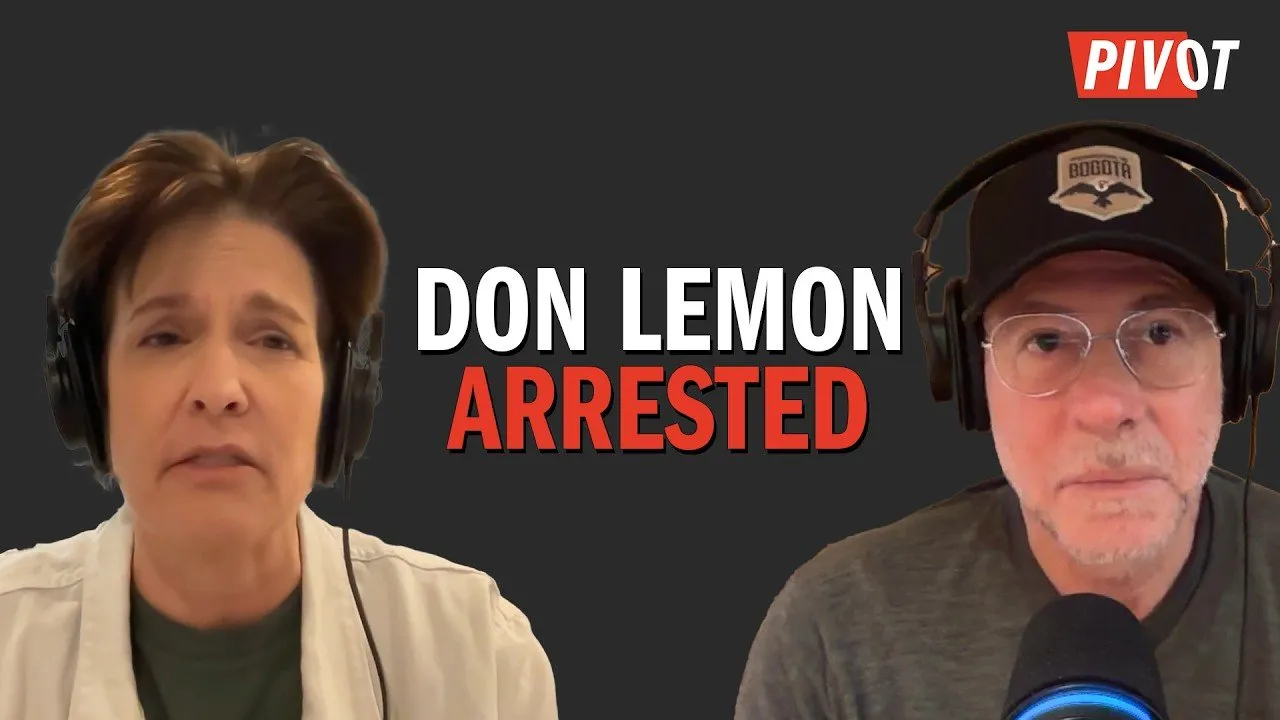
The recent arrest of journalist Don Lemon in Los Angeles marks a significant and potentially dangerous escalation in the relationship between the federal government and the press. During an emergency episode of Pivot, hosts Kara Swisher and Scott Galloway dissected the implications of the Justice Department’s move to charge Lemon for his presence at a Minnesota church protest. This event, which Swisher characterizes as an attack on the First Amendment, raises urgent questions about the independence of the judiciary, the safety of independent creators, and the economic consequences of state-sponsored repression. It is not merely a legal dispute; it is a signal that the boundaries of permissible speech are being redrawn.
Key Takeaways
- Federal Overreach: The arrest was reportedly ordered by Attorney General Pam Bondi, bypassing local resistance from courts and prosecutors in Los Angeles and Minnesota.
- Historical Precedents: Scott Galloway notes that criminalizing journalism often follows a specific historical pattern seen in nations like Turkey and Russia, serving as a precursor to broader authoritarianism.
- Economic Impact: There is a strong correlation between the suppression of the press and economic decline, as censorship stifles the "Creator Economy" and innovation.
- Institutional Complicity: The hosts argue that tech billionaires owning media platforms are engaging in a "soft capture" of the press, weakening institutional resistance to government overreach.
The Criminalization of Reporting
The core of the controversy surrounds the Department of Justice's decision to arrest Don Lemon and three other journalists. While the charges allege coordination with a protest group at a St. Paul church, Lemon has maintained that he was present solely to document the event as an independent journalist—a standard practice in field reporting. Notably, this federal action occurred despite a magistrate judge rejecting earlier attempts by the DOJ to bring charges and resistance from local prosecutors.
Kara Swisher argues that this move represents a desperate escalation by the administration. By targeting a high-profile, polarizing figure like Lemon, the government may be testing the public's tolerance for state intervention in the media. Swisher points out that Lemon’s transition from CNN anchor to independent creator on platforms like YouTube requires "street journalism," which inherently involves entering volatile environments.
"This was our attorney general, the federal government, specifically targeting specific journalists and essentially deciding to criminalize journalism, which at the end of the day, it converts politics into policing."
The concern is that if the government can successfully reclassify standard reporting activities—such as interviewing protesters inside a building—as criminal conspiracy or trespassing, it creates a chilling effect for all journalists. The distinction between a participant and an observer is being deliberately blurred to curb dissent.
State Capture of Truth: A Historical Perspective
Scott Galloway provides a critical historical framework for understanding these arrests, rejecting the notion that this is an isolated law enforcement issue. Drawing on 20th-century conflict history, Galloway suggests that the targeted arrest of journalists is rarely about enforcing statutes; it is about "shaping reality."
The Cycle of Repression
History indicates that authoritarian shifts often follow a predictable timeline. Galloway cites Turkey in 2013 and Russia in the early 2000s as prime examples. In both instances, initial arrests were framed as "law enforcement" actions against controversial figures whom the public was already divided on. However, once the normalization of arresting reporters occurred, the net widened rapidly.
"Once the state decides who may safely speak, politics stops being a debate and it becomes a permission structure."
This "permission structure" implies that political discourse ceases to be a right and becomes a privilege granted by the state. The ultimate result of this trajectory is not a more stable or truthful society, but one that is quieter, poorer, and angrier. Without an immediate "gag reflex" from the public and institutions to push back against these measures, the slide toward mass repression accelerates.
The Economic Consequences of Censorship
Beyond the constitutional crisis, there is a pragmatic economic argument against the repression of the press. Galloway highlights that the arrest of journalists almost always predates economic stagnation or collapse. Whether looking at examples in Egypt or Hungary, the suppression of information creates an environment of self-censorship that poisons the business climate.
The Threat to the Creator Economy
The digital economy is increasingly driven by independent creators. If the government establishes an "Orwellian environment" where only state-sanctioned political views are safe to express, it fundamentally undermines the marketplace of ideas necessary for innovation. Young entrepreneurs and independent journalists may retreat from the public sphere, fearing legal retribution for their content.
When a society creates a risk premium on speaking out, it damages the dynamism required for a robust economy. As Galloway notes, the fastest-growing sector of the digital economy involves people expressing views on global issues. Criminalizing those views based on political alignment introduces instability that markets generally abhor.
Tech Oligarchs and the "Soft Grab" of Power
While the arrest represents a "hard grab" of power, Swisher warns of a concurrent "soft grab" involving the wealthy owners of major media institutions. The silence of tech billionaires who own legacy media outlets—such as Jeff Bezos at the Washington Post or Larry Ellison’s influence via Oracle—is portrayed as complicity.
Swisher argues that these figures are "soft-pedaling" resistance to authoritarianism, perhaps to protect their broader business interests. Examples include:
- The cancellation of editorial endorsements.
- Changes in news leadership that encourage "both-sidesism" in the face of objective falsehoods.
- The lack of public defense for reporters who are targeted or have their materials seized.
This institutional weakness exacerbates the danger of the DOJ’s actions. If the owners of the platforms and publications refuse to stand behind the First Amendment, independent journalists like Lemon are left without the traditional legal and financial shields that once protected the press.
Conclusion: The Necessity of Pushback
The arrest of Don Lemon serves as a stress test for the First Amendment. The hosts emphasize that the First Amendment was placed first for a reason: the right to free speech, press, and assembly is the bedrock upon which all other rights rest. The government’s attempt to characterize reporting as criminal activity is a threshold that, once crossed, is difficult to reverse.
The consensus from the discussion is that waiting for de-escalation is a failing strategy. History shows that without robust, immediate opposition—from fellow journalists, business leaders, and the public—the scope of repression will only widen. As the administration appears willing to utilize the justice system to settle political scores, the defense of the press becomes synonymous with the defense of democracy itself.