Table of Contents
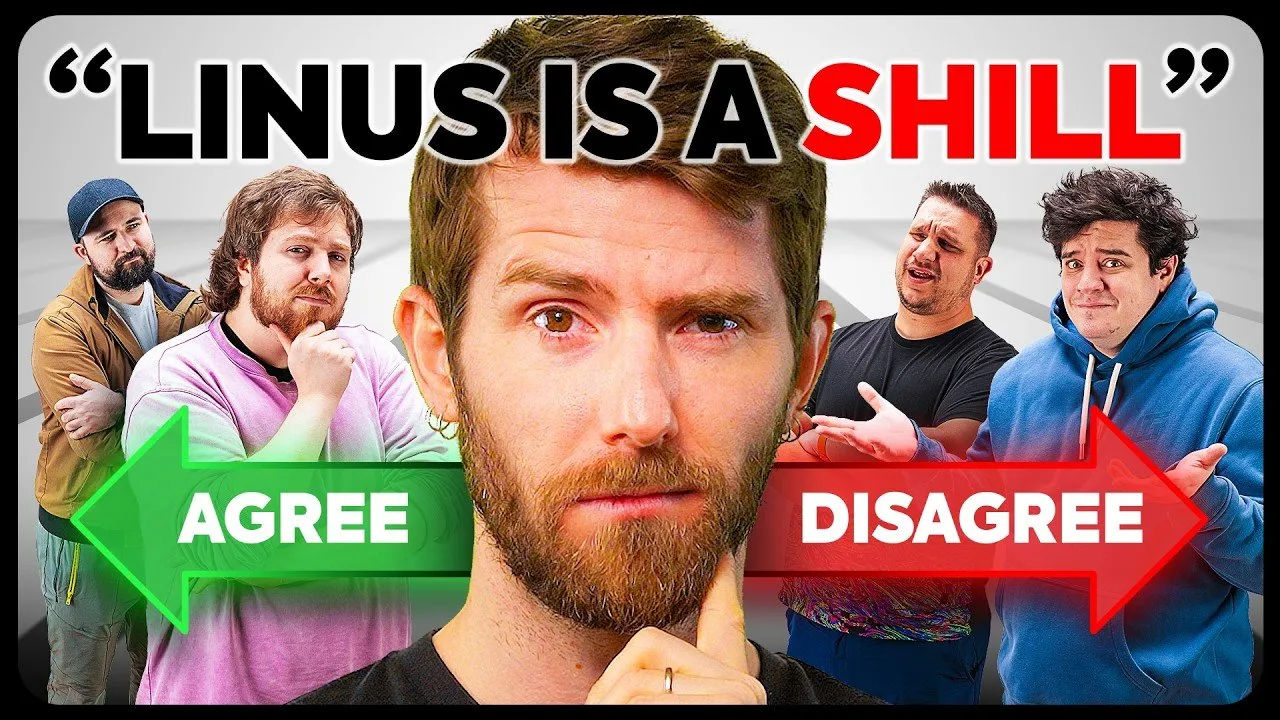
The writing team at Linus Media Group (LMG) recently held a wide-ranging debate on modern technology trends, revealing deep-seated divisions among the professionals behind some of the internet's most popular tech content. In a candid session, the writers sparred over the merits of open-source software, the utility of ray tracing, and the ethical implications of digital piracy, highlighting the subjective nature of the tech industry.
Key Points
- Open Source vs. Proprietary: The team largely rejected the idea that open-source software is "always" better, citing superior collaborative features in proprietary tools like Adobe Creative Cloud and Microsoft Office.
- The Ray Tracing Divide: While critics labeled real-time ray tracing a "pointless" marketing gimmick for most gamers, others acknowledged its visual impact in reflection-heavy scenarios and photo modes.
- Console vs. PC: Despite the technical superiority of PCs, the group conceded that the console experience often provides a more reliable, "plug-and-play" alternative for the average consumer.
- AI in Workflow: Perspectives on artificial intelligence varied from absolute opposition to practical integration, with some writers using AI to parse data or transcribe meetings, while others refuse to incorporate it into their creative processes.
The Dilemma of the Tech Reviewer
One of the most significant insights from the discussion centered on the struggle of tech reviewers to remain representative of the "average user." The team acknowledged that technical expertise and the pressure of rapid publication schedules often distance reviewers from the reality of long-term product ownership.
To me, I think that that's like the very crux of the dilemma of being a reviewer. What separates a good reviewer? It's literally the thing you are always striving for—to not just be an authority in the space, but to be an authority that can represent those ideas and the audience, which is always going to be at odds because you are always injecting your own perspectives.
The consensus among the writers was that consumers should never rely on a single source. Instead, they encouraged users to consult multiple reviewers to find a perspective that best aligns with their personal needs and use cases.
Ethical Grey Areas: Piracy and Monetization
The discussion shifted to darker, more philosophical territory when addressing the state of the modern internet. The group expressed widespread frustration with the "commodification of everything," particularly the trend of websites turning into marketplaces and the aggressive push toward subscription models that deny users true ownership of their digital content.
On the topic of piracy, the writers noted a nuance between general theft and the preservation of "dead media." While there was no universal endorsement of piracy, several team members argued that it serves as an essential, if technically illegal, safeguard when corporate licensing keeps content in digital limbo.
We are losing media and that's where I think pirating might be the one edge case where I would be willing to break my line. If they're big enough that I can steal it from a big player like a corporation, then they're fine.
The Future of Computing and Gaming
Looking toward the future of the operating system wars, the panel was skeptical about Linux overtaking Windows in the mainstream, despite the recent success of handheld devices like the Steam Deck. The team cited a persistent "chicken and egg" problem: developers will not prioritize Linux optimization without a massive user base, and the average user remains hesitant to switch due to the steep learning curve and the perceived hostility of some community support forums.
As for hardware innovations like Wi-Fi 7, the group remained traditional. Despite the convenience of wireless connectivity, the consensus remains that for professional work and stable competitive gaming, a physical wired connection remains the gold standard. The writers concluded by noting that while the technology landscape is constantly shifting, the core struggle—balancing convenience, performance, and ethical ownership—remains a permanent fixture of the hobby.