Table of Contents
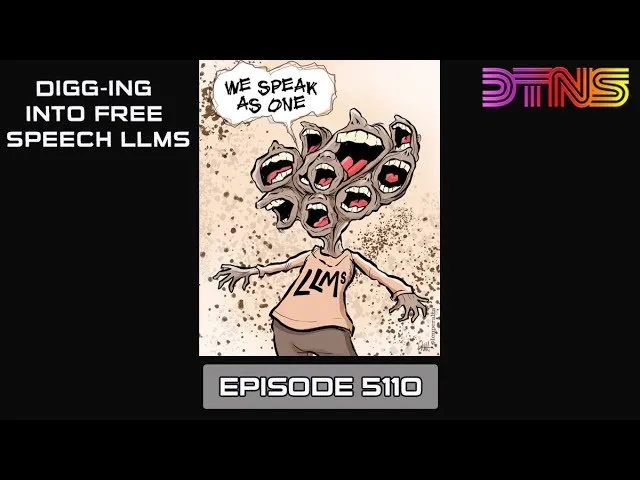
Social media pioneers Kevin Rose and Alexis Ohanian have officially relaunched news aggregator Digg, aiming to challenge Reddit’s market dominance through algorithmic innovation and authenticated community features. In parallel developments regarding digital governance, legal scholars are increasingly scrutinizing whether the output of Large Language Models (LLMs) qualifies for protection under the First Amendment, a debate that could shape the future of artificial intelligence regulation and liability.
Key Points
- Digg Relaunch: Under the ownership of Kevin Rose and Reddit co-founder Alexis Ohanian, Digg has entered a beta phase focused on authentic participation and combating bots through user verification.
- AI Legal Debate: Experts are questioning whether AI-generated text constitutes "speech" protected by the US Constitution, largely due to the lack of human intent behind algorithmic output.
- Google Gemini Update: Google has rolled out "Personal Intelligence" for Gemini, allowing the AI to access user data from Gmail, Docs, and Photos to provide hyper-personalized context.
- Wikimedia Strategy: The non-profit behind Wikipedia has secured high-throughput API partnerships with Amazon, Meta, Microsoft, and Perplexity to monetize commercial data scraping.
- Spotify Pricing: The streaming giant announced its third price hike since 2023 for US subscribers, raising the individual premium plan to $12.99 monthly.
The Resurrection of Digg
Following its acquisition in March, the revamped Digg has officially moved into a public beta phase. The platform, originally a precursor to Reddit, is attempting to differentiate itself in a crowded social media landscape by focusing on trust and authenticity. The new ownership team, comprising original founder Kevin Rose and Reddit co-founder Alexis Ohanian, is leveraging algorithmic verification to solve the "dead internet" theory—the idea that online activity is increasingly dominated by bots.
The platform’s new architecture allows users to create bespoke communities, similar to subreddits, but with potential features for product ownership verification. This would allow communities to restrict discussions to verified owners of specific items, theoretically raising the quality of discourse and reviews.
"They are hoping to use some algorithmic magic to be able to separate authenticated, authentic participation from fake bots and fight spam. If you have some way to verify... that allows a little higher level of trust. I think it would go a long way to expanding user experience into a less skeptical environment."
While the interface has been praised for its modern, Discord-esque design, industry analysts remain skeptical about the platform's ability to migrate entrenched communities from Reddit. The success of the relaunch will likely depend on whether Digg can offer a distinct utility, such as verified reviews or higher-quality discourse, rather than simply replicating existing forum mechanics.
Constitutional Questions: LLMs and the First Amendment
As generative AI becomes ubiquitous, a complex legal debate is emerging regarding the constitutional status of AI outputs. Data scientist and professor Andrea Jones-Rooy argues that the application of the First Amendment to Large Language Models hinges on the legal concept of intent.
The core legal friction lies in the definition of speech. While the First Amendment protects the expression of beliefs, LLMs do not hold beliefs; they predict text based on probability. Consequently, if an AI generates harmful content or incites violence, assigning liability becomes difficult if the algorithm itself lacks the intent to harm.
The "Buzzsaw" Analogy
Legal scholars are beginning to categorize LLMs not as speakers, but as tools or agents. Under this framework, liability shifts from speech regulation to product safety negligence.
"I view LLMs as a buzzsaw. There are certain things it needs to have guards up to stop you from cutting off your finger. But in the end, you should know you're using a buzzsaw. And if you want to take that guardrail off your buzzsaw, well, then you did it and you're responsible for it."
However, a counter-argument exists regarding the "right to hear." Even if the AI is not a human speaker, the First Amendment also protects the consumer's right to receive information and diverse viewpoints. Regulating or censoring AI outputs could theoretically infringe upon a user's constitutional right to access information, creating a significant tension between safety regulations and civil liberties.
Generative AI Moves to Personalization
Google has officially begun integrating Gemini deeper into its ecosystem with a feature dubbed "Personal Intelligence." Currently off by default, this setting allows the AI to index information from a user's Gmail, Google Photos, and Drive to provide context-aware responses. For example, the AI could suggest appropriate tires for a vehicle by analyzing family vacation photos to determine driving terrain, or summarize travel itineraries directly from email confirmations.
Simultaneously, OpenAI has launched ChatGPT Translate, a standalone web tool designed to compete with Google Translate. Unlike traditional translation services, this tool utilizes the contextual capabilities of LLMs to adjust the tone of translations—offering options for "business," "fluent," or "simplified" phrasing. This move signals a shift from general-purpose chatbots to specialized, productized AI applications.
Market Shifts and Sustainability
In a move to secure its financial future, the Wikimedia Foundation unveiled commercial partnerships with major tech players including Amazon, Meta, Microsoft, and Perplexity. These agreements provide paid, high-throughput API access to Wikipedia’s content. This strategy addresses the "server cost" crisis caused by AI companies scraping data at scale, ensuring that the entities profiting from Wikipedia's data contribute to its maintenance.
In the streaming sector, Spotify is adjusting its pricing strategy again to improve margins. The company is increasing subscription fees in the United States, Estonia, and Latvia. The US individual plan will rise from $11.99 to $12.99, while the family plan jumps to $21.99. Spotify justifies the hike by pointing to increased value delivery, including the rollout of audiobooks and impending high-fidelity audio features.
What's Next
The relaunch of Digg represents a significant test case for the demand for "verified" social media, potentially signaling a shift away from anonymous open forums if successful. On the legal front, expect 2024 and 2025 to be defined by court cases establishing the liability frameworks for AI, specifically whether courts will treat LLMs as product manufacturers (product liability) or publishers (speech liability). As these technologies integrate deeper into personal data via tools like Google Gemini, the friction between utility, privacy, and regulation will likely intensify.