
Table of Contents
The tech landscape is currently dominated by breathless headlines predicting an immediate AI job apocalypse. From high-profile layoffs to claims that large language models (LLMs) are essentially equivalent to an "army of PhDs," the gap between viral hype and workplace reality is widening. As we navigate this period of rapid innovation, it is essential to look past the surface-level reporting and analyze what is actually happening on the ground.
Key Takeaways
- Distinguishing Correlation from Causation: Corporate layoffs, such as those at Block, are often driven by pandemic-era overhiring and market corrections rather than AI-driven automation.
- The Limits of Anthropomorphization: Describing AI models by human education levels is scientifically misleading; these tools are specialized, not general-purpose geniuses.
- The Reality of AI Coding: While agentic tools have changed how developers work, they haven't replaced the need for human oversight, architecture, or critical judgment.
- Vibe Reporting vs. Evidence: Much of the current media coverage relies on speculation, while actual data from professionals suggests a more nuanced, gradual integration of AI.
The Myth of the AI-Driven Layoff
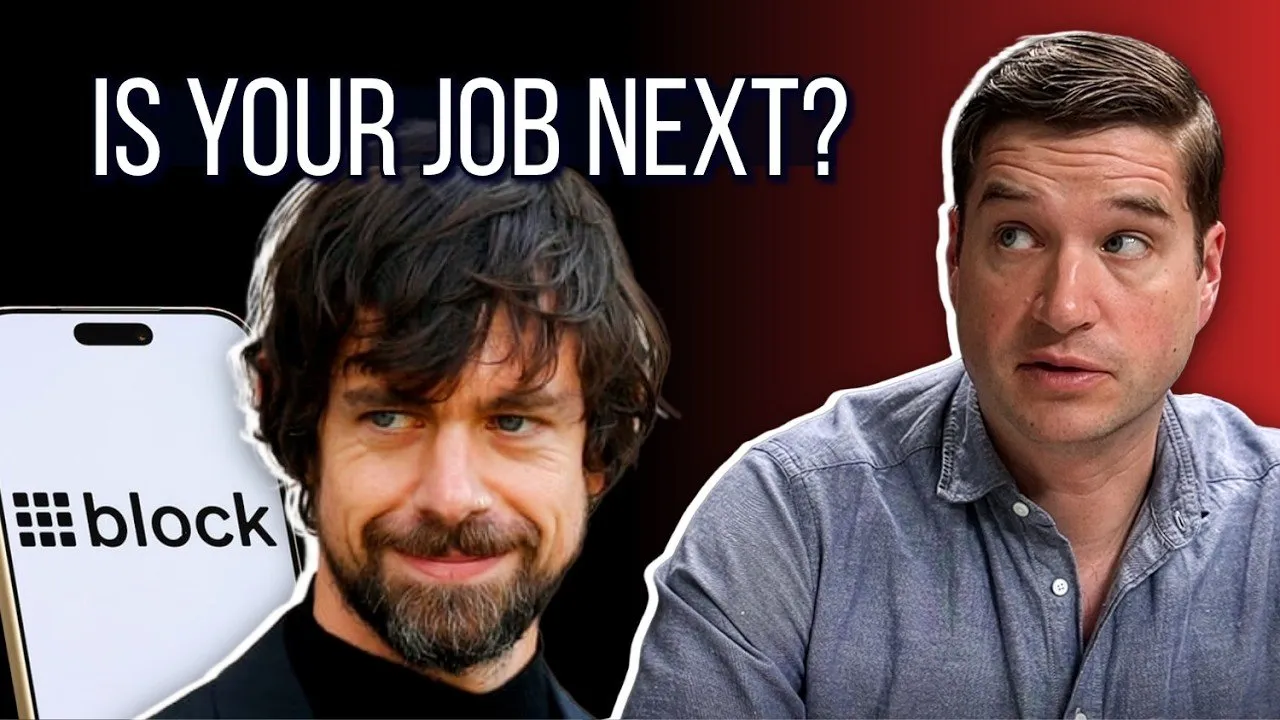
Recently, Jack Dorsey, CEO of the fintech company Block, announced a significant reduction in his company’s workforce. Major outlets were quick to link these cuts directly to AI, with headlines suggesting that artificial intelligence made thousands of jobs redundant. However, a closer look at the data suggests this narrative is more about AI washing—using the buzz around artificial intelligence to justify necessary financial restructuring—than actual automation.
The Pandemic Overhiring Context
Between 2019 and 2025, companies like Block saw massive, rapid expansion. Many firms hired aggressively during the pandemic boom, only to face market cooling shortly after. When companies announce layoffs today, they are frequently correcting for those over-hired cohorts. By attributing these cuts to AI, executives appear forward-thinking and tech-forward rather than acknowledging the miscalculations of the past few years.
This isn't about AI, but that is a smart way to sell it if you want to see your stock jump 20%. — Ethan Mollick
Evaluating AI Intelligence: A Reality Check
The marketing surrounding AI often leans on human metaphors. We hear about "data centers filled with geniuses" or "PhD-level intelligence." However, putting these models to the test often yields surprising results. In a notable experiment, a teaching assistant at Cornell University ran his freshman computer science course assignments through top-tier AI models. The results were far from doctoral-level mastery.
Why "PhD-Level" Labels Fail
The models struggled with complex, multi-step instructions, often hallucinating or abandoning specific assignment constraints. Crucially, they frequently failed to outperform the baseline requirements for a basic introductory course. The lesson here is clear: LLMs are not general-purpose, educated brains. They are specialized pattern-matching tools that function best when guided by a human expert who understands the domain and can verify the output.
Inside the Developer's Workflow
To understand the true impact of AI on productivity, it is necessary to look at the professionals actually writing code. Through a survey of hundreds of developers, a more grounded picture emerges. The "hyper-agentic" approach—where autonomous systems manage every aspect of programming—is largely absent in the professional world. Instead, developers are using AI as a sophisticated assistant.
The Hidden Costs of AI Assistance
While some developers report massive speed gains, others note a paradox: AI makes the easy parts of the job easier, but adds complexity to the rest. Tasks like boilerplate generation are faster, but the time saved is often consumed by prompt engineering, iterative debugging, and the increased scrutiny required during code review. As one engineer noted, you cannot simply trust generated code; you must verify it, which requires just as much, if not more, technical expertise than writing it from scratch.
Conclusion
The narrative that AI will immediately replace the workforce is an example of "vibe reporting" that ignores the complexities of organizational change and technical implementation. While AI is undeniably a powerful tool, it is not a magic solution that renders human skill and judgment obsolete. By moving away from hyperbolic claims and focusing on how these tools actually function in real-world professional environments, we can prepare for the future with clarity rather than panic. The future of work won't be defined by AI acting alone, but by our ability to integrate these tools effectively into the human-led workflows that drive innovation.




%20%7C%20AI%20Reality%20Check%20%7C%20Cal%20Newport)