
Table of Contents
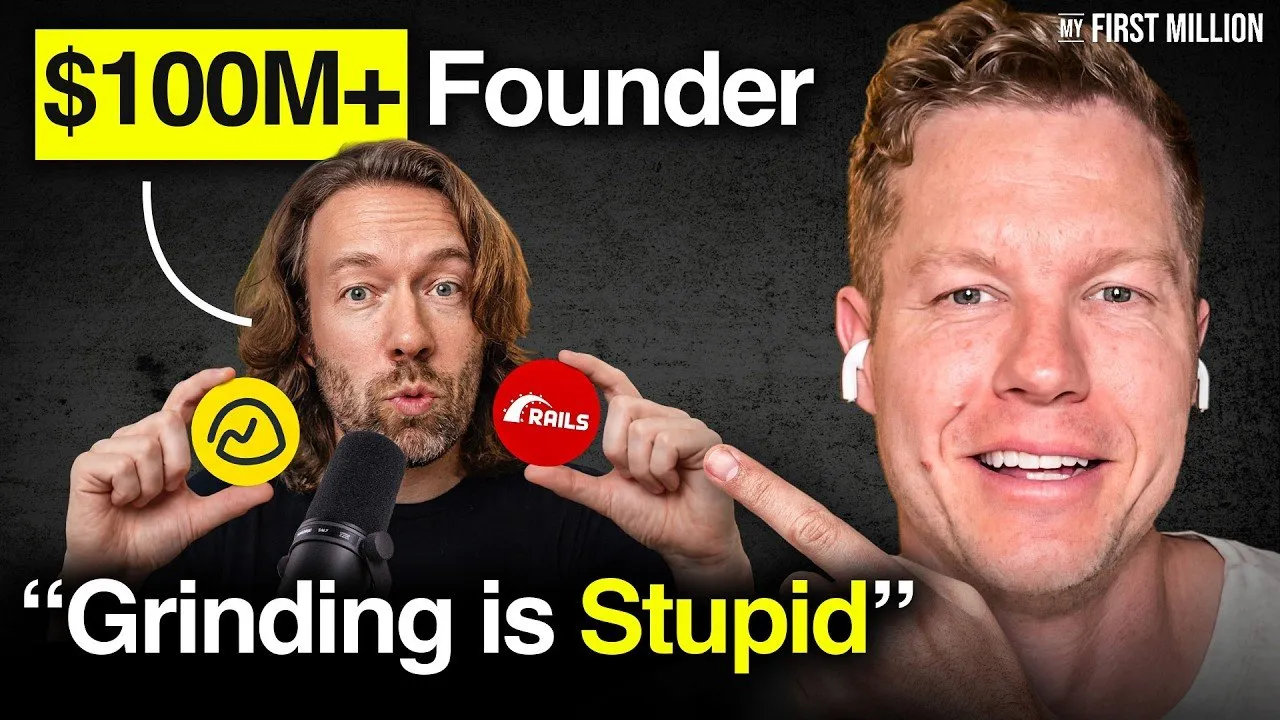
Building a successful, multimillion-dollar company isn't about grinding 100-hour weeks or blindly following the latest Silicon Valley playbook. According to David Heinemeier Hansson (DHH), co-founder of 37signals and creator of Ruby on Rails, the path to sustained excellence requires something far more controversial: the willingness to be unapologetically opinionated, the courage to operate without venture capital, and the wisdom to know when to ignore "best practices" in favor of your own intuition.
Key Takeaways
- Profitability as a Strategy: Maintaining high margins is the ultimate form of creative freedom, allowing founders to build what they value rather than what investors demand.
- The Power of Constraints: Resource scarcity, rather than abundance, is often the true catalyst for innovation and original problem-solving.
- Trust Your Taste: Relying on internal intuition and aesthetic preference often yields better results than running thousands of A/B tests to optimize for marginal gains.
- Avoid "Resulting": Never judge a high-quality decision by a single negative outcome. Look at the long-term trend line of your choices.
The Philosophy of Independence
For over two decades, 37signals has maintained a unique position in the SaaS world by choosing to remain a private, profitable company. Unlike many competitors that sacrifice autonomy for rapid scaling, DHH argues that the greatest privilege of being private is the ability to ignore the noise. When you aren't beholden to public market pressure or investor whims, you gain the luxury of "playing your own game."
Teaching Instead of Spending
Early on, the team realized they couldn't out-spend their competition. Instead, they focused on out-teaching them. By documenting their philosophy, sharing lessons from the "trenches," and being ruthlessly honest about their processes, they built a brand that didn't need a massive ad budget to reach an audience. They turned their operating manual into their marketing strategy.
"When you don't have a bunch of money to buy ads and awareness that way, you have to earn it. And the way to earn it is simply to be interesting."
The Strategic Advantage of Ignorance
Many entrepreneurs suffer from "imposter syndrome" because they assume they need to wait until they are seasoned veterans to offer advice. DHH challenges this, suggesting that the "liquid intelligence" of your early career—the sheer lack of baggage and fear—is a competitive asset. When you don't know the "rules," you aren't locked into the tired paradigms that constrain industry incumbents.
Breaking Out of the Echo Chamber
Because 37signals was born in Chicago, far from the insular tech culture of Silicon Valley, the founders avoided the "uniform thinking" that often plagues startups in coastal hubs. This distance provided the mental space to develop original approaches to software design and company culture, many of which (like those found in their book Rework) remain relevant today.
Data vs. Taste: The Luxury of Margins
There is a persistent belief that every business decision must be backed by a mountain of data. DHH suggests that while statistics have their place, relying on them too heavily can lead to a "grind" mentality. The team spent a decade working with data scientists, only to realize they rarely followed the data when it contradicted their intuition.
"The more margin we have, the more freedom we have. The more freedom we have, the more we could just focus our time on what we like to do."
When a company is profitable, it doesn't need to squeeze the lemon for every last drop of conversion data. Instead, founders can focus on high-quality work, trusting their taste to guide them toward products that people actually want to use. Data can optimize, but it rarely innovates.
Navigating the AI Revolution
The recent explosion in AI technology has fundamentally shifted how DHH approaches his own work. Initially skeptical of "autocomplete" style coding assistants that interrupted his creative flow, he has since embraced AI agents as a way to "grow 18 arms and seven more brains." He notes that the sudden capability leap in these models has led to the most significant shift in his workflow in over 25 years.
The "Nobody Knows Anything" Principle
Despite his success, DHH remains humble about the future of tech. Whether discussing climate change, the rapid growth of companies like Shopify (where he serves on the board), or the future of AGI, he advocates for an honest admission: nobody truly knows exactly how these systems will evolve. The best strategy is to remain curious and continue shipping work that matters.
Conclusion
True success isn't about reaching an exit; it's about building a station in life where you don't have to do work you despise. By valuing independence, embracing the "now" rather than chasing an hypothetical exit, and refusing to pay the "tax" of performative business tactics, founders can build organizations that last. Whether you are a solo developer or leading a large team, the lesson is clear: if you can fund your own operations, you are the only one who gets to decide how the game is played.

![Bitcoin: An Unfortunate Pattern [Update]](/content/images/size/w1304/format/webp/2026/03/bitcoin-unfortunate-pattern-update.jpg)
)