Table of Contents
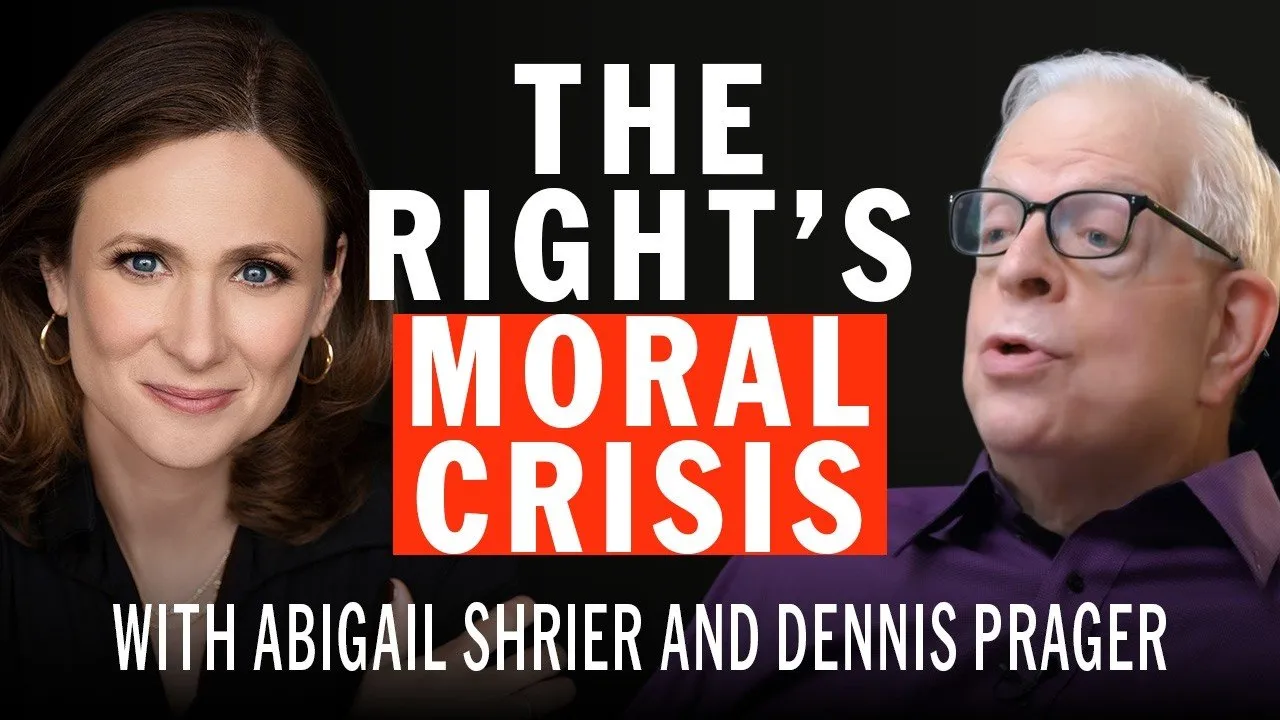
In a world increasingly dominated by subjective feelings, the distinction between objective right and wrong is under siege. Dennis Prager, a prominent intellectual, radio host, and co-founder of PragerU, has spent half a century arguing that this moral erosion is not an accident. It is the direct result of a society drifting away from its Judeo-Christian foundations. Even in the face of a life-altering spinal cord injury that left him paralyzed, Prager remains steadfast in his mission to defend the necessity of God as the ultimate anchor for objective morality.
Key Takeaways
- Without a metaphysical foundation like God, morality risks devolving into nothing more than personal opinion and shifting emotions.
- Judeo-Christian values provide a necessary framework for recognizing the unique, objective value of human life.
- Courage is required to identify and confront "feelings-based" morality, which often prioritizes sentiment over logical moral reasoning.
- A meaningful life is rooted in gratitude, which is severely undermined by the modern tendency to hold toxic expectations of life.
- The defense of Western civilization requires a unified front that recognizes the vital interplay between Jewish and Christian traditions.
The Moral Consequence of a Secular Society
For decades, Prager has presented a provocative test to high school students: if you were forced to choose, would you save a drowning stranger or your beloved dog? Consistently, he finds that roughly two-thirds of students choose the dog. He argues that this is not merely a quirk of youth but a symptom of a deeper moral displacement.
From Universal Rights to Subjective Feelings
Prager posits that without belief in a Creator, the inherent value of a human being is essentially arbitrary. If humans are not created in the image of God, they are simply part of the animal kingdom. When feelings dictate moral priority, the "stranger" loses their status, and the emotional connection to a pet takes precedence. As Prager notes, this shift has profound consequences for how we treat one another in public discourse.
If you don't believe in God, then you don't believe that the human being is created in God's image, obviously. And that's what gives us our biblical basis for the unique value of the human being.
God's Necessity Over God's Existence
While many intellectuals get trapped in the debate over whether God exists, Prager focuses on a different, more urgent question: Is God necessary? He argues that debating existence is less effective than highlighting the functional requirement of God for a functioning society. If there is no objective moral lawgiver, we are left only with our own desires, making it impossible to hold anyone accountable for "evil" outside of personal distaste.
The Role of Gratitude
Prager’s approach to life, even following his recent catastrophic fall, is rooted in a philosophy of gratitude. He argues that true happiness is impossible without it, and gratitude is the first casualty of unmet expectations. By maintaining a worldview where one does not "expect" life to be pain-free, he has managed to retain his clarity of mind and purpose despite extreme physical adversity.
Defending the Judeo-Christian Foundation
Prager highlights the historical importance of the Judeo-Christian tradition in fostering liberty. He points to the Liberty Bell, which features a quote from Leviticus, as evidence that the American experiment was built upon these ancient texts. He argues that the Jewish and Christian traditions are interdependent: without the Jewish roots, there is no Christianity, and without the Christian reach, these values would not have permeated the globe.
Addressing Moral Blindness
The conversation often turns to why religious individuals sometimes commit atrocities or embrace morally bankrupt ideologies. Prager distinguishes between the universal moral call of Judeo-Christianity and other belief systems that prioritize theological sectarianism over universal human decency. He maintains that when religious groups—or, in the modern context, segments of the political right—fall into antisemitism or nihilism, it is a failure to live up to the actual, life-affirming demands of their own scripture.
The Antidote to Modern Nihilism
As political discourse grows more divisive, Prager warns against the tendency of various movements to divide the "anti-left" through conspiracy theories and blood libels. He stresses that the antidote to these trends is not just intellectual debate, but the courage to call out evil where it exists, regardless of the political cost or the personality involved.
The antidote is courage. It's always the antidote to what is bad. People have to come out and say they're advocating bad indeed evil ideas.
Focusing on Deeds, Not Intentions
Prager challenges the modern obsession with determining what is in someone’s "heart." Instead, he advocates for an ethics of action. In both his personal life and his public intellectual work, he argues that we should focus on the objective impact of a person’s words and actions rather than guessing their internal moral state. By focusing on deeds, we create a more stable, predictable, and moral public square.
Conclusion
The battle over good and evil is far from over; it is being fought in our schools, our boardrooms, and our digital spaces every day. Dennis Prager’s work serves as a reminder that morality is not a luxury, but a necessity for the survival of a free society. By anchoring our values in something higher than our own fluctuating emotions, we can regain the moral clarity required to distinguish the truly good from the merely popular.
![Bitcoin Is on Sale [How to Buy It in 2026]](/content/images/size/w1304/format/webp/2026/03/how-to-buy-bitcoin-2026.jpg)