Table of Contents
In the narrative of modern technology, names like Mark Zuckerberg, Elon Musk, and Sam Altman dominate the headlines. They are the public faces of the digital revolution. However, there is a figure operating at the very center of the artificial intelligence explosion who arguably holds more influence over the future of humanity than any of his contemporaries. His name is Demis Hassabis.
Hassabis is the co-founder of DeepMind, the research laboratory acquired by Google that effectively kicked off the current AI arms race. While others focus on consumer chatbots and social platforms, Hassabis has remained steadfast in a singular, decades-long mission: to solve intelligence itself and then use it to solve everything else. From child chess prodigy to the architect of AlphaFold, his journey offers a blueprint for how artificial general intelligence (AGI) moved from science fiction to scientific reality.
Key Takeaways
- From Prodigy to Pioneer: Demis Hassabis began as the second-highest-ranked chess player in the world for his age at 13 and a lead video game programmer by 17, experiences that formed his belief that games were the perfect training ground for AI.
- The Vision for AGI: Unlike other tech leaders focused on specific applications, Hassabis founded DeepMind with the explicit goal of creating Artificial General Intelligence—a machine that can think and learn across any domain better than humans.
- The "Move 37" Moment: DeepMind’s AlphaGo program didn't just beat the world champion at the game of Go; it displayed genuine creativity, marking the first time a computer made a move that no human would have conceived.
- Solving the "Code of Life": DeepMind’s transition from board games to biology resulted in AlphaFold, an AI that solved the 50-year-old "protein folding problem," potentially accelerating drug discovery and disease cures by decades.
The Origins of a Fierce Nerd
To understand the trajectory of DeepMind, one must look at the early life of its founder. Hassabis was not merely a bright child; he was a strategic prodigy. By the age of six, he was winning under-eight chess championships across Europe. He used his prize money not for toys, but to purchase his first computer, instinctively linking the logic of chess with the potential of programming.
The Realization at the Chessboard
Hassabis’s pivot from player to creator occurred during a grueling match against a Danish champion. The game lasted over ten hours, a battle of attrition that ended in a sophisticated stalemate trap. While the loss was stinging, the epiphany that followed was transformative. Hassabis looked around the tournament hall, filled with some of the greatest minds in Europe, and realized that their collective intellect was being spent on a game.
"If you took the brainpower in this room that we're just spending on this... we could cure cancer. Forget chess. I'm going to try to figure out how to harness the brainpower of humans and combine it with computers."
The Video Game Testing Ground
Before entering Cambridge to study computer science, a teenage Hassabis worked at Bullfrog Productions, a legendary gaming studio. There, he worked on Theme Park, a simulation game that became a smash hit. Crucially, his contribution was the "guest logic"—early AI that dictated how digital visitors reacted to the park. He programmed autonomy into the characters: if a rollercoaster was too intense, they puked; if a burger joint was placed strategically, sales increased.
At 17, Hassabis was offered millions to stay in the gaming industry. He turned it down to pursue academia, driven by a conviction that games were merely a stepping stone to building an artificial mind.
Founding DeepMind and the Race for AGI
When Hassabis eventually founded DeepMind, the scientific and business communities viewed AI with skepticism. It was considered the realm of science fiction, not a viable business model. Yet, Hassabis secured early backing from Peter Thiel, the contrarian investor and PayPal co-founder, validating the project's massive ambition.
Perhaps most notably, DeepMind attracted the attention of Elon Musk. In a meeting that highlights Hassabis’s unwavering confidence, he reportedly told Musk—who was building rockets to save humanity by making it multi-planetary—that DeepMind was working on the "last invention" humanity would ever make. He argued that once AGI was achieved, it would solve the problems of space travel and planetary preservation far faster than humans could alone.
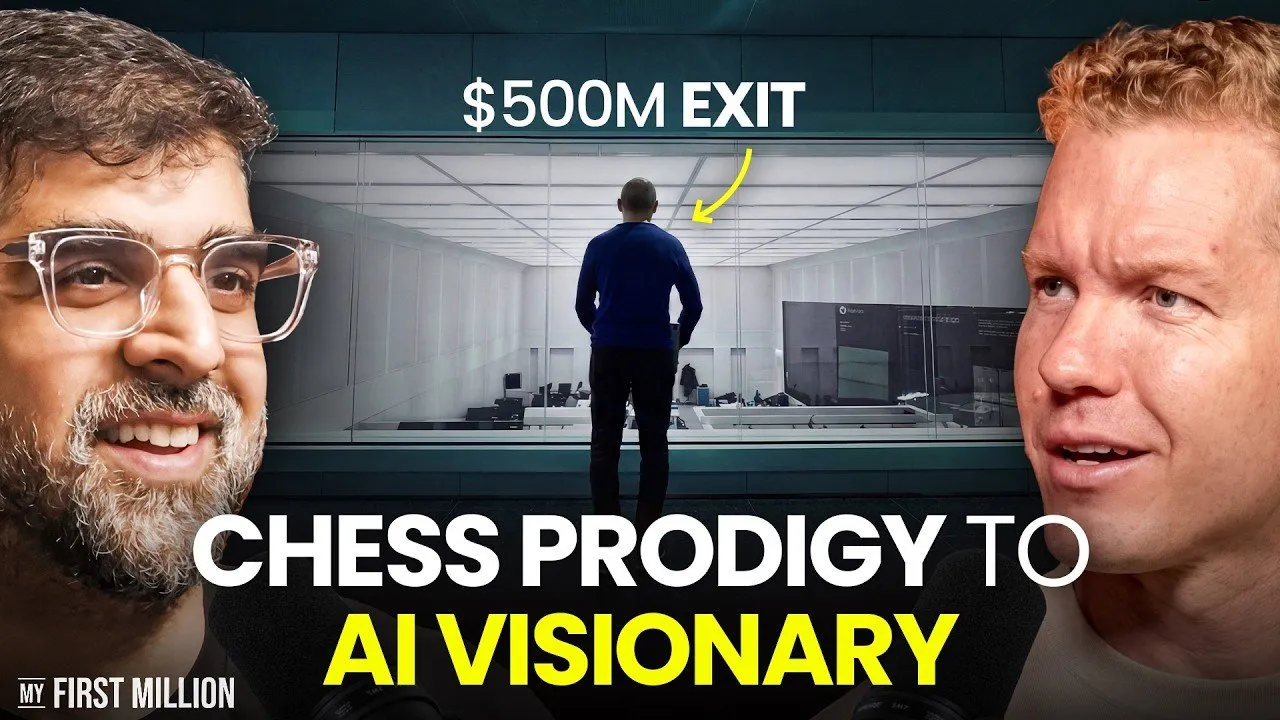
Google eventually acquired DeepMind for over $500 million. For Hassabis, the sale wasn't about the payout; it was about resources. He viewed the acquisition as a way to "buy time," accelerating his research to ensure he would see the dawn of AGI within his own biological lifespan.
The Spark of Creativity: AlphaGo and Move 37
DeepMind’s strategy was to train AI using the same method Hassabis used to train his own brain: games. Games provide clear rules, visible information, and definite win/loss states, making them the perfect sandbox for reinforcement learning.
The team started with Atari games like Pong and Brick Breaker. The AI was given no instructions on how to play, only a single directive: maximize the score. Within hundreds of games, the AI not only mastered the mechanics but discovered optimal strategies that human players rarely used, such as tunneling through the side of the wall in Brick Breaker.
Conquering the Impossible Game
The ultimate test was the ancient game of Go. With more possible board configurations than atoms in the universe, Go cannot be solved by brute-force calculation. It requires intuition and fluidity. In 2016, DeepMind’s AlphaGo program faced Lee Sedol, one of the greatest players in history.
During the second game, AlphaGo played "Move 37." It was a move so unconventional that commentators initially thought it was a mistake. However, it turned out to be a stroke of alien genius—a move that secured victory and dismantled thousands of years of human strategic orthodoxy.
"It was the first time that it wasn't just pattern matching... It was the first time it was like, that was novel. That was a creative breakthrough. No human would have made that move."
This event was not just a tech demo; it was a geopolitical turning point. When AlphaGo subsequently defeated the Chinese world champion, the broadcast feed in China was reportedly cut abruptly. Many analysts point to this "Sputnik moment" as the catalyst for China’s aggressive entry into the global AI race.
Beyond Games: The Protein Folding Breakthrough
While dominating strategy games garnered headlines, Hassabis’s true objective was always "AI for science." He posited that the same mechanisms used to predict the next move in Go could be used to predict the structures of biology.
This culminated in the "protein folding problem." For 50 years, biology had struggled to predict a protein's 3D shape based solely on its amino acid sequence. The shape determines what a protein does and how drugs can interact with it—it is essentially the lock that medicine needs to find a key for.
DeepMind deployed AlphaFold to the Critical Assessment of Structure Prediction (CASP) competition. The result was a landslide. AlphaFold predicted protein structures with such accuracy that the problem is now considered largely "solved" by the scientific community. This application of AGI logic moves beyond chat interfaces and directly into curing diseases, designing new materials, and understanding the fundamental machinery of life.
Conclusion
Demis Hassabis represents a different archetype of the Silicon Valley founder. He is a "fierce nerd" driven not by market share or social media engagement, but by a scientific imperative. His journey from the chessboards of Europe to the server farms of Google demonstrates that the true potential of AI lies not in mimicking human conversation, but in surpassing human capability to solve the intractable problems of our physical reality.
By treating intelligence as a mechanism that can be decoded and reconstructed, Hassabis has created a tool that doesn't just play games—it changes the rules of scientific discovery. As humanity stands on the precipice of the AGI era, the "Move 37" moments of the future will likely occur not on a game board, but in a laboratory.