
Table of Contents
The startup world often celebrates the "hacker" ethos—a culture of moving fast, breaking things, and bending reality to fit a vision. However, a recent, explosive controversy involving the compliance startup Delve has forced the industry to confront the dangerous edge where "hustling" bleeds into outright fraud. As investors and founders alike grapple with the implications, one truth has become clear: in an era of AI-driven shortcuts, the fundamental requirement of trust remains non-negotiable.
Key Takeaways
- The Delve Scandal: Allegations suggest the company may have produced hundreds of identical, boilerplate SOC 2 compliance reports, raising serious questions about the validity of their automated processes.
- The "Vibe Coding" Reality: While AI tools have drastically lowered the barrier to entry, they have also created a "bifurcation" where some founders use technology to scale operations, while others use it to hide operational deficiencies.
- Distinguishing Hustle from Fraud: Investors emphasize that while "bending the rules" can be a hallmark of a visionary founder, it must never come at the expense of honesty regarding customer status, financials, or legal standing.
- Diligence in the AI Age: The ease of creating "AI-slop" or fake business documents means that due diligence must evolve to verify the human and operational reality behind the digital claims.
The Delve Controversy: Compliance Theater or Innovation?
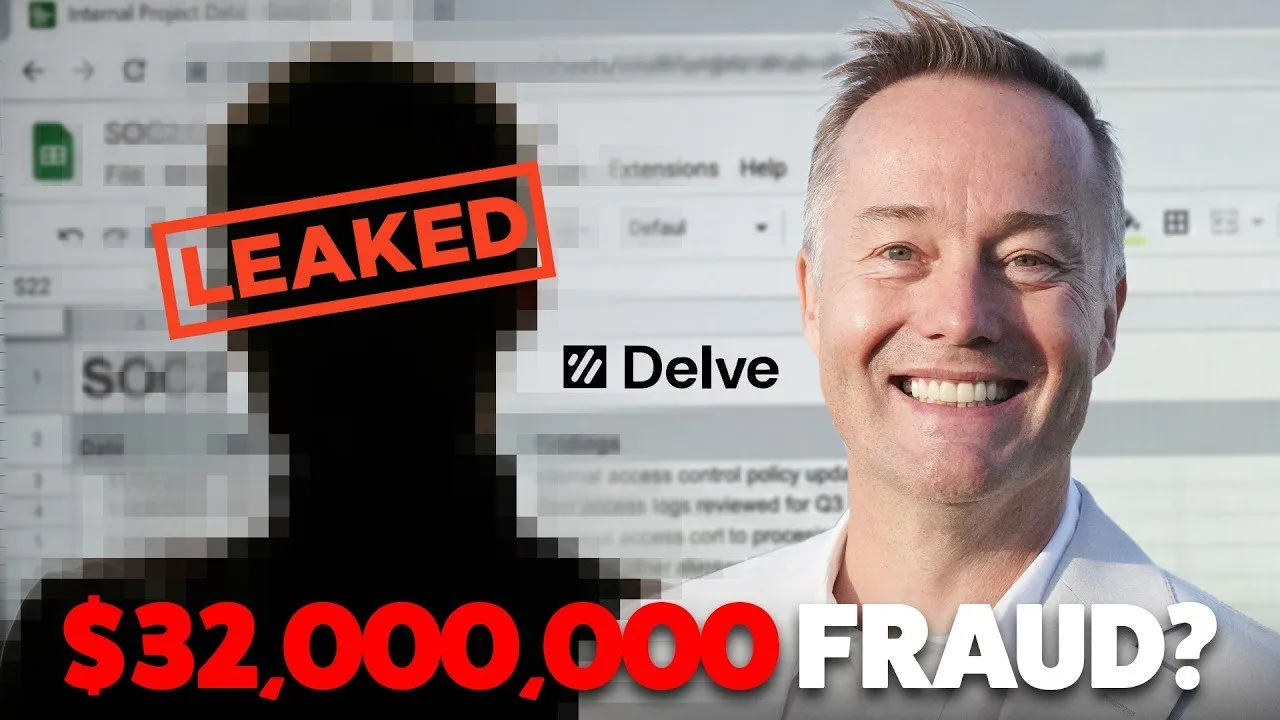
The tech industry is currently reeling from an investigative report, leaked anonymously, alleging that Delve—a startup backed by prominent investors and accelerators—functioned as a "compliance factory." The core accusation is stark: instead of providing rigorous, personalized SOC 2 audits, the company allegedly generated hundreds of nearly identical reports, swapping only client logos and names. Even more alarming, these reports reportedly showed zero auditor findings, a statistical impossibility in the context of genuine security assessments.
"This is a genuinely unfortunate situation, not just for Delve's customers, but the entire industry that effectively runs on trust." — Ryan Madavi, Founder and CEO of Ceel
The repercussions are not merely theoretical. Following the leak, further reports surfaced involving data security lapses, including exposed Stripe tokens and personal background checks. If these allegations are proven true, they represent a betrayal of the trust that underpins the entire B2B enterprise software stack. When a company sells "compliance," they are selling a guarantee of safety; if that guarantee is a fabrication, the downstream risk to customers is immense.
The Bifurcation: Who is Actually Leveling Up?
The rise of Large Language Models (LLMs) and coding agents has triggered a gold rush. Startups that once required a team of ten now function with a team of two, using AI to handle tasks that previously required expensive manual labor. However, this shift has created a clear divide in the startup ecosystem.
The Rise of the "Super-Founder"
For many, AI is a force multiplier. Founders who were once weak in design, legal operations, or marketing are now using AI agents to achieve professional-grade results across the board. These "super-founders" are essentially mutants—they have absorbed the collective capabilities of several traditional roles, allowing them to iterate faster than anyone thought possible just two years ago.
The "Vibe Coding" Trap
Conversely, there is a segment of the market that has not "leveled up." These founders rely on AI to mask their lack of execution. They produce decks that look perfect and codebases that run, but underneath, the business lacks the fundamental customer-market fit or operational integrity. This is the danger zone where "vibe coding"—coding via LLM prompts without deep understanding—becomes a liability.
Maintaining Integrity in a High-Stakes Environment
The line between an ambitious sales pitch and securities fraud is thinner than many realize. As an investor, the process of vetting a startup relies heavily on the trust of the founder. When a founder exaggerates their pipeline, lists potential clients as "customers," or misrepresents employee counts, they aren't just "hustling"; they are crossing a legal threshold.
"When you are doing something for a selfish reason, for your own gain, you have to put it through the lens of the law." — Jason Calacanis
To avoid this, founders must adhere to radical transparency. A common "red flag" for investors is when a company uses "weaselly" language to inflate their traction. For instance, distinguishing between a customer (someone paying for a product), a user (someone using a free version), and a pipeline lead (a contact in a database) is critical. Conflating these terms in a pitch deck can lead to immediate disqualification from funding and, in worst-case scenarios, lead to investigations by the SEC.
The Future of Due Diligence
The "Delve" scandal serves as a wake-up call for the venture capital community. As it becomes increasingly effortless to spin up a professional-looking startup in a weekend, the traditional "trust-based" model of early-stage investing must be supplemented with deeper, forensic due diligence. We are moving toward a world where auditors and investors must verify not just the output of an AI, but the human process and professional history that produced it.
Ultimately, the AI revolution is filtering out those who cannot adapt. Whether it is coding, marketing, or compliance, the bar has been raised. Founders who embrace AI to build genuine, durable businesses will thrive, while those who use it to manufacture "compliance theater" will inevitably face the consequences of a system that, while built on speed, is held together by the cold, hard reality of truth.


![Trump Market Manipulation Will Trap You! [This Happens Next]](/content/images/size/w1304/format/webp/2026/03/trump-market-manipulation-volatility-warning.jpg)
