Table of Contents
The recent removal of Nicolás Maduro from power has sent shockwaves through the geopolitical landscape, leaving analysts and investors scrambling to understand what comes next for Venezuela. While mainstream narratives often focus on political instability and infrastructure decay, a deeper look reveals a contrarian—and potentially lucrative—perspective.
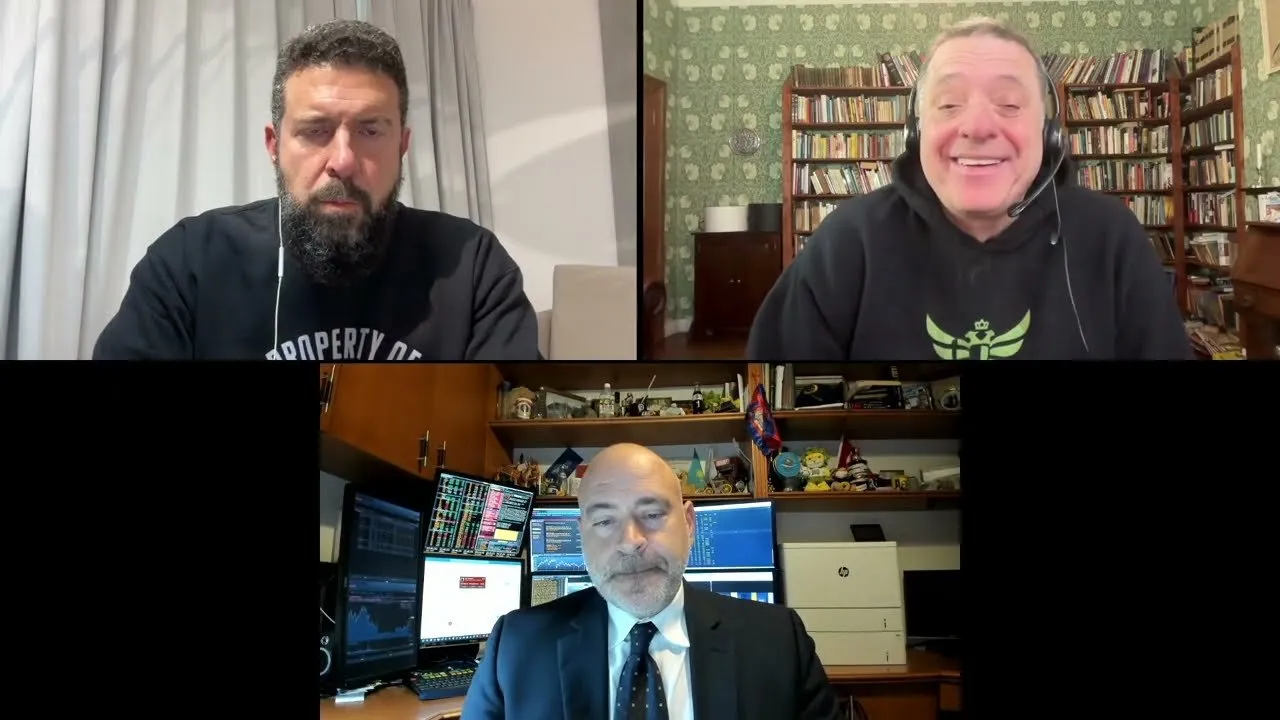
Emerging markets expert Raymond Zucaro argues that the current transition, likely spearheaded by Delcy Rodríguez, presents a "once in a lifetime" economic recovery opportunity. By drawing parallels to post-Soviet Russia and post-invasion Kuwait, the data suggests that Venezuela’s potential for rapid revitalization is being vastly underestimated. The path forward involves navigating the complex legacy of Chavismo, managing aggressive US foreign policy, and unlocking the world's largest proven oil reserves.
Key Takeaways
- Economic potential rivals historic recoveries: Economists predict Venezuela’s per capita GDP could triple over the next decade, offering investment opportunities comparable to the fall of the Soviet Union.
- Oil infrastructure is resilient: Contrary to reports of total ruin, historical precedents like Kuwait suggest Venezuela can return to 2 million barrels of production within three years once sanctions are lifted.
- Delcy Rodríguez is the pragmatic choice: As a figure with "Chavismo in her heart" but technocratic capability, Rodríguez is better positioned than the polarized opposition to unite a divided country and work with the US.
- Sanctions were the primary bottleneck: The removal of financial blockades is the "low-hanging fruit" that could immediately stabilize the economy and reverse migration flows.
- Regional ripple effects: A resurgent Venezuela poses economic challenges for Colombia and signals that Brazil could be the next target for US resource-focused foreign policy.
The "Once in a Lifetime" Economic Opportunity
The prevailing narrative in Western media often depicts Venezuela as a broken state requiring decades to fix. However, seasoned emerging market veterans see a different reality. The country possesses the foundational assets required for a V-shaped recovery, provided the political strangulation of sanctions is loosened.
Raymond Zucaro notes that the neglect of Venezuela's economy was not solely due to incompetence, but largely driven by an external financial blockade. With those barriers potentially falling, the upside is immense. Francisco Rodríguez, a former Bank of America economist, has projected that Venezuela's per capita GDP could triple in ten years. This level of growth is virtually nonexistent elsewhere in the developed or developing world today.
Debunking the Oil Infrastructure Myth
Critics frequently argue that Venezuela’s oil sector is too degraded to bounce back quickly, citing dilapidated refineries and a "brain drain" of engineers. Zucaro challenges this pessimism by pointing to the aftermath of the Iraqi invasion of Kuwait.
"I remember what happened after the invasion of Kuwait... upon the withdrawal of Iraqi troops, you saw 600 wells, every bit of infrastructure blown up and left literally on fire, but yet in three years you had back 2 million barrels of production."
Unlike Kuwait, Venezuela has not suffered a ground war, massive bombing campaigns, or the retreating destruction of military forces. The infrastructure suffers from neglect, not annihilation. Furthermore, major Western oil companies like Chevron, Repsol, and Eni never fully left the country, maintaining a operational foothold that can be rapidly expanded.
Resource Wealth Beyond Oil
Even if one applies a heavy discount to Venezuela’s oil reserves due to the cost of extraction—downgrading recoverable assets from 300 billion to 100 billion barrels—the country still holds more recoverable oil than Russia or Kuwait, and vastly more than the United States or Canada. Beyond energy, the nation sits on top of premium-grade iron ore and high-caloric coal, resources that are in high demand for global steel and power production.
Navigating the Politics: The Role of Delcy Rodríguez
The political vacuum left by Maduro requires a leader who can thread the needle between satisfying US demands and maintaining domestic stability. Venezuela remains a deeply polarized society where Chavismo—the populist ideology of Hugo Chávez—retains roughly 60% popularity among the working class. These voters felt abandoned by the pre-Chávez oligarchy and remain skeptical of the traditional opposition.
This reality makes hardline opposition figures like María Corina Machado risky candidates for reconciliation. Her polarizing rhetoric and historical antagonism toward the Chavista base could spark civil unrest. In contrast, Delcy Rodríguez represents a bridge.
Why Stability Requires a Hybrid Approach
Rodríguez possesses the revolutionary credentials to placate the Chavista base while offering the administrative competence required by international markets. Zucaro suggests that she is uniquely positioned to oversee a transitional period where the economy is prioritized over ideological warfare.
If elections are pushed out by 12 to 24 months, as hinted at by the Trump administration, Rodríguez has a window to stabilize the currency, lower crime, and allow the economic benefits of returning oil revenue to trickle down. A recovering economy is the most effective way to de-escalate social tension. As Zucaro notes, "Geography is destiny." Venezuela is in the Western Hemisphere, and for the Chavista movement to survive in any form, it must find a way to coexist with the regional hegemon, the United States.
The Trump Doctrine: "Plata o Plomo"
The US approach to this transition appears to be a blend of aggressive leverage and transactional diplomacy—a style reminiscent of the ultimatum "plata o plomo" (silver or lead). The blurring of public and private sector interests is becoming increasingly visible. The narrative that Venezuela is "uninvestable" is often a negotiating tactic used by major corporations to secure government guarantees or favorable terms before re-entering the market.
The lifting of sanctions acts as the primary catalyst for this shift. Previous sanctions regimes had unintended consequences that harmed US interests more than they toppled the Maduro government. For instance, banning the trading of Venezuelan debt forced US investors to sell bonds at pennies on the dollar to buyers in Europe, the Middle East, and Hong Kong, effectively transferring wealth out of the US.
Addressing the Migration Crisis
Perhaps the most significant unintended consequence of the economic blockade was the migration of nearly eight million Venezuelans. This exodus strained neighboring countries and the US southern border. By allowing the Venezuelan economy to breathe, the US addresses the root cause of the migration crisis.
"If you reverse some of these sanctions, if you help improve the local economy, you may actually see some people return to Venezuela. Pre-crisis, even under Chávez, the quality of life in Venezuela was actually quite nice."
Regional Geopolitics: Winners and Losers
A resurgence in Venezuela will reshape the balance of power in Latin America, creating distinct challenges for its neighbors, particularly Colombia and Brazil.
Colombia’s Dilemma
Colombia has been a primary recipient of Venezuelan migrants, many of whom brought capital and business expertise. A stabilizing Venezuela could reverse this flow, drawing high-net-worth individuals and capital back across the border. Additionally, investment dollars for oil and coal exploration may shift from the geologically complex Colombian Andes to the massive, easily accessible reserves in the Orinoco Belt.
Politically, Colombian President Gustavo Petro faces a difficult road ahead. With his own elections approaching and a history of anti-Trump rhetoric, he must navigate a diplomatic tightrope to avoid economic isolation.
Is Brazil the Next Target?
The geopolitical focus on resources suggests that Brazil could be the next focal point for US interventionism. As a founding member of BRICS and a global agricultural powerhouse, Brazil represents a strategic rival in the US quest for resource dominance—specifically regarding food security and soy production.
Analysts point to aggressive maneuvers by US agencies against the Bolsonaro administration in the past as evidence of interference. With Lula back in power and the BRICS alliance strengthening, the "Big Daddy" diplomacy currently applied to Venezuela could soon turn its gaze toward Brasilia, aiming to "clean up the map" of Latin America and secure the hemisphere's resources.
Conclusion
The removal of Maduro marks the end of an era and the beginning of a high-stakes economic experiment. While the geopolitical maneuvering is cynical and the risks remain high, the potential benefit for the Venezuelan people is undeniable. A return to economic normalcy, fueled by the lifting of sanctions and the revitalization of the oil sector, offers the first real hope for stability in a generation.
If Delcy Rodríguez can manage the delicate balance of retaining her Chavista base while accommodating US interests, Venezuela may well prove to be the decade's most surprising success story.
For more insights on emerging markets, you can follow Raymond Zucaro on X at @RayZucaro or visit rvx-am.com.