Table of Contents
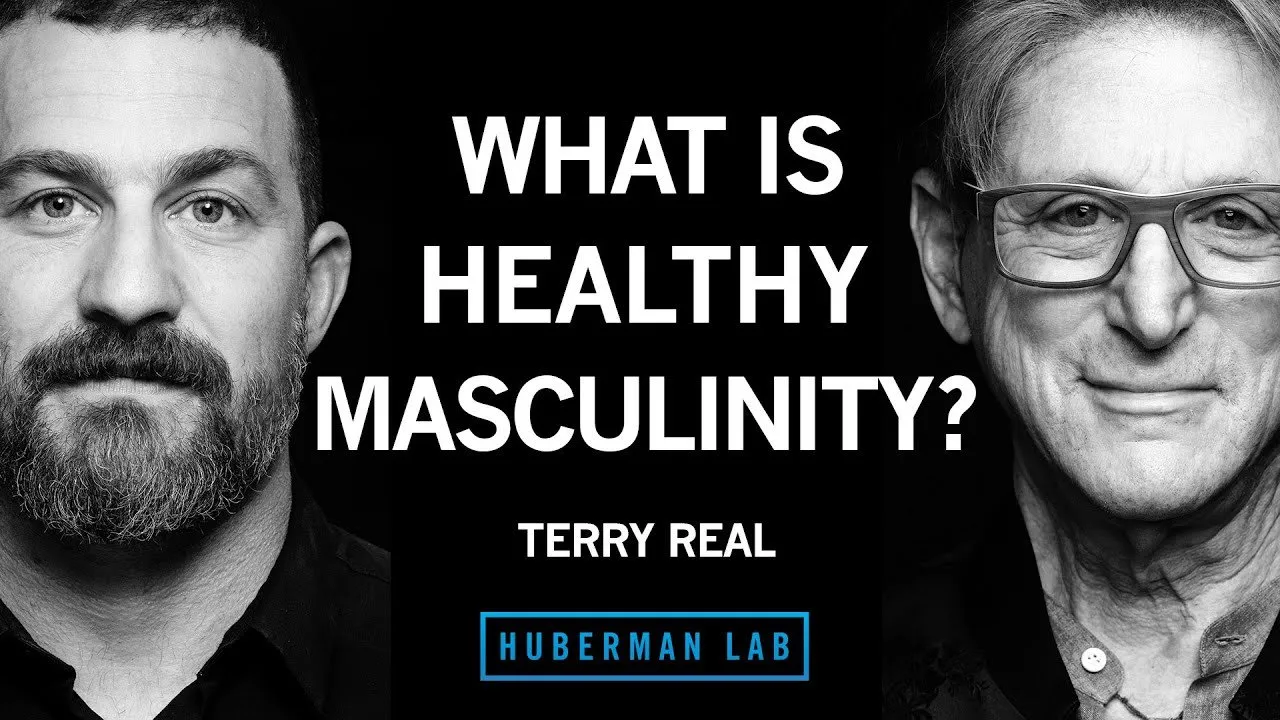
Terry Real is a therapist and one of the world's foremost experts on male psychology and romantic relationships. In this comprehensive discussion, we explore the modern masculinity crisis, the mental health challenges facing men today, and practical tools for building healthier relationships with ourselves and others. From understanding emotional expression to developing genuine self-esteem, this conversation offers essential guidance for men seeking to thrive in all areas of life.
Key Takeaways
- Men are struggling with a shift from traditional masculinity without clear models for what comes next, leading to rising rates of depression and suicide
- The essence of healthy masculinity is adaptability - knowing when to be fierce and when to be tender, based on what each moment requires
- True self-esteem comes from internal worth, not performance-based achievements that leave men vulnerable to shame when they fail
- Connection and relationality are fundamental human needs - disconnection is literally as harmful to health as smoking a pack and a half of cigarettes daily
- The antidote to harshness (toward others and ourselves) is loving firmness - being skilled rather than hard or soft in our responses
The Modern Masculinity Crisis
Men today face an unprecedented challenge: the old models of masculinity have shifted, but clear alternatives haven't emerged to replace them. As Terry Real explains, "The sand has shifted under our feet and we're trying to figure out what the hell we are."
The Problem with Traditional Masculinity
The essence of traditional masculinity centers on stoicism - the belief that vulnerability equals weakness. This creates several critical problems:
- We are inherently vulnerable as human beings, so denying this creates a fundamental lie we live by
- Connection happens through vulnerability - when we wall ourselves off, we lose the capacity for genuine relationships
- Women increasingly demand emotional connection and intimacy that was literally "stamped out" of many men as boys
Terry puts it bluntly: "Trying to run away from your own vulnerability is like trying to outrun your rectum. It has a way of following you everywhere you go."
The Regressive Response
Rather than moving toward healthier models, many men have responded regressively - doubling down on the worst aspects of traditional masculinity: dominance, entitlement, and aggression. This reaction, while understandable, doesn't lead to happiness or fulfillment.
Understanding Healthy Self-Esteem
One of the most crucial concepts Terry discusses is the difference between healthy, internal self-esteem and the performance-based self-worth that plagues many men.
Internal vs. External Self-Esteem
Healthy self-esteem comes from within - recognizing that your worth exists simply because you're here and breathing. It's democratic - your worth is no better or worse than anyone else's.
Performance-based self-esteem depends on external achievements: having big muscles, landing the job, or sexual prowess. This creates a dangerous cycle where success feels great, but failure leads directly to shame.
The Key to Accountability
Healthy self-esteem enables something crucial: the ability to feel proportionally bad about bad behavior while maintaining warm regard for yourself as an imperfect person. This means you can say "I screwed up and I'm sorry" without either becoming defensive or collapsing into shame.
The capacity to feel proportionally bad about bad behavior while holding yourself in warm regard as the imperfect person - that's what healthy self-esteem looks like.
Mastering Emotional Expression and Connection
Men often receive mixed messages about emotions - first told to suppress them, then encouraged to feel them, but rarely taught how to express them relationally.
Beyond Just Having Feelings
Terry emphasizes that simply having feelings isn't enough - it's what you do with them that matters. The goal isn't emotional expression for its own sake, but connection through vulnerability.
Practical Skills for Emotional Connection
Two fundamental skills can transform how men relate emotionally:
- Ask for help - Share what you're experiencing and ask for support, as Terry did when calling a mutual friend before our interview
- Respond with curiosity, not defense - When someone is upset, ask "What do you need?" or "What do you need from me right now?"
The Jiu-Jitsu Approach
When faced with criticism (even harsh criticism), Terry teaches a powerful technique: "Duck under the horrible delivery and deal with their ouch." Instead of reacting to how something is said, focus on addressing the underlying concern. This approach often de-escalates situations in minutes rather than letting them drag on for days.
Building Meaningful Connections and Community
One of the most pressing issues facing modern men is isolation. Many have few close friends and struggle to build the kind of community that supports both personal growth and relational skills.
The Crisis of Male Loneliness
The statistics are sobering: when women die, men often struggle significantly, while women typically maintain stronger support networks. Single men represent one of the greatest public health crises of our time.
Creating Modern Brotherhood
Terry advocates for men actively seeking and building community:
- Start a men's group with four other guys - no therapist needed, just commitment to honest conversation
- Experiment with vulnerability in existing friendships - share something deeper and see how it's received
- Seek mentors who are genuinely happy and skilled at relationships
- Create activities that naturally build connection - hiking, shared projects, or regular gatherings
Training Friends for Relationality
An important concept Terry introduces is training your friends to support your relationship, not just your individual empowerment. When you have relationship struggles, you want friends who ask "What did you contribute to that?" rather than simply validating your complaints.
The Art of Skilled Relating
Perhaps the most transformative concept Terry offers is thinking in terms of being skilled rather than hard or soft in relationships.
Redefining Strength
True strength isn't about standing your ground in every conflict. Instead, it's about being elegant and efficient in resolving problems. As Terry puts it: "I want you to say, 'I was really elegant. I just sidestepped that whole thing.' What might have been a struggle that would go on for days, I just diffused in 10 minutes."
The Morani Wisdom
Terry shares a profound story from Masai elders about what makes a great warrior (Morani):
When the moment calls for fierceness, a good Morani is a killer... When the moment calls for tenderness, a good Morani will lay down his sword and shield and be sweet like a baby. What makes a great Morani is knowing which moment is which.
This wisdom captures the essence of healthy masculinity: adaptability, flexibility, and wholeness.
The Power of Requests Over Complaints
Inside every complaint lies an implicit request. Rather than focusing on what's wrong, skilled relating means going directly to what you want: "Don't tell your guy what he's doing wrong. Tell him what he could be doing a little better."
Practical Steps for Personal Growth
The Anti-Harshness Campaign
Terry's most important message is simple but revolutionary: "There is no redeeming value in harshness. There is nothing that harshness does that loving firmness doesn't do better."
This applies to:
- How you treat others
- How you allow others to treat you
- Most importantly, how you treat yourself
Working with Your Inner Critic
When that harsh internal voice starts criticizing your imperfections, you can actively intervene. Terry shares a personal example of how he addressed his self-criticism over ruining an expensive shirt, reminding himself that "the same ADD brain that ruined this shirt is the brain that wrote the books."
Finding Mentors and Models
For younger men especially, Terry recommends two key strategies:
- Find older people who are genuinely happy and let them mentor you in the art of relationships
- Create a relationally cherishing subculture around yourself - friends, family, and community that supports healthy ways of being
Conclusion
The path forward for men isn't about returning to outdated models of masculinity or abandoning masculine qualities altogether. Instead, it's about integration - developing the full range of human capacities including strength, vulnerability, connection, and skillful response to life's challenges.
As Terry emphasizes, "Operating with maturity, skill, health, integrity, learning how to do this well - your life is simple. Being unskilled, that's complicated." The work of developing these relational skills isn't just nice to have - it's essential for mental health, meaningful relationships, and a fulfilling life.
The beauty of this approach is that it serves everyone. When we show up with greater skill, emotional intelligence, and genuine connection, we create the conditions for others to do the same. This isn't about perfection - it's about progress, practice, and the recognition that our relationships, including our relationship with ourselves, are the foundation of a life well-lived.