Table of Contents
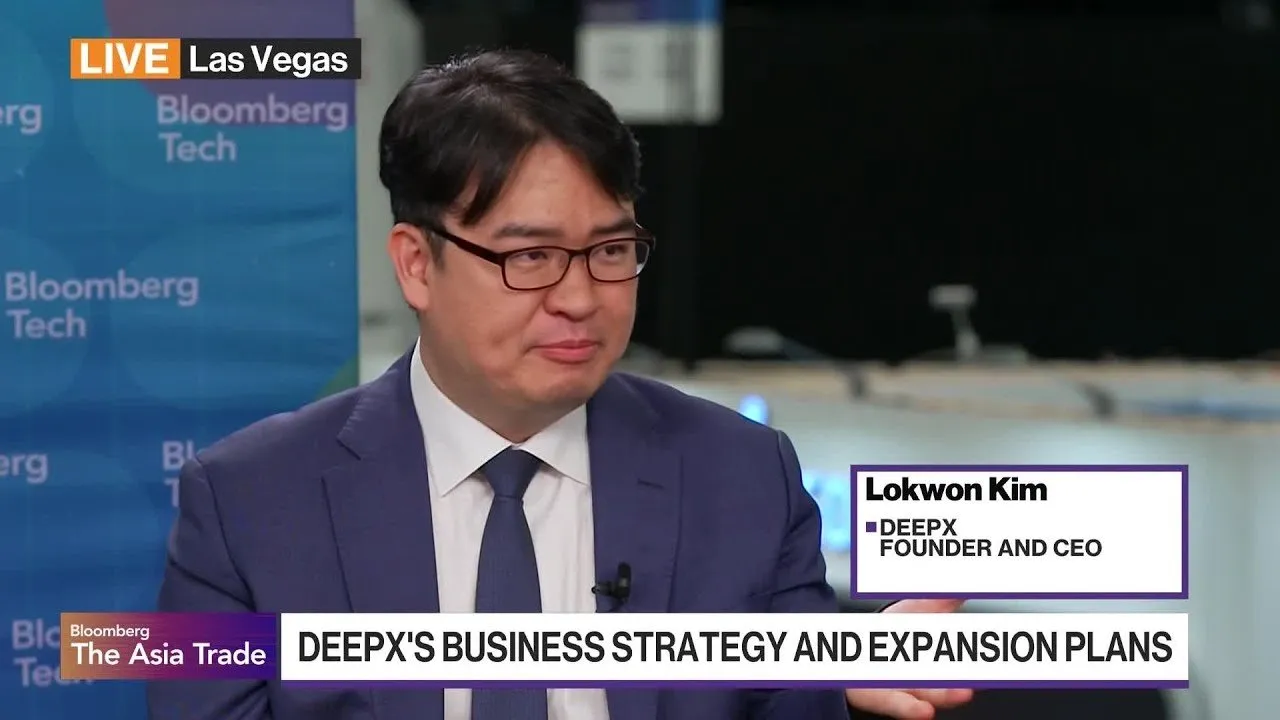
DeepX is carving a distinct niche in the global semiconductor landscape by prioritizing extreme power efficiency for robotics and edge devices, distinguishing itself from hyperscaler-focused giants like Nvidia. By leveraging Samsung Foundry’s advanced manufacturing nodes, the South Korean AI chip startup is positioning its technology as the engine for "physical AI," aiming to bypass geopolitical trade restrictions while preparing for a potential initial public offering (IPO) within the next three years.
Key Takeaways
- Power Efficiency Focus: DeepX chips consume approximately 5 watts, offering a low-power alternative to high-performance GPUs that require over 100 watts, making them ideal for battery-operated robots.
- Strategic Partnerships: The company utilizes Samsung Foundry’s 5nm and 2nm processes and has secured collaborations with major players including Baidu, Hyundai Motor Robotics Group, and Dell.
- Export Control Immunity: With processing capabilities purposely capped below 100 TOPS (trillions of operations per second), DeepX products remain unaffected by strict U.S. semiconductor export regulations.
- IPO Trajectory: Despite receiving acquisition offers and holding a valuation around $1 billion, DeepX leadership plans to pursue an IPO in two to three years once a strong business foundation is established.
The Shift to On-Device AI
While the current artificial intelligence boom is largely driven by data centers and cloud computing, DeepX is betting on the next wave of computing: on-device AI. The company’s strategy addresses the prohibitive costs and energy requirements of running generative AI models in centralized data centers. By processing data locally on the device, DeepX aims to eliminate latency and reduce reliance on internet connectivity for autonomous machines.
The company’s CEO emphasized the critical hardware distinction required for the robotics sector, noting that traditional GPUs are often ill-suited for mobile applications due to thermal and power constraints.
"Robots can use our chip because it consumes [around] five watts, but Nvidia chips can consume... over 100 watts. It is a really, really high power consuming thing... that is why we use cutting edge technology like Samsung Foundry, 5-nanometer or 2-nanometer technology."
This technical architecture allows DeepX to support large-scale language models (LLMs) and generative AI locally. The company claims its new chips can process up to 100 billion parameters directly on the device, enabling functionality similar to Touch ID—secure, local, and immediate—without the need for constant communication with a server farm.
Navigating Geopolitics and Global Expansion
DeepX has managed to circumvent the tightening web of semiconductor trade restrictions that have impacted major players in the industry. Current U.S. regulations restrict the export of high-performance chips to China based on specific performance thresholds. Because DeepX focuses on efficiency for edge devices rather than raw supercomputing power, its specifications fall safely within permissible limits.
According to the CEO, the company's products operate under the 100 TOPS cap set by regulators. This compliance allows DeepX to maintain a truly global footprint, selling freely in markets including the United States, China, South Korea, Taiwan, Japan, and Europe.
This flexibility has facilitated a diverse client portfolio. In China, DeepX is collaborating with Baidu on large-scale AI-enabled IT service deployments. In South Korea, mass production involves commercial robots for the Hyundai Motor Robotics Group. Globally, the company reports over 50 customers across various industrial automation sectors.
Market Valuation and Future Outlook
As the demand for embodied AI—intelligence integrated into physical machines—accelerates, DeepX is attracting significant capital interest. The company is currently valued at approximately $1 billion. While the semiconductor sector has seen a flurry of M&A activity, with giants like AMD and Qualcomm executing high-profile acquisitions, DeepX has firmly rejected buyout offers.
"We got some acquisition calls, but we rejected [them]... For the IPO, we are taking a very thoughtful approach while seeing the strong interest from the capital market."
Management indicated that while they have engaged in discussions with the Nasdaq and Singapore Exchange, the priority remains on cementing a robust business foundation before going public. The projected timeline for a listing is set for two to three years from now.
Moving forward, DeepX expects to capitalize on the "physical AI" trend, where generative AI capabilities move from screens to handheld devices, drones, and smart factories. With secured manufacturing support from Samsung and a growing roster of industrial partners, the company is ramping up mass production to meet the expanding need for efficient, decentralized intelligence.