Table of Contents
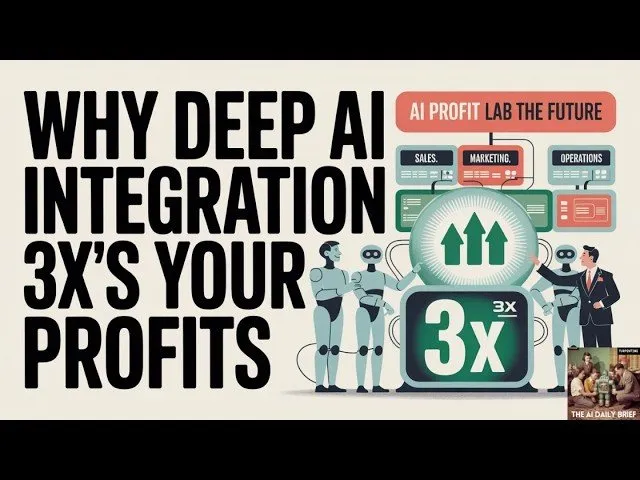
A trio of newly released reports from PwC, Workday, and education consultancy Section reveals a stark reality in the current state of enterprise AI: a massive chasm is forming between a small vanguard of successful adopters and a majority of organizations struggling with implementation. While recent media narratives have focused on AI "underperformance" due to friction in adoption, a granular look at the data suggests that companies deeply integrating artificial intelligence into their core infrastructure are three times more likely to see financial gains than those merely experimenting with the technology.
Key Points
- The "AI Tax" on Productivity: Employees report that for every 10 hours of efficiency gained through AI, approximately four hours are lost to fixing and reworking low-quality output.
- The 12% Vanguard: Only 12% of CEOs report that AI has delivered both cost reductions and revenue increases, but these companies are 2.6 times more likely to have embedded AI into core processes.
- Executive-Employee Disconnect: There is a 53-point gap regarding strategy perception; 81% of C-suite executives believe their company has a clear AI policy, compared to just 28% of individual contributors.
- Training Deficit: Despite leaders claiming skills development is a priority, 53% of reinvested time savings goes into technical systems, while only 29% goes into workforce development.
The "Productivity Tax" and Perception Gaps
Recent reporting, including coverage by The Wall Street Journal, has highlighted a growing sentiment that AI may be overhyped, driven by data showing a disconnect between executive expectations and worker reality. According to data from Section, while 33% of C-suite executives report saving between four to eight hours per week using AI, the workforce tells a different story. Forty percent of workers say they are saving no time at all, and more than a quarter are saving less than two hours weekly.
A significant factor driving this inefficiency is what researchers are calling an "AI tax." Data from Workday indicates that 37% of the time theoretically saved by AI is consumed by rework.
"Employees report spending significant time correcting, clarifying, or rewriting low-quality AI-generated content... For every 10 hours of efficiency gained through AI, nearly 4 hours are lost to fixing its output."
This friction has led to a divergence in sentiment. While over 70% of executives report feeling "excited" about AI, the sentiment among workers is nearly the inverse, with approximately 70% reporting feelings of anxiety or being overwhelmed. This is compounded by a lack of reliable utility in basic use cases. As Steve McGarvey, a user experience designer cited in the reports, noted: "I can't count the number of times that I've sought a solution for a problem, asked an LLM, and it gave me a solution... that was completely wrong."
The Gap Between Leaders and Laggards
Despite the friction reported by the general workforce, a specific subset of organizations is realizing significant value, suggesting the issue lies in implementation rather than the technology itself. A survey released by PwC to coincide with the World Economic Forum in Davos shows that while 56% of CEOs have seen no significant financial benefit to date, a "vanguard" of 12% are seeing simultaneous revenue growth and cost reductions.
The differentiating factor for this top tier is structural integration. These successful companies are 2.6 times more likely to have embedded AI into their core processes rather than using it as a superficial add-on. According to PwC, organizations that establish responsible AI frameworks and enterprise-wide technical environments are three times more likely to report meaningful financial returns.
The data suggests that deep integration acts as a multiplier. Companies that treat AI as a fundamental layer of their enterprise environment—rather than merely dropping Large Language Models (LLMs) onto employee desktops—are escaping the "trough of disillusionment" that currently plagues the majority of the market.
The Proficiency and Training Crisis
A critical barrier to realizing ROI is the lack of workforce proficiency, driven largely by insufficient training and strategic misalignment. The Section report identifies that only 3% of employees are currently considered "AI proficient," while 97% remain novices or experimenters. Furthermore, 85% of knowledge workers surveyed had either no work-related AI use cases or only beginner-level applications, such as basic drafting or summarization.
The root cause appears to be a lack of organizational support. There is a profound disconnect between what leadership believes is happening and the reality on the ground:
- Strategy: 81% of the C-suite claims a clear AI policy exists, versus 28% of employees.
- Training: 81% of the C-suite reports receiving training, compared to just 27% of individual contributors.
- Tool Access: 80% of executives have access to paid or enterprise tools, compared to 32% of employees.
The data indicates that leadership expectation is the strongest catalyst for adoption. Employees whose managers explicitly expect AI usage are 2.6 times more proficient than the baseline. However, companies are failing to reinvest savings into the necessary human capital to achieve this. The Workday study found that while 59% of leaders claim skills development is a priority, the majority of reinvested resources are flowing into technical infrastructure rather than people.
Implications and Outlook
The convergence of these three reports paints a picture of a market that is bifurcating. On one side are "augmented strategists"—experienced professionals (often aged 35-44) who treat AI as a radar for pattern recognition rather than a crutch for content generation. These workers are receiving training and support, and consequently, are generating net productivity gains.
On the other side is the "misaligned middle," struggling with high rework burdens and insufficient tooling. The consensus across the data is that the current challenges will not self-correct. Organizations that fail to move beyond basic task assistance and invest in deep, structural AI foundations risk falling permanently behind the 12% of vanguard companies already compounding their competitive advantage.
For enterprise leaders, the path forward requires shifting focus from passive tool deployment to active workforce development and deep technical integration. As the gap widens, the likelihood of catching up to the market leaders diminishes, making the current fiscal year a critical window for correcting AI strategies.