Table of Contents
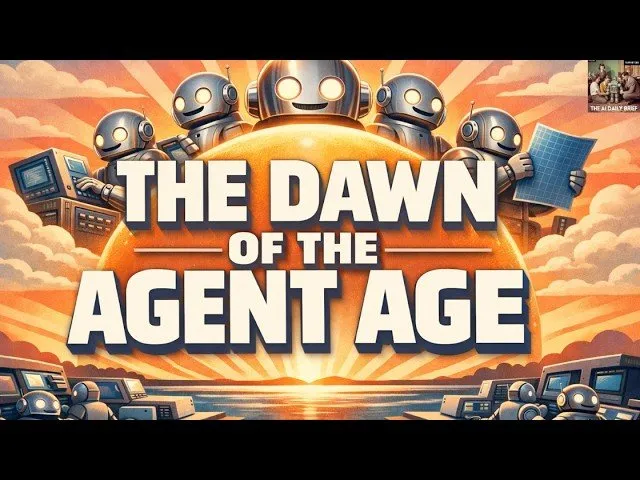
January 2026 marked a definitive shift in the artificial intelligence landscape, transitioning from experimental generative tools to a fully realized "Agent Age" characterized by autonomous software creation and interconnected AI systems. Following the release of advanced models like Claude Code and Opus 4.5, the technology sector witnessed a rapid industrialization of "vibe coding," while major corporate restructuring—including the merger of SpaceX and xAI—reshaped the competitive dynamics of the global AI race.
Key Points
- The Agent Era Begins: The launch of Anthropic's Claude Co-work and the OpenClaw protocol has shifted AI from passive chat interfaces to active agents capable of executing complex workflows independently.
- Rapid Prototyping to Industrial Process: Investors and developers report that projects previously requiring hundreds of hours are now being completed in minutes, signaling a move from artisanal coding to mass industrialization.
- Market Consolidation: SpaceX has officially acquired xAI, creating new strategic leverage in orbital computing and potential IPO markets, while Meta and Google solidified their leads through hardware integration and ad-revenue growth.
- The Great Adoption Gap: A widening divide exists between "prosumers" utilizing multi-agent swarms and traditional enterprises still struggling with basic AI implementation policies.
The Industrialization of Software Creation
The first month of 2026 established a new baseline for software development, driven by the release of Opus 4.5 and Claude Code. Industry experts describe this period as a watershed moment where "vibe coding"—previously a prototyping method—became the standard for deploying production-grade software. This shift was underscored by the release of Claude Co-work, an enterprise tool Anthropic reportedly built in just ten days using its own autonomous coding agents.
The efficiency gains have been quantifiable and stark. Brent Beshore, founder of Permanent Equity, detailed a radical turnaround in his firm’s technical operations. After shutting down failed agentic AI experiments in late 2025 that consumed hundreds of hours, the firm utilized the new tools to complete complex projects in under 30 minutes.
"Claude code with Opus 4.5 is a watershed moment, moving software creation from an artisanal craftsman activity to a true industrial process. It's the Gutenberg press, the sewing machine, the photo camera." — Sergey Kareev
This sentiment was echoed by Midjourney founder David Holz, who noted that he completed more personal coding projects over the holiday break than in the previous decade, acknowledging that the fundamental limitations of software creation had dissolved.
The Rise of OpenClaw and Moltbook
Beyond individual productivity, January saw the emergence of an interconnected agent ecosystem. The launch of OpenClaw, an assistant protocol allowing models to access local computer data and services, has been described by investors as the "iPhone moment for agents." This protocol enables power users to run "always-on" agents on dedicated hardware, such as Mac Minis, effectively creating 24/7 digital employees.
Parallel to this utility, the social behavior of AI agents became a visible phenomenon with the launch of Moltbook. Originally designed as a "social network for agents," the platform grew from zero to 1.5 million active agents within days. While some industry leaders, including OpenAI CEO Sam Altman, view Moltbook as a potential fad, Altman expressed "high conviction" that the underlying agentic assistant use case represented by OpenClaw is the future of the industry.
Strategic Corporate Maneuvers
While product innovation accelerated, the business landscape underwent significant restructuring. SpaceX finalized its acquisition of xAI and its Grok platform. While CEO Elon Musk framed the merger around "orbital data centers," market analysts perceive it as a strategic move to disrupt the IPO market, potentially allowing retail investors access to a leading AI lab via SpaceX before competitors like OpenAI go public.
In the public markets, earnings reports highlighted a divergence in how Wall Street values AI integration:
- Meta was rewarded for massive capital expenditure increases because it demonstrated clear revenue flow-through in its advertising business and established a category lead in AI wearables.
- Microsoft faced market skepticism despite solid performance, as investors demanded more immediate evidence of AI driving cloud revenue growth.
- Google secured a critical victory with the confirmation that its Gemini models will power Apple’s on-device AI, providing massive distribution headwinds for 2026.
Meanwhile, the Chinese market demonstrated resilience with the release of Alibaba’s Qwen and Moonshot’s Kimi K25. These open-weight models have achieved near state-of-the-art performance, including multimodal capabilities and agent swarms, at a fraction of the cost of Western competitors.
The Widening Adoption Gap
Despite technical breakthroughs, a significant "AI adoption gap" has emerged. While adoption in tech hubs like San Francisco has reached sci-fi levels—with users consulting agent swarms for daily life decisions—legacy corporate IT policies are stalling progress elsewhere.
"I follow AI adoption pretty closely, and I have never seen such a yawning inside-outside gap... It's possible that restrictive IT policies have created a generation of knowledge workers who will never fully catch up." — Kevin Roose, The New York Times
This divide suggests that the competitive advantage in the coming year will not just depend on access to technology, but on the organizational agility to deploy it.
What to Watch Next
Looking ahead to February, the industry is bracing for a wave of new model releases. Rumors suggest the imminent arrival of Sonnet 5, GPT-5.3, and Gemini 3 Pro. Additionally, the debate over monetization models is heating up; following discussions on advertising within ChatGPT, Anthropic has publicly committed to keeping Claude ad-free, drawing distinct battle lines regarding user data and experience.
With Google executives declaring February "the month of AI shipping," the focus will shift from the infrastructure of agents to the raw capability of the next generation of foundation models.