Table of Contents
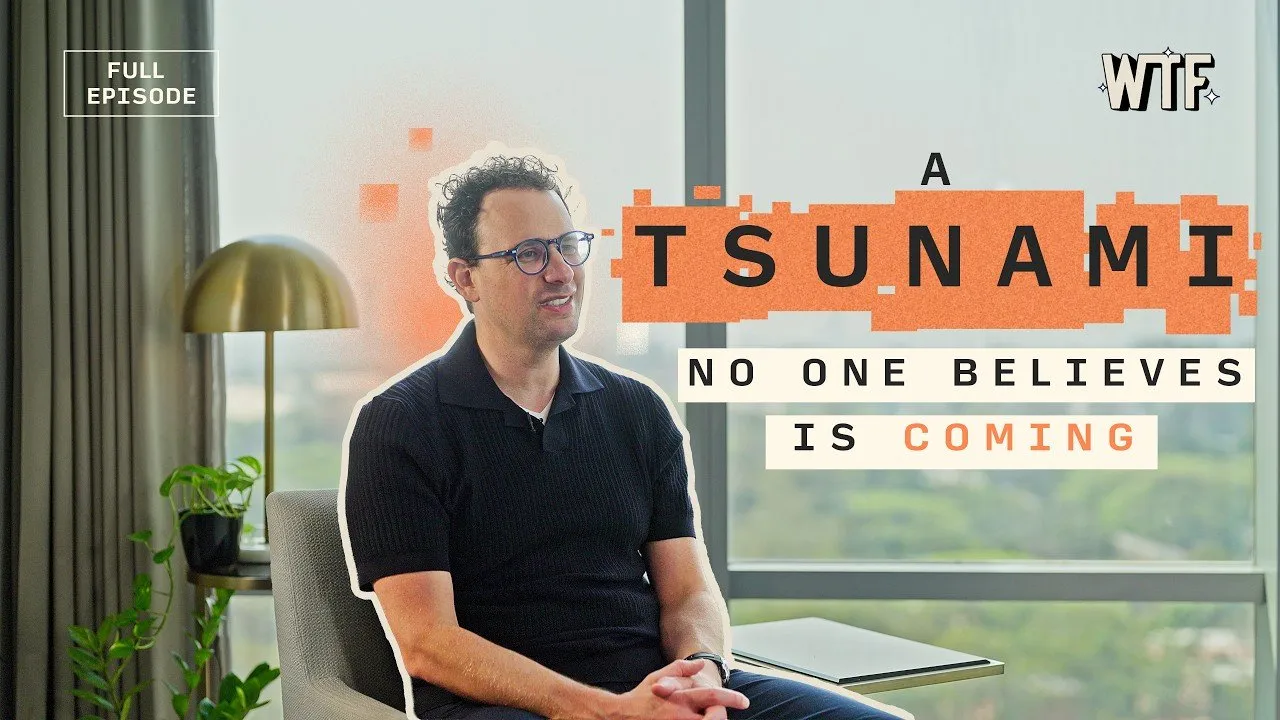
The sensation of using modern artificial intelligence often transcends simple utility; for many, it borders on the eerie. Dario Amodei, the co-founder and CEO of Anthropic, notes that users are increasingly surprised by how well models like Claude seem to "know" them, reflecting a level of cognitive mimicry that was unthinkable just half a decade ago. Despite this rapid advancement, Amodei warns of a profound disconnect between the technical reality of AI and the public's perception of it. We are standing before a metaphorical tsunami, visible on the horizon, yet much of society remains preoccupied with explaining away the rising tide as a mere trick of the light.
Key Takeaways
- The Scaling Laws are Absolute: Intelligence is essentially the product of a "chemical reaction" between data, compute, and model size; increasing these ingredients consistently yields higher cognitive performance.
- Societal Unreadiness: While technical safety and alignment work are progressing, public and governmental awareness of the coming "AI tsunami" lags dangerously behind the technology's actual trajectory.
- The Death of Rote Coding: While high-level software engineering will persist, basic coding is being rapidly automated, shifting the value of human labor toward design, critical thinking, and human-centric relationships.
- A Biotech Renaissance: AI is poised to revolutionize biology by mastering its immense complexity, specifically through programmable peptide-based therapies and genetic engineering.
The Genesis of Anthropic and the Power of Scaling
Dario Amodei’s journey into AI began not in computer science, but in biophysics. His early career was spent grappling with the staggering complexity of biological systems—the way proteins are modified, complexed, and signaled. He eventually reached a point of despair, believing biology was too intricate for the human mind to fully grasp. This realization led him to neural networks, which he viewed as a potential tool to solve the problems humans couldn't. After leading research at OpenAI, Amodei and a core team of colleagues founded Anthropic with two primary convictions: the inevitability of "scaling laws" and the necessity of a safety-first institutional structure.
Understanding Scaling as a Chemical Reaction
To demystify how AI becomes "smarter," Amodei compares the process to a chemical reaction. If you want to start a fire, you need specific ingredients in proportion. In the realm of AI, those ingredients are massive datasets, immense computational power, and large model architectures.
"The scaling laws just tell you that... what you get out is intelligence. Intelligence is the product of a chemical reaction."
This predictable relationship between inputs and outputs has driven the industry's rapid expansion. Five years ago, computers could not write essays, implement code features, or analyze the nuances of a video. Today, these tasks are trivial because the "reaction" has been scaled to unprecedented levels, allowing for emergent behaviors that mimic human reasoning rather than just matching text patterns on the internet.
The Redefinition of Intelligence and Consciousness
As AI models begin to reflect on their own decisions and process multi-modal information (text, images, and video), the question of what constitutes "intelligence" or even "consciousness" becomes unavoidable. Amodei suggests that intelligence today is no longer about looking up existing information via search; it is about the ability to synthesize hypothetical scenarios and "think" through problems that have no pre-existing answers on the web.
The Emergence of Machine Consciousness
While the topic remains mystical to many, Amodei approaches consciousness from a materialistic, biological perspective. He views it as an emergent property of systems that are complex enough to reflect on their own existence. While today's models may not yet be conscious, the gap between the human brain’s wiring and neural network architecture is narrowing.
"I suspect that at some point... we would indeed say under most definitions that we would endorse that the models will be conscious."
To manage this, Anthropic has experimented with internal guardrails, such as an "I quit this job" button, allowing models to terminate conversations involving extreme violence or brutality. These interventions are part of a broader "Constitutional AI" framework designed to ensure that as models become more human-like, they remain aligned with human values.
Societal Risks and the Need for Regulation
One of the more striking aspects of the conversation is Amodei’s discomfort with the concentration of power within a few AI labs. He argues that this power has accumulated "almost by accident" and that the industry requires proactive, sensible regulation. Unlike many corporate leaders who resist oversight, Amodei has actively advocated for laws like California’s SB 53, even when such positions are commercially disadvantageous or alienate suppliers.
The "Adolescence of Technology"
Amodei identifies a tension between two visions of the future: "Machines of Loving Grace," where AI cures diseases and expands human potential, and the "Adolescence of Technology," where the risks of misuse and loss of control loom large. He notes that while technical work on interpretability—the science of seeing inside neural nets like an MRI scans a brain—has gone better than expected, societal awareness has lagged.
The ideology of "acceleration at all costs" is, in his view, a failure to recognize the genuine risks associated with human-level intelligence in a digital form. Effective regulation, he argues, should target large-scale incumbents rather than stifling smaller startups, ensuring that those with the most resources are held to the highest safety standards.
The Future of Work: India and the Global Economy
For a global hub like India, the rise of AI presents both an existential threat to traditional IT services and a massive opportunity for high-level integration. Amodei views India not just as a consumer market, but as a critical partner in the "application layer" of AI. He dismisses the idea that AI will simply replace all service jobs, pointing instead to the history of technology and the principle of comparative advantage.
From Coders to Engineers
Amodei makes a sharp distinction between rote coding and the broader discipline of software engineering. While the actual act of writing lines of code is being rapidly automated, the role of the "architect"—the person who understands user demand, design, and team management—remains essential. Much like the invention of the calculator did not end the need for mathematicians, AI will amplify the productivity of those who possess strong critical thinking skills.
The Radiologist Paradigm
A common fear is that AI will replace specialized professionals. Amodei points to radiologists as a counter-example. While AI can now scan images more accurately than humans, the demand for radiologists has not plummeted. Instead, the job has shifted toward the "human-centered" aspect: walking patients through results and providing the "human touch" that machines cannot yet replicate. For the next decade, the most secure professions will be those that sit at the intersection of the physical world, human relationships, and analytical oversight.
A Renaissance in Biotechnology
Perhaps the most optimistic sector of the AI revolution lies in biology. Amodei predicts a total renaissance in the field, driven by the ability of AI to navigate the "design space" of the human body. He specifically highlights peptide-based therapies and cell-based therapies (such as CAR-T) as areas where AI will drive the most significant breakthroughs.
- Programmable Medicine: Unlike small-molecule drugs with limited degrees of freedom, peptides allow for continuous, digital-like optimization.
- Curing Disease: The ability to genetically engineer a patient’s own cells to attack specific cancers is a direct application of AI’s pattern-recognition capabilities.
- Mastering Complexity: AI can finally manage the "splicing and phosphorylation" complexities that once made biology seem impenetrable to human researchers.
The Path Toward First Principles
The rapid pace of AI development often leads to a "fear of missing out" (FOMO), yet Amodei suggests the most valuable skill is not learning a specific tool, but maintaining the ability to reason from first principles. The future can often be predicted "for free" simply by extrapolating existing empirical curves and ignoring the temptation to believe that a change is "too weird" to happen.
As we navigate this transition, the challenge remains an empirical one. Whether AI becomes an "angel on our shoulder" or a tool for manipulation depends on the choices made today by developers, governments, and individuals alike. The tsunami is no longer on the horizon; it is at our feet, and the time for debating its existence has passed. The focus must now shift to how we steer through the tide.