
Table of Contents
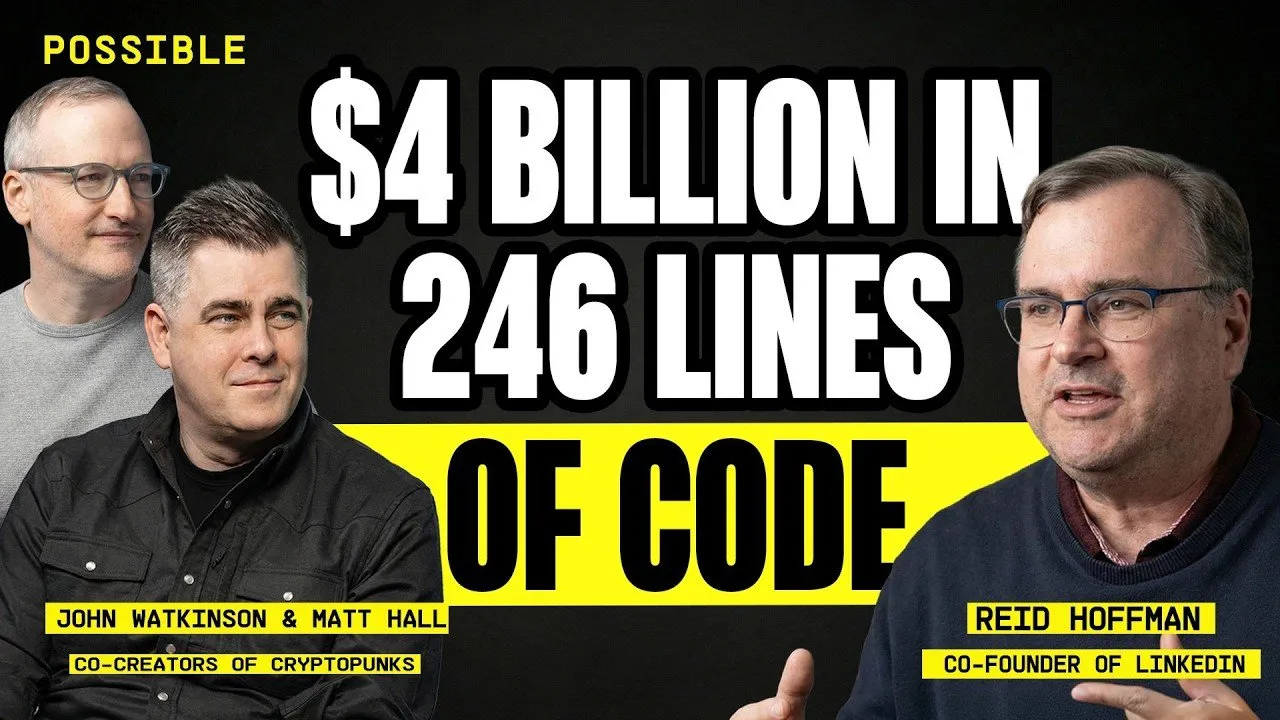
Before NFTs became a polarizing buzzword and cryptocurrency evolved into a massive industry, two Canadian software developers were simply running an experiment. Matt Hall and John Watkinson, the co-founders of Larva Labs, released 10,000 pixelated characters onto the Ethereum blockchain in 2017. They had no roadmap, no marketing budget, and zero expectations of financial return. They essentially gave the project away for free.
What followed was the birth of CryptoPunks, a project that didn't just generate billions in trading volume; it fundamentally altered how we perceive digital identity, ownership, and community formation. Today, CryptoPunks are housed in major art museums and serve as the blueprint for the entire digital collectible ecosystem. The story of their creation offers a masterclass in decentralized innovation, the importance of immutability, and the unexpected power of internet culture.
Key Takeaways
- Immutability builds trust: By refusing to include "admin keys" or royalty mechanisms, the creators ensured the project belonged entirely to the community, fostering genuine ownership.
- The profile picture (PFP) is digital real estate: Hall and Watkinson identified early on that the avatar next to a social media post is the most valuable visual space on the internet.
- Mistakes in code are permanent: Developing for the blockchain requires a different mindset than traditional software; once a contract is deployed, errors cannot be patched, only abandoned.
- AI as an accelerator, not a creator: The founders view artificial intelligence as a tool to remove the "grind" of coding, allowing them to focus purely on high-level creative problem solving.
The Origins of the "Accidental" Empire
In 2017, the concept of a "Non-Fungible Token" (NFT) barely existed. Hall and Watkinson were technologists with a background in creative coding and mobile apps. They were looking for a project that sat at the intersection of art and digital scarcity. Their hypothesis was simple: Could the psychological value people attach to Bitcoin apply to a digital collectible?
They launched CryptoPunks with a modest post on the Ethereum subreddit. The mechanics were straightforward: anyone with an Ethereum wallet could claim a Punk for free, paying only the gas fees (transaction costs) required to interact with the network.
We’re not the best marketers. We just sort of wrote a nerdy post in the Ethereum subreddit... 'Hey, this is an experiment in digital art and collecting. Come and get one, they’re free.'
Initially, the response was silence. However, following a favorable article in Mashable, the remaining Punks were claimed within 24 hours. The marketplace, which the duo had built into the system, suddenly came alive. The creators watched in fascination as assets they had given away for free began trading for dollars, then hundreds, and eventually millions.
From Market Makers to Observers
In the earliest days, Hall and Watkinson acted as market makers to keep the economy moving. They bought Punks for $10 and sold them for similar amounts, simply to demonstrate that a market existed. This hands-on approach didn't last long. As the community took over, the founders stepped back, transitioning from active managers to fellow collectors—a shift that would become central to the project's ethos.
Code as Law: The Philosophy of Immutability
One of the defining characteristics of CryptoPunks—and a major reason for its endurance—is the creators' commitment to decentralization. Unlike modern tech platforms where administrators can ban users or alter databases, CryptoPunks was designed to be immutable upon deployment. Once the contract was live, Hall and Watkinson had no more power over the assets than any other user.
This "hands-off" approach wasn't just philosophical; it was a survival mechanism for the art. By ensuring they could not alter the supply, seize assets, or change images, they guaranteed the collection's longevity.
One nice thing about this mechanism is it’s a way for people not to wish for our death. The set size is set. We can’t make more of them... It’s already a collectible. Leave us alone.
The High Stakes of Blockchain Development
The commitment to immutability came with severe risks. Immediately after the initial launch, the duo discovered a critical bug in the smart contract. In traditional software development, this would be a simple patch. In blockchain, it was catastrophic. They had to redeploy the entire contract and hope the community would migrate.
This experience fundamentally changed how they approached programming. Hall notes that you don't truly understand the weight of immutable software until you have made a mistake that cannot be fixed. It forced a transition from the "move fast and break things" mentality of Silicon Valley to the rigorous, high-stakes environment of financial cryptography.
Digital Identity and the Value of the PFP
Before CryptoPunks, Larva Labs had experimented with an app called "Androidify" for Google, which allowed users to create Android robots that looked like them. The engagement numbers were staggering. This provided a crucial insight: people are desperate to project their identity online.
The duo realized that the small square image next to a user's name on social media—the profile picture—is arguably the most viewed and valuable real estate on the internet. It appears beside every post, every comment, and every interaction.
CryptoPunks succeeded because they weren't just art to be looked at; they were identities to be worn. When collectors began using Punks as their Twitter (now X) avatars, they weren't just displaying wealth; they were signaling membership in a specific digital culture. This behavior turned the community into a decentralized marketing machine, spreading the project's influence far more effectively than any ad campaign could have.
The Intersection of Art and Artificial Intelligence
As veteran developers who lived through the "AI winter" of the 1990s, Hall and Watkinson have a grounded perspective on the current generative AI boom. While they don't view AI as a replacement for human creativity or idea generation, they consider it an indispensable accelerator for execution.
The "grind" of coding—writing boilerplate syntax, debugging APIs, or switching between languages like Java and Solidity—can now be offloaded to AI agents. This allows them to focus entirely on the architectural and creative challenges of a project.
We don’t think of AI as actually being a creative tool... It just frees us up to be working on the cool parts, or the really challenging interesting parts from a tech point of view.
They also utilize AI as a "foil" to stress-test ideas. By asking an AI to simulate a critique or search for existing similar projects, they can rapidly vet concepts before writing a single line of production code. However, they maintain a healthy skepticism, noting that unlike a compiler which throws an error when it fails, AI can confidently hallucinate incorrect information.
Conclusion: When Culture Takes the Lead
The story of CryptoPunks is ultimately a story about what happens when creators have the courage to let go. By releasing control and allowing the community to define the value and narrative of the art, Hall and Watkinson facilitated the creation of a global culture.
From a free experiment to Christie's auction house and the Centre Pompidou, the journey of these 10,000 characters proves that digital ownership is not merely a financial speculation. It is a new mode of belonging. As the creators note, the project’s endurance is no longer up to them—it relies on the Ethereum blockchain and the culture that inhabits it, ensuring the Punks will likely outlive their creators.
)