Table of Contents
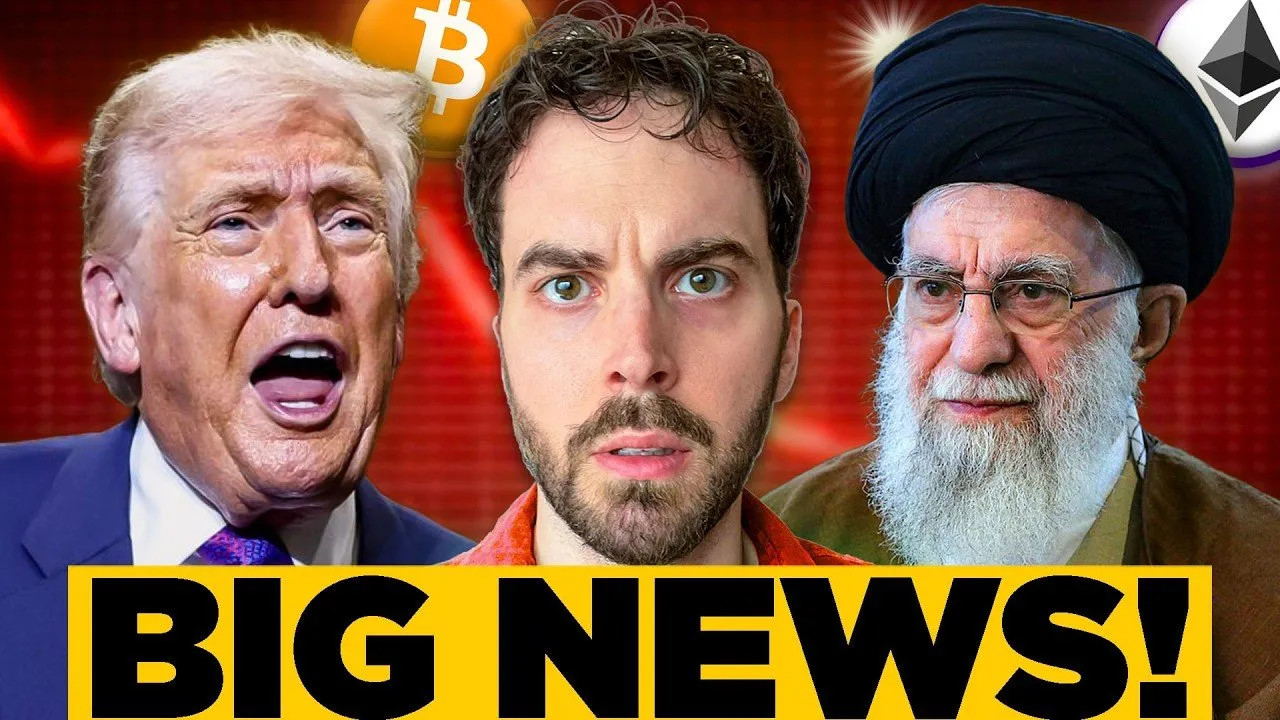
Reports from former intelligence officials suggest an imminent escalation in U.S.-Iran relations, with claims that the Trump administration has authorized a military strike against Iran scheduled for early this week. While geopolitical tensions generally trigger volatility across traditional markets, historical data and institutional trends indicate that Bitcoin (BTC) and Ethereum (ETH) may once again serve as "flight-to-safety" assets for investors seeking to hedge against sovereign risk.
Key Points
- An ex-CIA whistleblower reports that a decision has been reached to target Iran on Monday or Tuesday following a 10-day ultimatum regarding ballistic missiles and nuclear enrichment.
- Historical analysis of 20 major geopolitical events shows Bitcoin averages a 31.2% price increase in the 50 days following the onset of a crisis.
- Institutional sentiment remains highly bullish, with non-commercial traders currently holding historically high net long positions in Bitcoin futures.
- Major financial entities, including BlackRock, are increasingly positioning Bitcoin as a decentralized alternative to traditional currencies during periods of fiscal and political instability.
Escalating Tensions and White House Dynamics
The reported decision to strike Iran follows a period of heightened rhetoric. According to a former CIA officer cited in recent briefings, the administration provided Tehran a 10-day window to halt its uranium enrichment and ballistic missile programs, as well as its support for regional proxies. However, sources suggest that President Trump may move ahead of the stated deadline to maintain a tactical advantage.
The administration appears divided on the path forward. Anti-war sentiments are reportedly led by Vice President JD Vance and Tulsi Gabbard, while a pro-intervention faction includes Secretary of State Marco Rubio and Secretary of Defense Pete Hegseth. Notably, the Joint Chiefs of Staff, historically cautious regarding new conflicts, are now reportedly aligned with the pro-interventionist wing following a series of strategic leadership replacements over the last 12 months designed to ensure political loyalty.
Bitcoin as a Geopolitical Hedge
Market analysts are closely watching the "risk-off" behavior of digital assets. During the 2020 U.S.-Iran conflict involving the assassination of Qasem Soleimani, Bitcoin rose approximately 21% as tensions peaked. This trend has been mirrored in subsequent conflicts, including the 2022 invasion of Ukraine and the 2023 Gaza conflict, where initial market "dumps" were followed by significant rallies within 50 days.
The Bitwise Investments "Chart of the Week" highlights that Bitcoin tends to underperform in the days immediately preceding a conflict but consistently overperforms in the weeks that follow. In Iran specifically, the Iranian rial has collapsed against Bitcoin, with the cryptocurrency rising over 2,600% in local terms as citizens seek to preserve wealth against a devaluing national currency.
"Across the past 20 major geopolitical risk events, Bitcoin performed on average 31.2% upwards after 50 days... which suggests that major geopolitical risk events tend to be good buying opportunities for Bitcoin and other crypto assets."
Institutional Positioning and Long-Term Outlook
Despite the immediate uncertainty, institutional data reveals a massive accumulation phase. Non-commercial traders—primarily hedge funds—are at one of the most extreme net long positions in the history of the asset class. This positioning often precedes substantial market rallies, similar to the movements seen in late 2023 and early 2025.
BlackRock, the world's largest asset manager, has also intensified its education of high-net-worth individuals regarding the merits of decentralized assets. The firm views Bitcoin not merely as a speculative tool, but as a sovereign-risk alternative.
"When you think about Bitcoin, we think of it primarily as an emerging global monetary alternative... It is a scarce, global, decentralized, non-sovereign asset which has no country-specific risk and no traditional counterparty risk."
As the deadline for military action approaches, the market is braced for short-term volatility. Investors are advised to monitor official White House communications and the DXY (U.S. Dollar Index) for broader signals, though the historical precedent for Bitcoin as a "safe haven" during Middle Eastern conflicts remains a primary focus for digital asset strategists.