Table of Contents
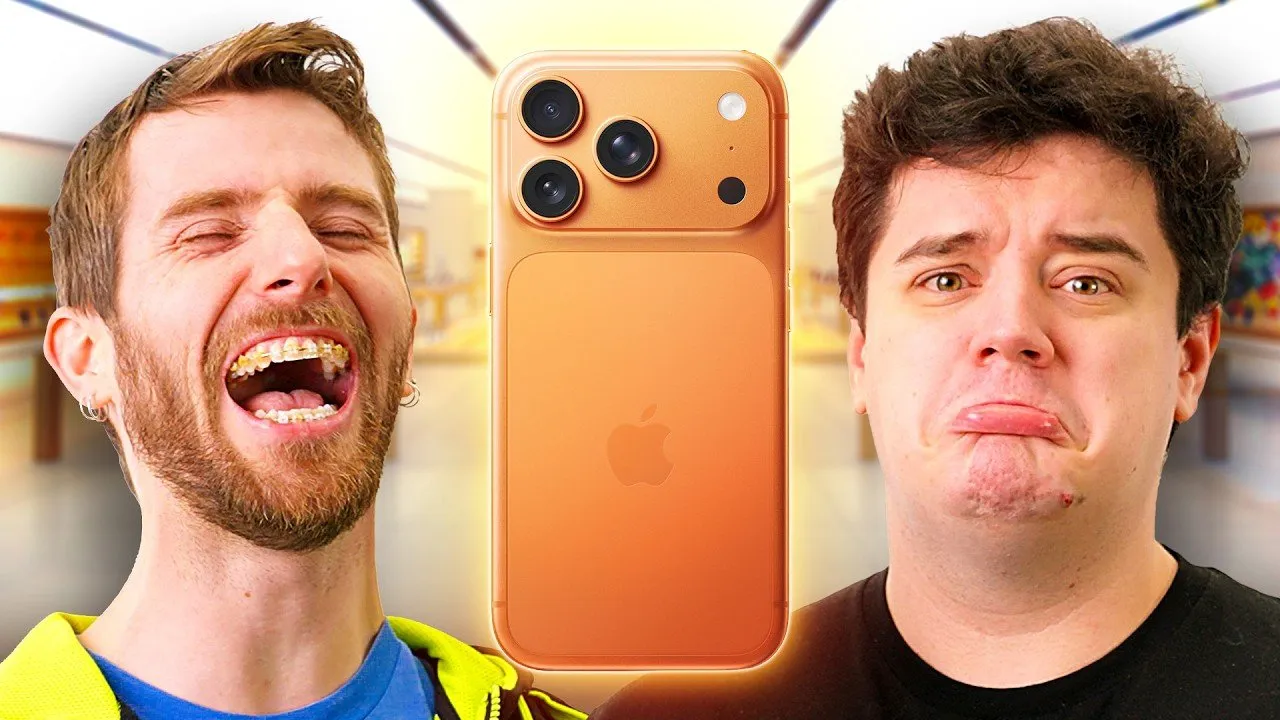
A prominent content creator recently detailed their decisive shift from Android to the new iPhone 17 Pro Max, a move made despite what initially appeared to be inopportune timing with competing product announcements. This personal and professional reevaluation of mobile ecosystems, heavily influenced by critical social interaction shortcomings experienced at events like TwitchCon, highlights a growing focus on integrated user experience and platform advantages for professionals in the digital space.
Key Points
- The creator's primary motivation for switching from Android to iOS was enhancing social networking and contact sharing, particularly the seamlessness of AirDrop.
- Despite significant frustrations with Apple's Move to iOS app during the initial setup, the iPhone 17 Pro Max offered unexpected "quality of life" features, including its display, battery life, and surprising customization options.
- Persistent user experience pain points identified include the default iOS keyboard's design and a confusing system of swipe-down gestures for core functions.
- The iPhone's superior camera capabilities and its optimized integration with third-party applications for content creation were cited as major advantages over Android's fragmented ecosystem.
- The creator concludes that the iPhone is ideally suited for both users seeking a straightforward smartphone experience and content professionals, expressing strong commitment to the Apple platform moving forward.
The Shift to iOS: Social & Creative Catalysts
The transition to Apple's ecosystem was not a casual decision but a calculated response to specific professional and social needs. The content creator, previously an avid Android user with devices like the OnePlus 11 and a Fold 4, revealed a desire for a "fresher, cutting-edge" device. While a better camera and innovative gimmicks were considerations, the paramount factor proved to be the social experience.
A pivotal moment occurred last October during TwitchCon, where the limitations of an Android device became apparent in networking situations. "As dumb as this is going to sound to many of you," the creator stated, "my Android device actually held back my networking efforts multiple times." The inability to quickly share contact information via methods like AirDrop forced awkward requests for manual number entry, creating perceived friction in professional interactions. While no one refused to share their contact, the experience underscored a significant barrier. Though a temporary workaround involved setting a Discord QR code as a wallpaper, its limited ubiquity in North America presented its own challenges.
Beyond the immediate social hurdles, the overall appeal of the latest iPhone generation played a role. Even renowned tech reviewer Lionus, a figure often critical of Apple, reportedly acknowledged the iPhone 17 Pro Max as an "incredibly complete package" from top to bottom. This holistic appeal, combined with the social imperative, ultimately drove the purchase.
"As dumb as this is going to sound to many of you, my Android device actually held back my networking efforts multiple times."
User Experience: Frustrations and Unexpected Delights
The initial migration process presented a significant hurdle. Setting up the new iPhone proved to be an arduous task, taking "over 48 hours" for the device to be fully operational. The primary culprit was Apple's Move to iOS app, which repeatedly failed. The creator recounted instances of the Android phone overheating and shutting down, both devices dying mid-transfer due to prolonged duration, and transfers getting stuck for several hours at the "1 minute remaining" mark.
When these issues were shared on Twitter, some users questioned the authenticity or attributed it to a "skill issue." The creator countered, stating, "All I did was follow the app instructions. And at the time, I had no intention on this being a video, so why would I fake this for my own personal device?" While some comments suggested the app may be broken on specific "flavors of Android" due to ecosystem fragmentation, the lack of an official warning from Apple was noted as a failing. Ultimately, a manual setup, while taking four hours, inadvertently provided a deeper appreciation for the iPhone's lauded qualities.
Among the unexpected positives, the device's aesthetics and fluid interface stood out. The "smooth transitions and the fun little animations" associated with Liquid Glass contribute to a luxurious feel. The display was praised for its quality and ability to dim significantly for nighttime use, and the battery consistently lasted "multiple days," charging rapidly enough to be a non-issue during the work week. Surprisingly, the level of customization available on iOS was found to be "on par or even better than some Android devices," though the inability to sideload applications was acknowledged as a key distinction, albeit one that personally hadn't hindered the user.
However, not all aspects were seamless. The default iOS keyboard was deemed "the worst default keyboard I have ever used on a mobile phone," citing wasted space and the "unacceptable" placement of the dictation key directly where the send button typically resides. Furthermore, the fragmented swipe-down gestures for notifications, app search, and the control center were highlighted as confusing and ergonomically challenging, especially the inconsistent "tap to go back" action within the control center.
"All I did was follow the app instructions. And at the time, I had no intention on this being a video, so why would I fake this for my own personal device?"
Camera Prowess and the App Advantage
The iPhone's camera emerged as a definitive strength. Described as "easily the best camera I've ever used on a mobile device, no question," its capabilities are seen as a primary driver for its dominance among social media-driven demographics. While the default camera app was criticized for being "too bare and not customizable," the extensive compatibility and enhanced features offered by third-party camera apps are considered unparalleled.
This camera superiority is attributed to Apple's integrated ecosystem. The tight interplay between iOS software and iPhone hardware contrasts sharply with Android's vast, fragmented ecosystem. "Android is incredibly versatile and works across thousands of devices," the creator explained, "but that means developers of each flavor need to work on bridging the gap between the various physical camera integrations and Android." This fragmentation often leads to "extra overhead, poor image processing, and maybe most importantly, an extremely inconsistent look and feel across the ecosystem." This inconsistency is particularly evident when third-party apps utilize the camera, as demonstrated by a direct comparison of two Twitch streams: an iPhone's front-facing camera stream appeared cleaner even after Twitch compression and YouTube upload, surpassing the quality of a rear-facing Android camera's full-quality file.
Beyond the camera, the app ecosystem itself offers a significant advantage. New applications frequently launch exclusively on iPhone, and established apps often roll out updates and new features to iOS users "before the Android plebs." This is especially true for content creator-focused functionalities, with examples including YouTube stories support arriving earlier on iPhone and Instagram's "trial reels" feature being available on iOS for a year before reaching many Android devices. The seamless "magic" of Apple's integrated experience, from AirDrop's intuitiveness to iMessage features and one-button FaceTime transitions, stands in stark contrast to Android's often "afterthought" approach to similar functionalities like Quick Share.
"You can say what you want about Apple's walled garden, but when people have been fully converted to it, it truly feels like magic."
Who is the iPhone For? A Creator's Perspective
Based on this comprehensive experience, the creator posits that the iPhone caters to two distinct demographics. The first comprises individuals who "just want a phone," prioritizing ease of use, camera quality, design, and a reliable experience over technical specifics like sideloading or open ecosystems. For these users, Apple's focus on visible features like the camera, device body, colors, and Liquid Glass makes perfect sense.
The second demographic, and one the creator identifies with, is the content creator. While acknowledging that creative work can be done on any device, the iPhone streamlines the workflow through its prioritized features: early access to new app functionalities, effortless sharing of large video files via AirDrop, and convenient contact exchange at industry events. These capabilities directly address the unique needs of professionals in the digital content space.
The creator expressed a strong sentiment against returning to Android, even regretting not having made the switch sooner. The only potential exception that might prompt a reconsideration is the Samsung Trifold, a device the creator has long awaited and recently had the opportunity to experience firsthand. However, for the foreseeable future, the iPhone appears to be the platform of choice for this particular content creator.