Table of Contents
The widespread perception of creativity is fundamentally flawed. Society often treats it as a passive, binary trait—like a scar or eye color—that you either possess or lack. While genetic predispositions exist, viewing creativity as a fixed attribute is a self-fulfilling prophecy of failure. If you convince yourself you lack the "creative gene," you surrender your potential before you even begin.
Creativity is not a mystical gift; it is a skill that can be honed, practiced, and systematized. The only way to guarantee a lack of creativity is to surrender your agency to AI or to endlessly repeat the mantra that you aren't creative. By shifting your perspective from "talent" to "system," you can build a toolbox for new ideas, practice the craft daily, and hold yourself accountable for the output.
Key Takeaways
- Creativity is synthesis, not magic: Humans do not create from nothing; we rearrange existing knowledge and experiences into new forms.
- Mastery precedes rebellion: You must understand the rules and constraints of your medium before you can effectively break them.
- Experience fuels output: A rich life filled with diverse experiences and "boredom" provides the raw data your brain needs to generate ideas.
- Action outperforms theory: Theoretical knowledge is useless without the "daily reps" of creating, failing, and refining work.
- Publishing creates accountability: Art must be released into the world to be judged, which forces you to finish projects and improve.
The Evolution and Definition of Creativity
To master creativity, we must first define it. The etymology of the word offers profound insight into how our understanding has shifted over centuries. The term originates from the Latin creare, meaning simply to make or bring forth. It was a practical, workmanlike term.
However, as Christianity influenced Europe during the Middle Ages, the word creatio took on a divine weight. It became theological, reserved for God’s ability to create something out of nothing (creatio ex nihilo). The Renaissance and the rise of Humanism later reclaimed the word, stressing the artistic potential of man. Today, we have returned to a broader definition, but the theological distinction remains relevant: humans cannot create out of nothing.
Gathering Your Raw Materials
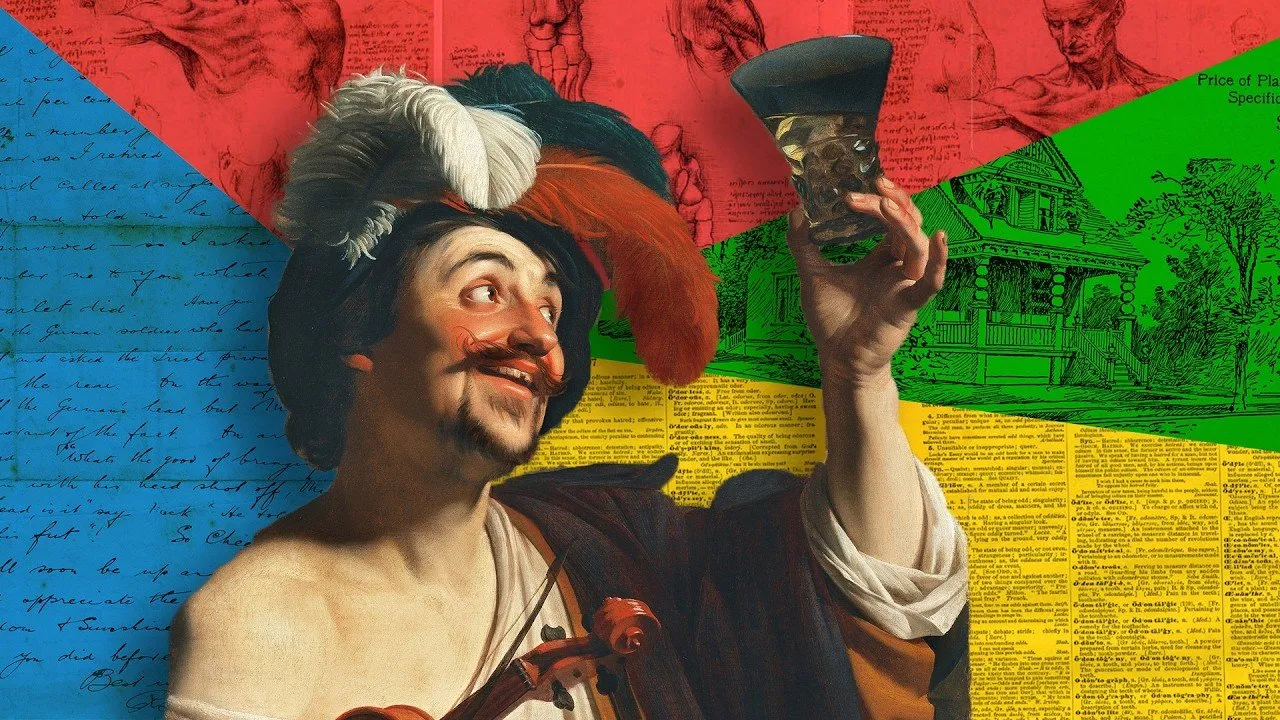
True creativity is the imaginative use of existing knowledge to produce new ideas, inventions, or art. Absolute originality is a myth; we all have access to the same raw materials—limestone, paint, words, musical notes. The difference between the creative and the uncreative lies in how those materials are gathered and synthesized.
Therefore, the first step in any creative system is consumption. To produce unique work, you must immerse yourself in the great works of your field. Just as Dostoevsky did not simply spawn with thematic talent—he absorbed Gogol and Pushkin—you must collect the "DNA" of other creators.
"Creativity is how we use existing knowledge imaginatively to come up with new ideas... That's going to mean nothing is 100% original. But that isn't the goal of creativity because it's impossible unless you're God."
By mimicking styles, borrowing tones, and studying the architecture of great works, you eventually create a synthesis that becomes your own unique voice. You must visit museums, read complex literature, and analyze films not just as a consumer, but as a student of the craft.
Beyond Novelty: The Standard of Excellence
In the modern era, the definition of creativity has often been diluted to mean "being different." There is a tendency to blindly worship novelty, assuming that the more shocking or alternative a piece of work is, the more creative it must be. This is a dangerous misconception.
Being different is easy; being excellent is difficult. Contemporary art movements often rely on shock factor or purposeful weirdness, but without technical execution or aesthetic value, these works often blend into a forgettable mass of "edginess."
Balancing Originality with Beauty
True creativity should aim for a higher standard: building on novelty while maintaining excellence. Work should be unique, yes, but it must also be evocative, technically executed, and beautiful. This approach respects the value of the art form rather than deconstructing it solely for the sake of rebellion.
A creative act should not be a random mashing together of elements. It requires the discipline to produce something that is not only new but also impressive and structurally sound.
The Paradox of Rules and Constraints
A common cliché in the arts is to "master the rules before you break them." While often repeated, the depth of this advice is rarely understood. Some view creativity as a measure of how many rules one can ignore, equating contrarianism with artistic merit. However, breaking rules without understanding them results in chaos, not art.
Constraints as a Catalyst
Technical constraints—such as grammar in writing, logic in philosophy, or the rule of thirds in photography—force you to be creative with the resources you have. When you restrict your freedom, you prevent the reliance on crutches like expensive equipment or obscure techniques. You build a foundation based on the fundamental principles of your craft.
Breaking Rules with Intent
The second benefit of mastering rules is that it allows you to break them with precision. Great artists deviate from convention not by accident, but by calculated choice to achieve a specific effect. A novice breaks a rule because they don't know it exists; a master breaks a rule to make a statement.
"You as a creative person, you must respect the rules until you have the authority to break them."
Consider the 1995 film La Haine. Despite being filmed in the mid-90s, the director chose to shoot in black and white. To a modern audience, this might seem obsolete, but the choice was deliberate. The lack of color emphasized the gritty, bleak atmosphere of the narrative, making it feel like a documentary of alienation rather than a standard thriller. This was a broken rule that elevated the work.
Feeding the Mind and Embracing Boredom
Your creative output is a reflection of your lived experience. If your input is shallow, your output will be shallow. Historic movements, such as Italian Futurism, were born out of the specific political and industrial climate of their time. Similarly, authors like Tolkien wove their experiences of war and academic philology into their fantasy worlds.
To expand your creative potential, you must live richly. Travel, difficult conversations, and intimidating experiences build a bank of inspiration that you can draw from later. However, gathering these experiences is only half the battle; you also need the mental space to process them.
The Necessity of Silence
When we feel uncreative, our instinct is often to force an idea, sitting at a desk and straining for a breakthrough. This is rarely effective. The brain is a thinking organ that synthesizes information naturally during downtime. If you constantly jam content—podcasts, music, endless scrolling—into your mind, there is no room for new ideas to form.
You must actively embrace boredom. Go for walks without headphones. Sit in silence. By reducing external stimulation, you allow your brain to drift, daydream, and make the unexpected connections that characterize true creativity.
Action, Authenticity, and Accountability
Theory alone will never make you creative. You can study techniques and read forums indefinitely, but nothing replaces the act of doing. This distinction is highlighted by a study involving CPR performance, where experienced paramedics outperformed CPR instructors in recognizing effective life-saving techniques. The instructors were focused on the theoretical, step-by-step textbook approach, while the paramedics relied on the nuances learned through real-world application.
Intellectualism without action is merely daydreaming. You must have the courage to look clumsy, fail, and produce bad work in order to eventually produce good work. The person who enters the arena and fails learns infinitely more than the spectator criticizing from the sidelines.
The Practice of Authenticity
Authenticity is a buzzword that is often confused with being "raw" or messy. True authenticity is simply honesty—being who you are, whether that is polished, raw, controversial, or safe. Many creatives dilute their work with disclaimers and "safe" opinions to avoid judgment, resulting in spiritually neutered art.
To be creative, you must be willing to be misunderstood. Write like nobody is watching, even though you intend to publish. This removes the self-imposed suffocation of trying to please an imaginary audience.
The Power of Publishing
Finally, creativity requires accountability. If your work stays in a drawer or on a hard drive, it is safe, but it is also stagnant. By publishing your work—whether on a website, social media, or a forum—you introduce the pressure of judgment.
This external pressure forces you to finish projects rather than abandoning them when they get difficult. It pushes you to improve faster because your reputation is on the line. Whether you are building a portfolio or sharing thoughts on a blog, the act of hitting "publish" transforms a hobby into a discipline.
Conclusion
Creativity is not a genetic lottery ticket; it is a system of inputs and outputs. It requires the humility to learn from the past, the discipline to master the rules, the courage to experience life fully, and the grit to practice daily. Stop telling yourself you aren't creative. Gather your materials, respect the craft, and most importantly, put your work out into the world.