Table of Contents
In the high-stakes world of product management, every item in your backlog is a gamble. Whether you acknowledge it or not, you are placing bets on features, hoping they will drive the outcomes your business needs. The difference between successful product teams and those that spin their wheels isn't just about execution velocity—it is about how they mitigate risk through continuous learning.
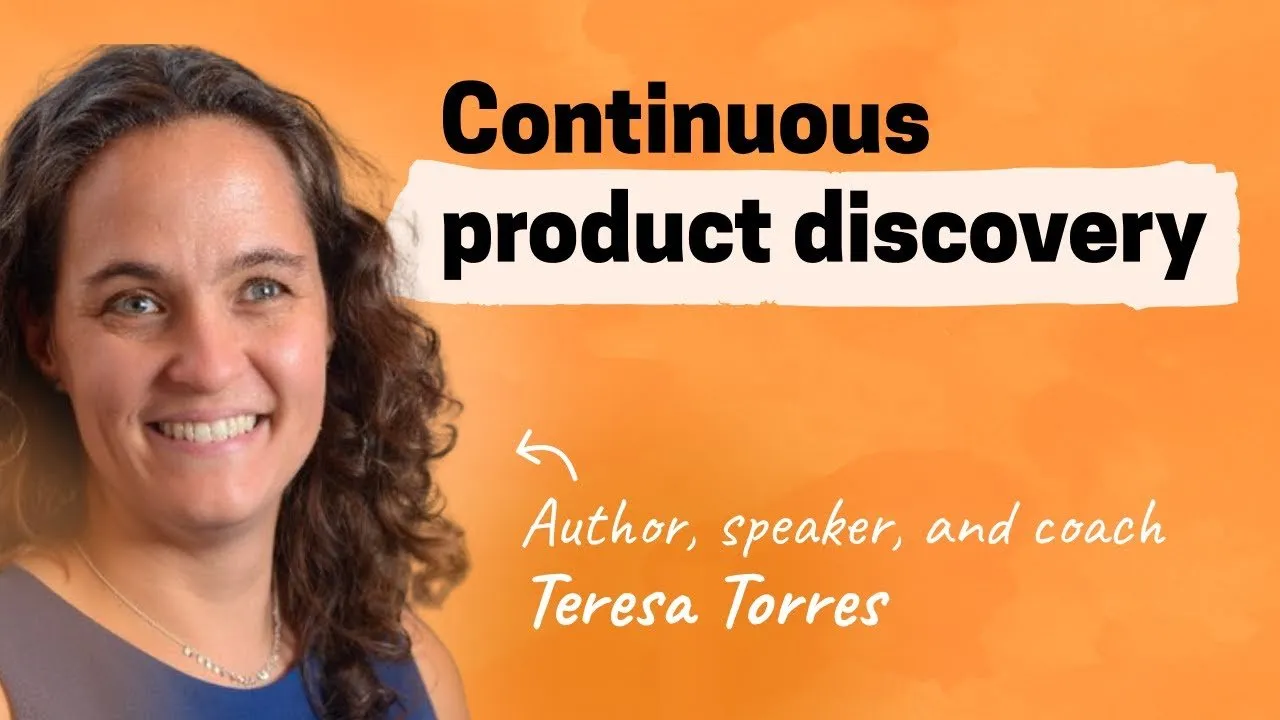
Teresa Torres, author of Continuous Discovery Habits, argues that the traditional divide between "discovery" (figuring out what to build) and "delivery" (building it) is a fallacy that slows teams down. Instead of treating research as a one-off phase, modern product trios must build a habit of continuous engagement with customers.
By shifting from project-based research to continuous discovery, teams can move faster, build with confidence, and align their daily work with strategic business outcomes. This guide explores how to implement the Opportunity Solution Tree, automate your research recruitment, and master the art of the customer interview.
Key Takeaways
- Discovery is not a phase: Treat discovery and delivery as parallel tracks. You should always be delivering value while simultaneously reducing risk on future bets through research.
- Map opportunities, not just solutions: Use the Opportunity Solution Tree (OST) to visualize the path from business outcomes to customer needs (opportunities) and finally to solutions.
- Automate recruitment: Remove the friction of finding interview subjects by using in-product "nudges" to fill your calendar automatically, aiming for at least one customer conversation per week.
- Collect stories, not opinions: When interviewing, avoid asking what users would do. Ask them to tell a specific story about the last time they encountered a problem to get reliable behavioral data.
- Test assumptions, not ideas: Speed up validation by breaking large ideas down into their underlying assumptions and testing those rapidly, rather than running slow, full-scale experiments.
The Philosophy of Continuous Discovery
Many organizations view product development as a linear process: first, you discover, then you deliver. This project-based mindset often leads to "analysis paralysis" or, conversely, reckless building with zero validation. The reality is that digital products are never truly "done." They require constant iteration, which means the discovery process must be just as constant as the delivery process.
The core philosophy of continuous discovery rests on the understanding that everything in your backlog is a bet. You are betting that a specific feature will solve a customer problem, and you are betting that solving that problem will drive a business result.
"Everything in our backlog is a bet... whether we do discovery or not. Discovery is helping us make a better bet. Now sometimes in our organizations, we need to do a lot of discovery and make as good of a bet as we can, but there's other times we can make a risky bet."
The goal is not to eliminate risk entirely—that is impossible in business. The goal is to calibrate your investment in discovery based on the risk of the bet. If you are tweaking a password reset flow, you might just ship it. If you are pivoting the core product strategy, you need robust evidence. By building a continuous habit of research, you ensure that you always have the customer context required to make these judgment calls effectively.
Mastering the Opportunity Solution Tree
One of the most difficult challenges for product teams is connecting high-level business goals (like "increase retention") with the day-to-day work of shipping features. To bridge this gap, Torres introduced the Opportunity Solution Tree (OST). This visual framework helps teams organize their thinking and ensure they are solving real customer problems rather than just building features.
The Structure of the Tree
The tree consists of four distinct levels:
- The Outcome: The root of the tree. This is the business metric you are trying to drive (e.g., Increase viewing time).
- The Opportunities: These are unmet customer needs, pain points, or desires. This is the most critical and often misunderstood layer.
- The Solutions: The features or tactics you believe will address the opportunities.
- Assumption Tests: The specific experiments run to validate the solutions.
The Trap of "Solutioning" Opportunities
The most common mistake teams make when using the OST is writing solutions in the opportunity space. An opportunity is not "I wish this was easier to use" or "I want a search bar." Those are solutions disguised as needs.
A true opportunity is specific and grounded in the customer's experience. To find these, teams should map out the customer's experience. For example, in the context of streaming entertainment, the experience map might look like this:
- Trigger: Deciding to watch something.
- Evaluation: Deciding what to watch.
- Viewing: The actual consumption experience.
- Post-viewing: Deciding to continue or stop.
Within the "Evaluation" phase, a specific opportunity might be: "It is physically painful to type a long movie title using an Apple TV remote." This is a distinct, solvable pain point. By drilling down to this level of specificity, teams can brainstorm multiple solutions (voice search, mobile keyboard pairing, predictive text) rather than locking themselves into a single idea too early.
Automating the Research Habit
The number one objection to continuous discovery is time. Product managers are often overwhelmed with meetings and delivery management, leaving no room for research. However, the time drain usually comes from the logistics of recruiting users, not the interviews themselves.
To sustain a continuous cadence, you must automate the recruiting process. The goal is to wake up on Monday morning and see an interview slot on your calendar without having done any manual work to put it there.
The "Nudge" Approach
Leveraging the concept of "Nudge theory," you want to make it easier for customers to say yes than to say no. The most effective method is to recruit users while they are already engaging with your product.
- In-Product Intercepts: Similar to an NPS survey, use a pop-up that asks, "Do you have 20 minutes to chat with us to help improve [Product Name]?" If they click yes, immediately serve them a scheduling link (like Calendly) to book a time.
- Leveraging Customer Teams: For B2B products where direct access is harder, utilize your sales and support teams. Create a specific "trigger" for them. For example: "If you speak to a customer struggling with [X feature] this week, please book a time on the product team's calendar."
By completely removing the administrative burden of finding people to talk to, the "cost" of discovery drops significantly, making a weekly cadence sustainable.
Conducting Effective Customer Interviews
Once you have a customer on a call, the quality of your data depends entirely on your interviewing technique. Many product teams default to asking direct questions like, "What features do you want?" or "How do you decide what to watch?"
The problem is that humans are notoriously bad at analyzing their own behavior out of context. They will give you an idealized answer that often contradicts their actual actions.
The "Tell Me About the Last Time" Method
To get reliable data, you must move the conversation from the abstract to the specific. Your goal is to collect stories, not opinions.
If you are building a streaming service, do not ask, "What do you usually watch?" Instead, ask: "Tell me about the last time you watched something."
The Story-Collection Framework:
- Set the Scene: "Where were you? Who were you with? What time was it?" This grounds the user in a specific memory.
- Trace the Timeline: "What happened first? You sat on the couch—then what? You opened Netflix. What did you see?"
- Dig for Friction: "You scrolled for five minutes and didn't pick anything. What were you thinking then? Why did you switch to Prime Video?"
"If your interview feels like you're having a beer with a buddy, that's a good sign... It should be that casual and that conversational."
When you collect stories, opportunities emerge naturally. You might discover that the user switched apps not because of content, but because they couldn't remember their password on the first app—a friction point you might never have discovered through a survey.
Testing Assumptions vs. Running Experiments
In the scientific model of product management, we often talk about "running experiments." However, many teams interpret this as building a Minimum Viable Product (MVP) or a high-fidelity prototype and A/B testing it. This is often too slow and expensive for continuous discovery.
Torres suggests shifting the focus to Assumption Testing. A solution is essentially a bundle of assumptions. Rather than testing the whole solution, break it down:
- Desirability Assumptions: Do they want this?
- Viability Assumptions: Should we build this (business sense)?
- Feasibility Assumptions: Can we build this?
- Usability Assumptions: Can they figure out how to use it?
By isolating a single assumption—for example, "We assume users are willing to share their location data"—you can run a very small, rapid test (like a fake door test or a one-question survey) to validate that specific premise. This allows teams to test dozens of assumptions per week across multiple solution ideas, dramatically speeding up the feedback loop compared to traditional experimentation.
Conclusion
Continuous discovery is not about strictly following a rigid methodology; it is about shifting the team's mindset from "knowing" to "learning." It requires humility to admit that we cannot predict the future and discipline to check our biases against customer reality regularly.
The most successful teams operate as a "Product Trio"—a product manager, a designer, and an engineer—who interview together, map opportunities together, and decide on solutions together. By democratizing this knowledge and maintaining a continuous dialogue with the market, teams can stop guessing and start building products that truly resonate.