Table of Contents
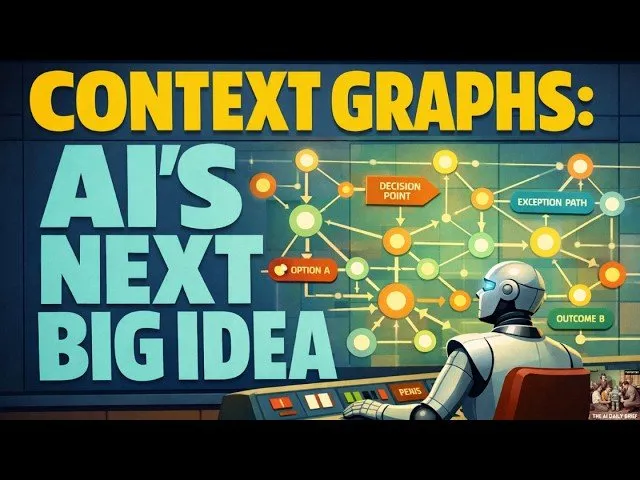
As the enterprise sector prepares for the next phase of artificial intelligence implementation in 2026, a critical data architecture concept is emerging as the missing link for autonomous agents: the "Context Graph." While traditional databases excel at recording finalized transactions, industry experts argue they fail to capture the decision-making logic—the "why"—that precedes those outcomes. This new framework aims to digitize the unstructured "decision traces" typically lost in Slack threads and verbal approvals, potentially serving as the foundation for true AI autonomy.
Key Points
- The "Why" Gap: Traditional Systems of Record store state (what happened) but lack the decision lineage (why it happened) required for agents to function autonomously.
- Decision Traces: Context Graphs capture the full execution path, including exceptions, overrides, and cross-platform communications, creating a queryable history of logic.
- Context Engineering: Industry leaders predict a shift where human workers evolve into "managers of agents," responsible for curating the context that guides AI decision-making.
Moving Beyond Systems of Record
The conversation around Context Graphs stems from a growing recognition that current data infrastructures are insufficient for the agentic era. Investor Jamin Ball recently highlighted the fragility of current workflows in his analysis, "Long Live Systems of Record." He notes that while large enterprises have invested heavily in data warehouses and lakehouses, these systems often contain conflicting truths. Sales, finance, and legal departments may all hold different definitions of a metric like Annual Recurring Revenue (ARR).
According to Ball, as workflows become automated, the risk of failure shifts from the AI model itself to the accuracy of the data it retrieves. If an agent cannot determine which system holds the "canonical" truth, it cannot execute complex tasks reliably.
The Rise of the Context Graph
While establishing a single source of truth is essential, investors Jay Gupta and Ashu Garg of Foundation Capital argue that cleaning up existing data is only half the battle. They identify a "trillion-dollar opportunity" in capturing what they term "decision traces."
Current systems are effective at recording state—for example, that a deal closed at a 20% discount. However, they fail to record the nuance of why that discount was approved. Was it due to a specific procurement cycle policy? A concession made because of a service outage? Or a precedent set by a VP in a previous quarter?
"The context graph becomes the real source of truth for autonomy because it explains not just what happened but why it was allowed to happen."
Currently, this vital context lives in ephemeral channels: direct messages, hallway conversations, and tribal knowledge. A Context Graph functions by stitching these disparate elements together. Because AI agents sit in the execution path, they are uniquely positioned to record the inputs gathered, policies evaluated, and exception routes invoked at the moment of decision. This turns fleeting interactions into a permanent, searchable record of organizational logic.
Context Engineering and the Future of Work
The implementation of Context Graphs suggests a fundamental shift in how organizations are structured. The Cogent Enterprise substack argues against pre-defining these graphs, suggesting instead that agents should be allowed to discover the "organizational ontology" through actual usage patterns. By traversing APIs, documentation, and past tickets, agents can reveal how work actually gets done, often exposing where practical reality diverges from written policy.
This technological shift will necessitate a corresponding evolution in human roles. Aaron Levie, CEO of Box, describes this future as the "era of context." He predicts that as AI assumes more execution capabilities, human differentiation will rely on "context engineering."
"The individual contributor of today becomes the manager of agents in the future. Their new responsibilities will be providing the oversight and escalation paths... shepherding work between the various agents."
As companies look toward 2026, the competitive advantage may no longer lie solely in having the best talent or the most data, but in having the most complete record of decision-making logic. By capturing the "decision traces" that define an organization's unique operational character, Context Graphs promise to turn exceptions into precedents, allowing AI to navigate the complexities of enterprise work with human-like judgment.