Table of Contents
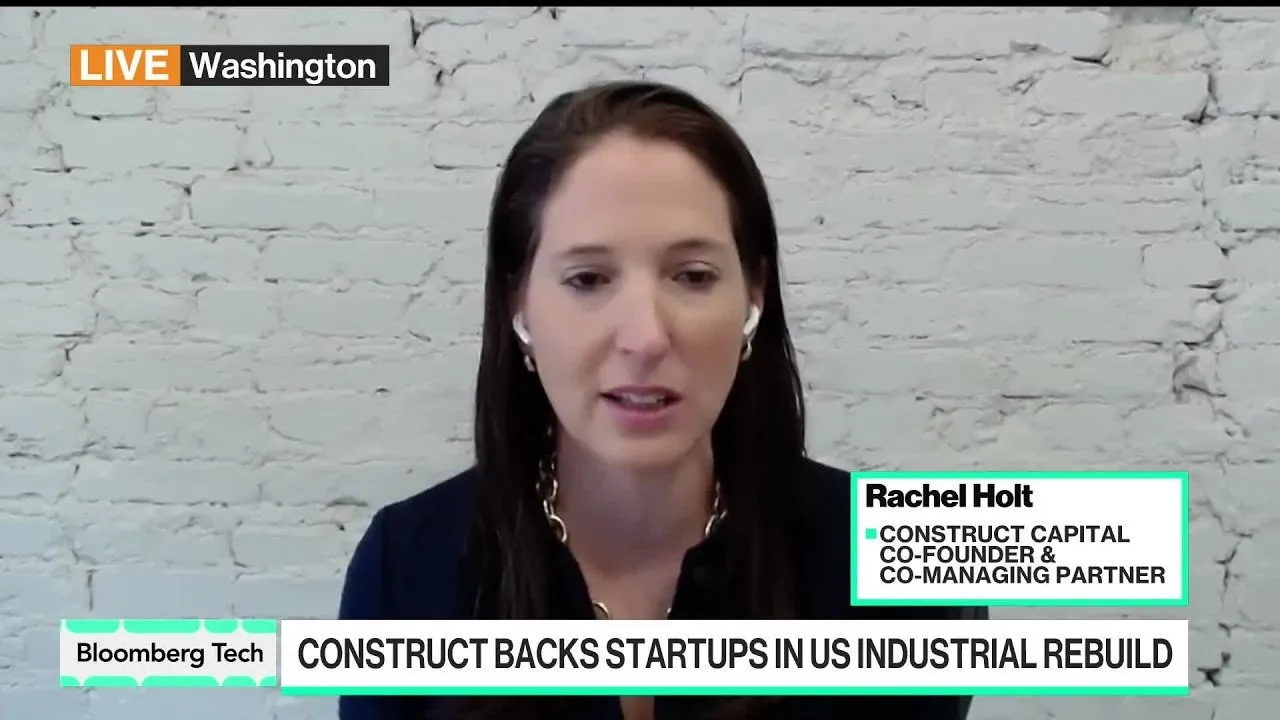
Venture capital firm Construct Capital has successfully raised $300 million to continue its mandate of backing startups within foundational industries, including manufacturing, supply chain, and defense technology. Founded in 2020 by Rachel Holt and Dana Grayson, the firm aims to address long-standing productivity declines in sectors that remain critical to the U.S. economy, despite a broader tech focus elsewhere.
Key Points
- Construct Capital secured $300 million to invest in early-stage startups focused on industrialization, defense tech, and logistics.
- The firm reports a 20x increase in Series B funding flowing into these sectors since its inception in 2020.
- Founders prioritize dual-use technology—software and hardware that serves both commercial and government markets—to manage long procurement cycles.
- The investment strategy centers on the belief that software can help the U.S. "leapfrog" traditional manufacturing bottlenecks where manual labor efficiency has historically lagged.
The Shift Toward Industrial Reinvestment
When Construct Capital launched in early 2020, its focus on "productivity technology" for foundational industries was a contrarian bet. While the broader venture capital market was captivated by Web3 and crypto, the firm identified a critical vulnerability: productivity in manufacturing and logistics had been steadily declining for over a decade. By applying modern software solutions to these massive, capital-intensive sectors, the firm sought to reverse a trend where basic industrial tasks were taking significantly longer to complete than they did 15 years ago.
The market environment has shifted dramatically since then. The firm notes that interest in industrial tech and defense has surged, as evidenced by a 20-fold increase in Series B financing for companies in these spaces. High-profile, sold-out industry events, such as the Hill in the Valley Forum, signal a new consensus among investors that these sectors are no longer just "slow-moving" or "boring," but are instead the next frontier for venture-scale returns.
Strategic Focus: The Dual-Use Advantage
A central pillar of the firm’s investment thesis is the concept of dual-use technology. Rather than relying solely on government contracts—which are often characterized by long lead times and complex compliance requirements—Construct Capital targets companies that can build initial momentum through commercial, private-sector demand. This approach allows startups to build robust supply chains and technological capabilities before scaling into high-impact government work.
"There are a lot of amazing companies in the defense tech space, but companies like Hadrian didn't start just selling into governments. Fundamentally, what excites us about these companies is half the GDP sits within foundational industries. There has been almost no technology incumbent, and when you think about AI, we can really leapfrog forward," said Rachel Holt.
The firm points to Hadrian, a precision manufacturing company, as a primary example of this success. Hadrian’s recent, high-profile contract with the U.S. Navy demonstrates how a firm can blend commercial viability with public-sector utility to accelerate its growth trajectory significantly.
The Road Ahead for Industrial Innovation
As the firm deploys its latest $300 million, the broader political and economic climate appears increasingly supportive of domestic reindustrialization. Current administrative efforts to cut red tape and expedite permitting are viewed as positive tailwinds for the startups currently in the firm’s portfolio.
The core objective remains to bridge the gap between American software prowess and the practical, manual-heavy requirements of industrial production. By avoiding the pitfalls of previous market cycles and staying disciplined in sectors that represent roughly 50% of the U.S. GDP, Construct Capital positions itself at the center of a long-term transition toward more efficient, technology-enabled domestic manufacturing and defense supply chains.