Table of Contents
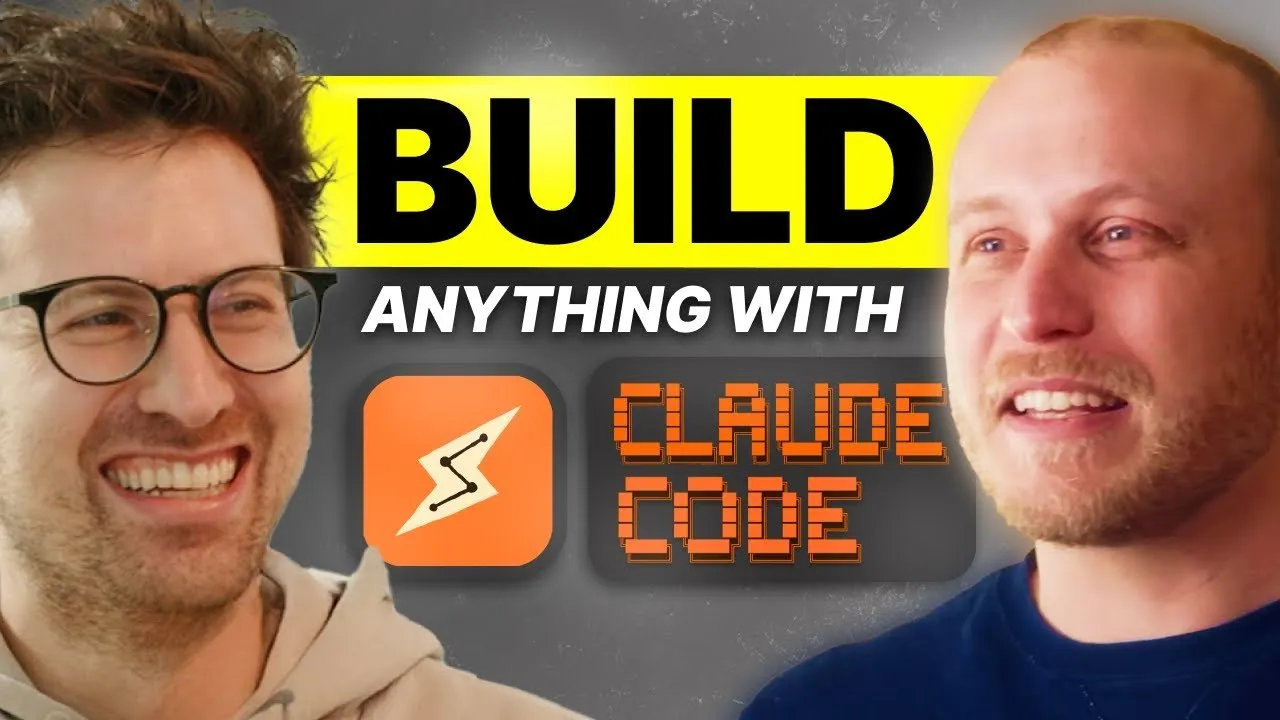
Claude Cowork represents a significant shift in how we interact with artificial intelligence, moving beyond simple chat interfaces to a model that actively participates in your desktop environment. While Claude Code has already gone viral among developers for its terminal-based capabilities, Cowork bridges the gap for non-technical users, offering a polished UI that harnesses the same agentic power. In a recent deep dive with Boris, the creator of Claude Code and co-creator of Cowork, we explored exactly how this tool functions, how to set it up for maximum efficiency, and why understanding it now puts you ahead of 99% of the workforce.
Key Takeaways
- The Agentic Shift: Unlike standard chatbots, Claude Cowork is designed to take action—renaming files, controlling browsers, and executing complex workflows across your operating system.
- Safety First: The system utilizes advanced safety protocols, including virtual machines and deletion protection, to ensure the AI interacts with your computer securely.
- Parallel Productivity: The most effective workflow involves "multi-clauding"—running 5–10 concurrent sessions to handle tedious tasks while you manage the high-level strategy.
- Opus 4.5 Superiority: For coding and complex reasoning, the Opus 4.5 model is surprisingly more cost-effective than smaller models because its superior intelligence reduces the need for corrections.
- Verification is Vital: Giving Claude the tools to verify its own work (like a browser extension to preview a web app) drastically improves output quality.
Understanding Agentic AI and Cowork
The term "agentic" has been frequently misused in the AI industry, often applied to any tool that performs a function. However, true agentic AI has a specific meaning: it is not limited to text generation or simple web searches. An agent can take independent action, use tools on your computer, and interact with the world.
Claude Cowork brings this capability to the desktop. Under the hood, it is powered by the same engine as Claude Code—the "Claude Agent." By wrapping this powerful SDK in an intuitive user interface, Anthropic has created a tool that allows users to grant access to specific folders and let the AI operate almost like an extension of the operating system.
"When you think about the AI products that everyone’s used... the biggest difference with agents is it can take action. It’s not just text... it can actually use tools on your computer."
This shift requires a change in mindset. You are no longer just chatting with a bot; you are assigning tasks to a digital teammate that has hands on the keyboard.
Real-World Use Cases and Workflow
To understand the practical application of Cowork, it helps to see it in action. The tool excels at reducing "toil"—the repetitive, administrative tasks that consume valuable time. During the demonstration, Boris highlighted several key capabilities:
File Management and Organization
One immediate use case is local file organization. By mounting a specific folder (giving the AI permission to see it), users can instruct Cowork to perform bulk actions. For example, if you have a folder full of disorganized receipts, Cowork can scan the images, identify the dates, and rename all files to a consistent format instantly.
Notably, Cowork employs "reverse solicitation." If the AI is unsure about a specific file—perhaps a receipt is missing a date—it will pause and ask the user for clarification rather than making a potentially incorrect assumption.
Browser Automation
Cowork’s capabilities extend to the browser via MCP (Model Context Protocol). It can open a browser window, navigate to Google Sheets, create a new spreadsheet, populate it with data from your local files, and format the cells. It can even compose emails within Gmail, finding the correct contact and drafting the message based on the work it just completed.
Safety and Permissions
Allowing an AI to control your mouse and keyboard raises valid security concerns. Anthropic has built Cowork with a heavy emphasis on safety alignment. The system runs within a virtual machine to isolate actions, ensuring that mistakes do not affect the broader system. Furthermore, features like deletion protection require user confirmation before any files are permanently removed.
Boris’s Claude Code Setup
While Cowork is designed for broad usability, Boris also shared his personal setup for Claude Code, offering a masterclass in how power users leverage these tools. His setup focuses on maximizing the reasoning capabilities of the model while minimizing manual friction.
1. Always Use Opus 4.5 with Thinking
There is a common misconception that smaller, faster models are cheaper for development. Boris argues the opposite. He uses Opus 4.5 with "Thinking" enabled for everything. While the per-token cost is higher, the model’s superior intelligence means it makes fewer mistakes and requires less steering.
"Because the model is smarter, it actually uses less tokens in the end... it’s often cheaper than using a smaller, less intelligent model."
2. The "Multi-Clauding" Workflow
The modern engineering workflow is no longer linear. Boris runs five to ten Claude sessions in parallel. He kicks off a task in one tab, and while the model is planning or executing, he moves to the next tab to start another task. His role has shifted from writing code to "tending to the Claudes"—unblocking them, answering questions, and reviewing plans.
3. Plan Mode is Essential
A critical feature of Claude Code is "Plan Mode." Before writing a single line of code, the AI generates a comprehensive plan of attack. Boris notes that with Opus 4.5, once the plan is solid, the execution is almost always perfect.
"Once the plan is good, the code is good."
4. The CLAUDE.md File
To maintain consistency, Boris’s team utilizes a CLAUDE.md file in their repositories. This is a simple text file that serves as a knowledge base for the AI. It contains project-specific instructions, coding standards, and lessons learned. If the AI makes a mistake, the team updates this file so the error isn't repeated—a process they call "Compound Engineering."
The Future of Work: 2026 and Beyond
Predicting the trajectory of AI development is difficult because humans think linearly, while this technology is advancing exponentially. Just a year ago, few predicted that models would be writing 100% of the code for senior engineers, yet that is the reality for Boris today.
Looking forward, Cowork is likely to become the "gateway drug" to more advanced agentic workflows. We can expect the emergence of "vertical agents"—highly specialized skills that plug into Cowork to handle specific software like AutoCAD or Salesforce. The future of work will likely involve managing an army of digital agents, moving humans away from tedious execution and toward high-level orchestration.
Conclusion
Claude Cowork and Claude Code represent a fundamental change in how we interact with computers. Whether you are an engineer automating pull requests or a business owner organizing finances, the ability to offload execution to an agentic AI is a superpower.
The best way to learn is to get your hands dirty. As Boris suggests, mount a folder, install the Chrome extension, and start experimenting. There is no single "correct" way to use these tools; the most productive users are those who treat it like an open-ended RPG, finding their own path through the technology to build workflows that suit their unique needs.