Table of Contents
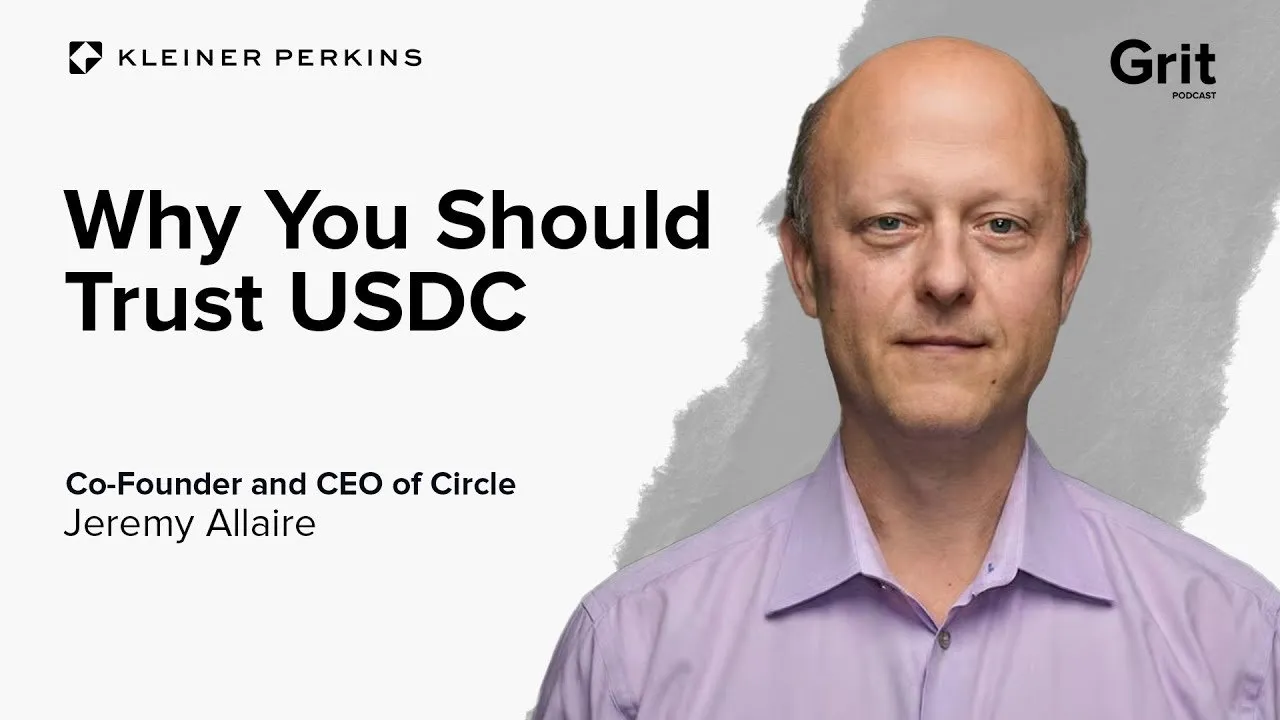
Building a new layer for the global financial system requires more than just code; it demands an almost irrational level of conviction. For Jeremy Allaire, co-founder and CEO of Circle, the journey to establishing USDC as a regulated, trusted digital dollar has been a fight against regulatory skepticism, market collapses, and near-bankruptcy. Yet, the vision remains clear: a transformation of global economic prosperity driven by dollars that move at the speed of the internet.
Circle is not merely a crypto company; it is an internet financial platform designed to upgrade the world’s economic operating system. By bridging the gap between traditional banking and blockchain technology, Circle aims to transition corporations from offline entities to "on-chain" organizations. This shift promises a future where contracts, governance, and financial arrangements are executed by software machines, fundamentally changing how value is stored and transferred globally.
Key Takeaways
- The Rise of the On-Chain Company: Just as businesses moved from offline to online, the next evolution involves companies running their governance, contracts, and treasury on programmable smart contracts.
- Full Reserve vs. Fractional Reserve: Unlike traditional banks that lend out deposits (creating risk), USDC operates on a full reserve model, holding 100% of assets in cash and short-duration U.S. Treasuries.
- The 2019 Pivot: Facing a "crypto winter" and potential bankruptcy, Circle sold off profitable exchanges and brokerage products to bet the entire company on the future of stablecoins.
- Regulatory Validation: The passage of stablecoin legislation codifies the concept of "narrow banking," separating payment utility from lending risk.
- Sustainable Leadership: Surviving 15 years of high-stakes volatility requires strict adherence to physical wellness, including sleep hygiene and mindfulness, to manage neurophysiological stress.
The Evolution of Internet Money
To understand the utility of a stablecoin, Allaire draws a parallel to the evolution of the music industry. Music on physical CDs had limited utility. When converted to MP3s, that utility increased. When music migrated to the cloud via streaming services, it became a globally accessible "celestial jukebox."
Circle is attempting to execute the same transition for the U.S. dollar. By uploading dollars to the internet, they become programmable, composable, and open to the entire world. This is not just about faster payments; it is about creating a new operating system for economic coordination.
Companies will become on-chain companies. It means that more and more of the performance of the corporation itself, its contracts, its governance, its money, its financial arrangements will be executed by smart contract-powered software machines, probably interacting with AI.
In this future state, developers can build applications on top of money protocols just as they built on top of Voice over IP (VoIP) or HTTP. The result is a financial stack that is transparent, compliant, and globally available.
Full Reserve Banking: The "Safest Dollar"
One of the critical distinctions Allaire makes regarding USDC is its structural difference from money held in a traditional bank account. When a customer deposits money into a commercial bank like Bank of America, they are technically lending that money to the bank. The bank then lends that money out to other customers (mortgages, business loans), holding only a fraction of the actual cash in reserve.
This "fractional reserve" system creates liquidity risks, as seen in historical bank runs. In contrast, Circle operates on a full reserve model, often referred to as "narrow banking."
How USDC Liquidity Works
When a user converts fiat currency into USDC, Circle does not lend that money out. The backing consists strictly of:
- Short-dated U.S. Treasury bills.
- Treasury-collateralized cash assets.
- Cash held at global custody banks.
You know if you're holding USDC, there's no risk-taking behind it. We're just holding the safest high-quality liquid assets possible.
This structure ensures that the digital dollar remains a store of value and a medium of exchange without carrying the inherent credit risk of a lending institution. Recent legislative moves, which Allaire refers to as a historic turning point, have finally codified this distinction into federal law, validating the safety and soundness of the stablecoin model.
Surviving the Darkest Hour
While Circle is now a giant in the industry, the company faced a near-death experience in 2019. Following a period of aggressive expansion in 2017 and 2018, the market entered a severe "crypto winter." Products that had previously generated significant revenue began hemorrhaging cash, and regulatory pressure made raising new capital nearly impossible.
By September 2019, the situation was dire. The board of directors hired bankruptcy advisors, and weekly meetings were held to determine if the company needed to wind down. While many executives and investors saw no path forward, Allaire saw that USDC had achieved product-market fit. He believed the stablecoin was the company's true purpose.
The Strategic Restructuring
Refusing to accept defeat, Allaire orchestrated a massive pivot:
- Asset Sales: He sold off the company’s exchange and brokerage businesses to generate immediate cash.
- Radical Downsizing: The workforce was cut from 450 employees to just 59 by January 2020.
- Singular Focus: The remaining resources were doubled down exclusively on the USDC network.
The gamble paid off. By March 2020, aided by the global shift to digital systems during the pandemic, USDC adoption exploded. The company went from near-insolvency to 1,000% growth in back-to-back years, attracting investment from financial titans like BlackRock and Fidelity.
The Human Toll of Disruption
Building a company that challenges the fundamental architecture of the global financial system takes a physical toll. Allaire admits that the stress of the early years—fighting for legitimacy while being dismissed by banks, auditors, and regulators—impacted his health.
To sustain the "extraordinary complexity" of his role, Allaire completely recalibrated his lifestyle. He views personal wellness not as a luxury, but as a prerequisite for effective leadership in a high-pressure environment.
The CEO Wellness Protocol
- Strict Sleep Hygiene: Seven hours of sleep is treated as doctrine, essential for cognitive recovery.
- Mindfulness: Daily meditation practice helps manage the cognitive dissonance of building a future the world doesn't yet believe in.
- Elimination of Negatives: Allaire stopped drinking alcohol and improved his diet to maximize energy availability.
- Compartmentalization: The ability to context-switch between fifteen different high-stakes engagements daily—from recruiting to Senate hearings—without succumbing to catastrophic thinking.
Allaire notes that recruiting for Circle involves a similar vetting process. He warns potential hires that it will be the "hardest job they've ever done" due to the unrelenting macro shocks and regulatory scrutiny. He even goes as far as meeting with candidates' spouses to ensure the family unit is prepared for the intensity of the role.
Conclusion: The Long Game
From being unable to get a meeting with an auditor in 2013 to establishing a headquarters on the 87th floor of One World Trade Center, Circle has cemented its place at the center of the financial world. The new office, overlooking the New York Fed and the Stock Exchange, serves as a symbolic statement that digital currency has arrived.
However, Allaire insists the company is still in its early stages. He envisions another 10 to 20 years of major transformation before the global economic system fully transitions to an internet-native state. For Circle, the goal isn't just to build a successful company, but to establish new global policy and contribute to an increase in economic prosperity worldwide.