Table of Contents
Most of us operate under the assumption that our digital lives are relatively private and that the world of espionage is confined to Hollywood blockbusters. However, John Kiriakou, a former CIA analyst and counterterrorism officer who spent nearly two years in prison for blowing the whistle on the agency's torture program, paints a drastically different picture. In a candid discussion about his 15-year career, Kiriakou reveals the unsettling capabilities of modern surveillance, the ruthlessness of foreign intelligence services, and the ethical gray areas that define global statecraft.
From the mechanics of recruiting spies to the reality of "sleeper agents" living next door, Kiriakou offers an insider's view that challenges the average citizen's perception of security and privacy. The following analysis breaks down his most significant revelations regarding the CIA's reach, the shifting geopolitical landscape, and the heavy price of truth-telling.
Key Takeaways
- Surveillance is near-total: Intelligence agencies possess the technology to hack cars, turn smart TVs into listening devices even when off, and purchase metadata without warrants to build profiles on citizens.
- Money drives treason: Contrary to complex psychological theories, Kiriakou asserts that 95% of individuals who turn against their countries do so simply for financial gain, with ideology and revenge playing minor roles.
- The "Sleeper Agent" threat is real: Foreign nations, particularly Russia, utilize deep-cover agents who assume the identities of deceased infants to live as Americans for decades before activation.
- China is the primary long-term adversary: While Russia is disruptive, China is playing a patient, multi-decade game focused on economic dominance, infrastructure, and academic espionage.
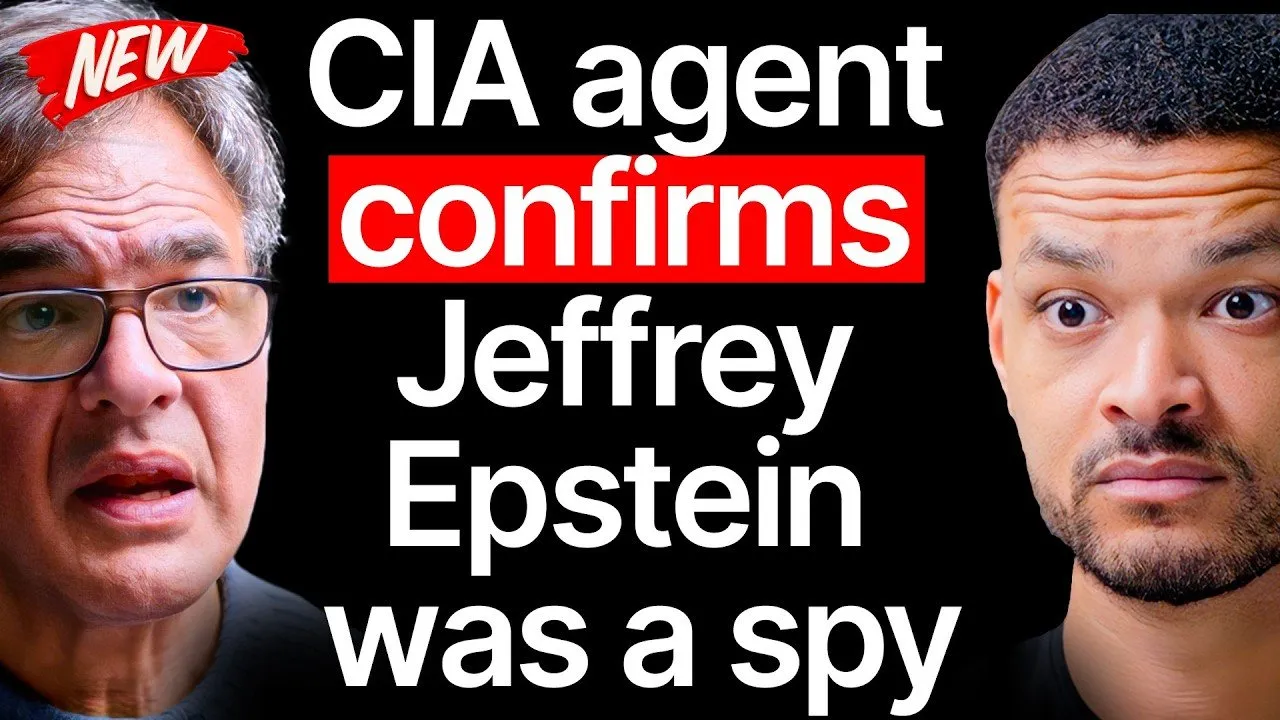
- The Jeffrey Epstein connection: Based on tradecraft analysis, Kiriakou strongly believes Jeffrey Epstein was an "access agent" likely working for Israeli intelligence (Mossad) to gather kompromat on powerful figures.
The End of Privacy: Surveillance and Cyber Capabilities
One of Kiriakou's most stark warnings concerns the erosion of privacy in the digital age. He argues that the concept of a private life is largely an illusion due to the sophisticated tools available to intelligence agencies like the CIA and NSA, as well as foreign adversaries. The conversation highlighted that agencies no longer need to physically break into homes to gather intelligence; they simply exploit the connected devices we voluntarily bring into our lives.
If they really want to get you, they're going to get you. Which reminds me of a book... called Three Felonies a Day. [The author] argues... that we are so overcriminalized, so overregulated in this country that the average American on the average day going about his or her normal business commits three felonies every day.
Vault 7 and Device Vulnerabilities
- Car hacking capabilities: Citing the "Vault 7" documents released by WikiLeaks, Kiriakou confirms that the CIA possesses software capable of remotely taking control of a car's computer system. This technology can be used to crash a vehicle, offering a method of assassination that mimics a fatal accident.
- Smart TV surveillance: Intelligence agencies can compromise smart televisions, turning their internal speakers into microphones. This allows agents to listen to conversations in a room even when the television appears to be powered off.
- The metadata loophole: While legal protections ostensibly exist, Kiriakou points out that law enforcement and intelligence agencies often bypass the need for warrants by simply purchasing metadata from service providers. This data is commercially available and can be used to reconstruct a person's movements and associations.
- Universal vulnerability: It is not just American agencies that possess these capabilities. Kiriakou warns that the intelligence services of France, Germany, Israel, Russia, and China all have similar tools to intercept communications and hack devices.
- Digital caution is paramount: The former spy advises a philosophy of extreme caution regarding digital communications, quoting former New York Governor Eliot Spitzer: "Don't nod when you can motion. Don't speak when you can nod, and don't ever put anything in a text message."
- The "Internet of Things" risk: The convenience of interconnected devices has created a massive attack surface. Whether it is a phone, a car, or a home appliance, if it is connected to the internet, it is theoretically accessible to state-level actors.
The Psychology of Espionage: How Spies Are Recruited
Kiriakou spent years in human intelligence, specifically in the "asset acquisition cycle"—the process of spotting, assessing, developing, and recruiting spies. While pop culture often emphasizes blackmail or ideological conversion, the reality of human motivation in the spy world is far more transactional. The CIA trains its officers to become "professional liars" and to identify the specific vulnerabilities or desires that can be leveraged to turn a target against their own government.
- The dominance of financial motivation: Internal CIA studies cited by Kiriakou suggest that 95% of assets are recruited purely for money. It is rarely about high-minded ideals; it is usually a simple cash transaction where secrets are exchanged for financial security.
- The "MICE" acronym: While money is the primary driver, other motivations include Ideology, Compromise (or Coercion), and Ego (or Excitement). Some individuals are recruited because they want to feel like James Bond, seeking an adrenaline rush they cannot get in their daily lives.
- The recruitment cycle: The process is methodical. It begins with "spotting" a target with access to desired information, "assessing" their vulnerability (e.g., are they disgruntled, in debt, or lonely?), "developing" a relationship based on trust, and finally "recruiting" them to spy.
- Lying as a tradecraft: Intelligence officers are trained to lie convincingly and to maintain complex cover stories. Kiriakou notes that this professional requirement often bleeds into personal lives, contributing to an exceptionally high divorce rate among CIA operatives.
- Building genuine connection: Despite the deception, successful recruitment often relies on genuine human empathy. Kiriakou recounts recruiting an Al-Qaeda-linked asset simply by showing interest in his family and personal well-being—something the target had been deprived of for years.
- The sociopathic tendency: The agency actively seeks individuals who can operate in legal and ethical gray areas. While not clinical sociopaths, effective spies must be able to compartmentalize and justify breaking laws (such as burglary or bribery) in service of the "greater good."
The Ethical Cost: Torture, Whistleblowing, and MK Ultra
Kiriakou is perhaps best known for being the first CIA officer to publicly confirm that the agency used waterboarding on detainees, a revelation that eventually led to his imprisonment. His narrative is one of deep conflict between institutional loyalty and personal ethics. He argues that the post-9/11 era saw a dangerous shift where the CIA began to operate outside the bounds of international law and American values.
I would let them send me to prison again because it was the right thing to do. I mean, we know that they were experimenting on American citizens and spreading diseases in American cities.
The Dark History of Experimentation
- MK Ultra legacy: Kiriakou draws a direct line from historical abuses to modern torture. He details the CIA's MK Ultra program (1950s-70s), which involved dosing unsuspecting American citizens with LSD and even releasing pathogens in San Francisco to test biological dispersion.
- The torture fallacy: A central reason for his whistleblowing was the realization that the torture program was not only immoral and illegal but ineffective. He asserts that superiors perpetuated the lie that torture saved lives, whereas it often produced false intelligence.
- Legal shapeshifting: Kiriakou notes that waterboarding was prosecuted as a war crime by the US in World War II and the Vietnam War. However, after 2001, the legal interpretation was conveniently altered to permit the exact same actions, despite the law itself not changing.
- Selective prosecution: He highlights the disparity in how leaks are punished. While he was prosecuted for exposing torture, senior officials who authorized the program or leaked pro-administration information often faced no consequences.
- The "Kill List": The interview touches on the "Tuesday Morning Kill List" meetings during the Obama administration, where officials would decide which targets to eliminate via drone strikes, often based on intelligence that was not transparently vetted by courts.
- Personal resilience: Despite losing his career, pension, and freedom, Kiriakou maintains that his decision was necessary to preserve his own sense of ethics. He emphasizes the importance of refusing to feel sorry for oneself and finding a new purpose after professional destruction.
China: The Long-Term Geopolitical Adversary
When asked about the greatest threat to the West, Kiriakou unequivocally points to China. Unlike Russia, which acts as a disruptor, China is viewed as a competitor seeking to displace the United States as the global hegemon through economic and soft power means. Kiriakou argues that the American political system, with its short election cycles, puts the US at a strategic disadvantage against Chinese long-term planning.
- Academic espionage: Kiriakou asserts with certainty that China utilizes PhD candidates and students in hard sciences to appropriate technology and intellectual property from American universities and research institutions.
- Infrastructure vs. Military spending: He critiques the US approach of spending trillions on defense while domestic infrastructure crumbles. In contrast, China invests heavily in high-speed rail, airports, and global infrastructure projects (Belt and Road Initiative) to build influence.
- The Taiwan question: While tension exists, Kiriakou believes the US policy is ultimately one of strategic ambiguity that kicks the can down the road. He suggests that in a true conflict over Taiwan, the US might prioritize defending major non-NATO allies like Japan or Australia over direct intervention.
- Economic warfare: The danger, according to Kiriakou, is not necessarily a military invasion but the US spending itself into bankruptcy. China allows the US to overextend its military commitments while it focuses on economic expansion in Africa and South America.
- Patience as a weapon: The Chinese government operates on timelines spanning decades, whereas American policy often shifts every four to eight years, making it difficult to maintain a coherent containment strategy.
- The Monroe Doctrine challenge: Recent geopolitical moves, such as Russian and Chinese influence in Venezuela, signal a shift toward a multipolar world where the US can no longer enforce exclusive influence over the Western Hemisphere.
The Aggression of Israeli Intelligence
Kiriakou describes Israeli intelligence (Mossad and Shin Bet) as perhaps the most effective and ruthless in the world. He characterizes their operations as having "no rules," willing to engage in targeted assassinations and collateral damage that other Western nations might avoid. This section of the interview also ventured into the controversial topic of Jeffrey Epstein.
- The Epstein Theory: Kiriakou posits that Jeffrey Epstein fits the profile of an "access agent"—someone recruited not to steal secrets personally, but to entrap powerful individuals who possess secrets. He believes Epstein likely worked for Mossad to gather compromising material (kompromat) on politicians and business leaders.
- Technological warfare: The interview cited the recent "pager operation" against Hezbollah as a prime example of Israeli ingenuity. By compromising the supply chain of low-tech devices, they were able to simultaneously incapacitate thousands of operatives.
- Aggressive surveillance of allies: Kiriakou recalls being warned during his CIA orientation that Israeli intelligence officers actively target American defense secrets. He recounted instances where Israeli officials attempted to bug CIA conference rooms during friendly liaison meetings.
- Recruitment in hostile territory: He detailed how Israeli intelligence effectively recruited Afghan refugees within Iran to track and assassinate Iranian nuclear scientists, demonstrating a high level of operational reach.
- Extortion as a tool: Unlike most services that rely on rapport or money, Kiriakou notes that Israeli and Russian services are among the few that will utilize sexual entrapment and extortion to secure cooperation.
- The "Mad Dog" strategy: The willingness to inflict disproportionate damage—such as leveling a city block to kill one target—is described as a calculated deterrent to convince adversaries that the cost of attacking Israel is too high.
Sleeper Agents: The Enemy Next Door
One of the most unsettling aspects of the conversation was the discussion of "illegals" or sleeper agents. These are not diplomats with immunity but individuals trained to integrate fully into American society, often for decades, waiting for activation. Kiriakou estimates that between foreign operatives and domestic undercover agents, there are tens of thousands of individuals involved in espionage within the United States.
They'll go through death records... look for deaths where the person was only a day or two old... take that name and the birth date and they'll get a social security card... Then they'll use the social security card to get you a passport.
The Mechanics of Deep Cover
- Identity theft of the deceased: A common tradecraft method involves assuming the identity of a baby who died shortly after birth. This provides a legitimate birth certificate and social security number, allowing the agent to build a "real" American life from scratch.
- The "American Town" training: Kiriakou described training facilities in Russia designed to mimic American towns, where prospective agents are immersed in US culture, slang, and media to perfect their assimilation before deployment.
- Long-term embedding: These agents may work mundane jobs—travel agents, teachers, or corporate employees—for 20 years without engaging in espionage, simply establishing their cover until they are needed for a specific mission.
- Defense sector infiltration: The highest concentration of foreign intelligence officers is likely found within or near US defense contractors (e.g., Lockheed Martin, Boeing, Northrop Grumman), targeting proprietary military technology.
- Scale of operations: Based on his experience, Kiriakou estimates there could be 50,000 to 60,000 people in the US connected to espionage activities, suggesting that statistically, many Americans have unknowingly interacted with someone involved in the trade.
- The East German example: He recounted the story of an East German sleeper agent who lived in New York for decades, raising an American family, before eventually turning himself in because he could not bear to betray the life he had built.
Conclusion
John Kiriakou's account of his time in the CIA serves as a sobering reminder of the shadow world that operates parallel to our daily lives. While the stories of car hacking and sleeper agents are frightening, his ultimate message is one of personal agency and ethics. He emphasizes that laws and governments can lose their moral compass, and in those moments, individuals must be willing to stand up for what is right, regardless of the personal cost.
Furthermore, his insights into the geopolitical landscape suggest a future where information is the most valuable currency. Whether it is protecting one's digital metadata from domestic surveillance or understanding the long-term economic strategies of rival nations, awareness is the first line of defense. As Kiriakou notes, we live in a world where "nothing is secret," and realizing that is the first step toward navigating modern reality.