
Table of Contents
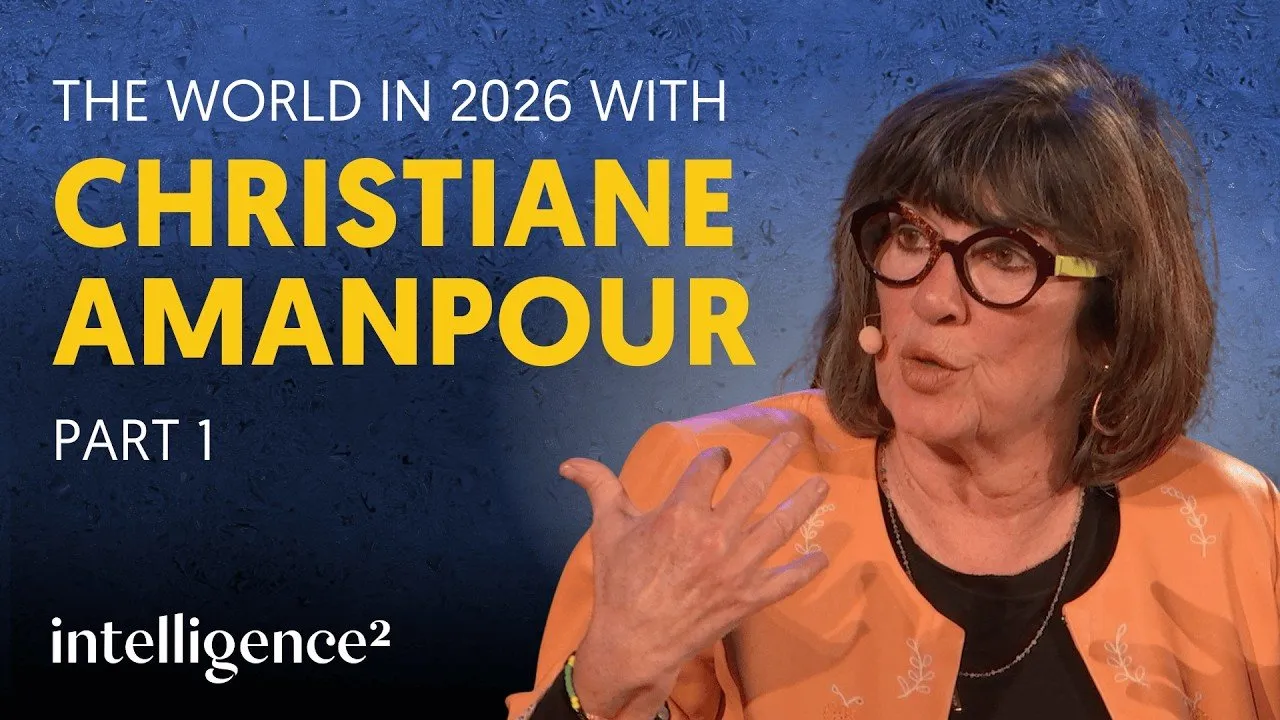
As the world approaches 2026, the geopolitical landscape appears increasingly fractured, marked by the erosion of long-standing democratic norms and the realignment of international alliances. At a recent Intelligence Squared event, CNN Chief International Anchor Christiane Amanpour shared her perspective on the volatile state of global affairs. Drawing from decades of experience reporting from front lines ranging from the Balkans to Gaza, Amanpour offered a sobering assessment of the "normalizing deviance" within the United States and the precarious future of the transatlantic alliance.
Key Takeaways
- Journalistic Integrity: Amanpour advocates for a "truthful, not neutral" approach to reporting, arguing that objective journalism requires calling out deviance rather than creating false moral equivalencies.
- The Transatlantic Rift: Traditional allies now view the United States with deep suspicion, oscillating between seeing the U.S. as a protective partner and a "potentially predatory" actor.
- Domestic Erosion: The collapse of political "guardrails" in the U.S. has led to draconian domestic policies that are beginning to face significant public and judicial pushback.
- Iran’s Internal Volatility: The Iranian regime faces unprecedented pressure from a populace demanding fundamental change, even as external military tensions with the U.S. and Israel reach a fever pitch.
The Shift from Neutrality to Truthful Journalism
In an era defined by political polarization, Amanpour challenges the traditional journalistic pillar of absolute neutrality. She argues that when reporters attempt to provide equal weight to two sides of an issue where one is clearly the aggressor or factually incorrect, they risk becoming "accomplices" to injustice. This philosophy was forged during her coverage of the Balkan Wars, where the reality of ethnic cleansing demanded a clear distinction between victim and aggressor.
Amanpour highlights a growing phenomenon she describes as normalizing deviance. This process involves the gradual acceptance of behaviors, rhetoric, and policies that would have once been considered unacceptable in a functional democracy. By "normal-washing" these events, the media and the public risk losing the ability to recognize when fundamental constitutional principles are under assault.
"Be truthful, not neutral. If you are neutral and trying to make some kind of false moral or factual equivalence... you become an accomplice."
The U.S. and Europe: From Leadership to Predation
The relationship between the United States and its European allies has undergone a radical transformation. At recent Munich Security Conferences, the shift in American rhetoric has left diplomats stunned. Amanpour notes that while the post-1945 world order was built on U.S. leadership, current administrative policies often treat allies with the same hostility traditionally reserved for adversaries.
The Diplomatic Dissonance of Rubio and Vance
The contrast between different factions of American leadership provides a glimpse into the confusion facing Europe. While figures like JD Vance have been blunt in their criticism of NATO allies—essentially telling them their problems come from within—others like Marco Rubio have attempted to use more "diplomatic" language. However, the underlying message remains the same: a demand for Europe to manage its own "decline" and take full responsibility for its defense, often while the U.S. pursues punitive trade measures.
A Continent Between Two Fires
Quoting foreign policy analyst Robert Kagan, Amanpour suggests that Europe finds itself in a precarious geographic and political position. The continent is effectively caught between a "definitely predatory" Russia and a United States that has become increasingly "hostile and potentially predatory." This lack of trust has forced European nations to consider massive increases in defense spending, potentially at the cost of social programs and internal economic stability.
"Europe is sitting between a definitely predatory Russia and a potentially predatory United States."
Domestic Turbulence and the Collapse of Guardrails
Within the United States, the implementation of draconian policies has begun to test the limits of public endurance. Amanpour points to the deportation efforts led by the Department of Homeland Security as a primary "tipping point." Notably, an incident in Minneapolis involving the deaths of American citizens during ICE operations served as a catalyst for a localized shift in sentiment, forcing the administration to temporarily pull back.
The "guardrails" that many political analysts believed would contain unconventional executive power appear to be failing. Amanpour observes that institutions ranging from law firms to the press are being "bullied into being very careful" through punitive lawsuits and economic threats. This atmospheric pressure has created a environment where the rule of law is increasingly subverted by political will.
The Tense Standoff in Iran
Iran remains one of the most volatile flashpoints in 2026. The Iranian government is currently navigating a dual crisis: a massive internal uprising and a significant buildup of U.S. and Israeli naval forces in the Persian Gulf. The regime’s response to domestic dissent has been characterized by a "violent, lethal crackdown" and the use of sophisticated electronic surveillance to identify and arrest protesters.
The Significance of the 40-Day Cycle
In a desperate attempt to maintain control, the Iranian regime has moved to ban traditional 40-day mourning commemorations. These gatherings are deeply rooted in Islamic tradition and were instrumental in the mass movements that led to the 1979 Revolution. By suppressing these religious observances, the regime is effectively "going against the religious beliefs of their people," a move that may further delegitimize their standing as an Islamic Republic.
Strategic Military Build-ups
The presence of U.S. aircraft carriers and battle groups in the region serves both offensive and defensive purposes. While some factions within the U.S. and Israel have historically advocated for strikes against Iran’s nuclear infrastructure, the current buildup is also a response to the potential for Iranian retaliation against the numerous U.S. military bases in the Middle East. The primary challenge, Amanpour notes, is that even if "regime change" is achieved, building a unified, democratic nation in its wake has proven historically difficult in the region.
Conclusion: A World in Transition
The outlook for 2026 is one of profound uncertainty. As the United States grapples with internal divisions and a redefined role on the world stage, the global community is left to navigate a landscape where old alliances are no longer guaranteed. Christiane Amanpour’s insights remind us that the survival of democracy—both in the West and in the Middle East—depends on the resilience of institutions and the courage of those willing to speak the truth without the shield of false neutrality. The coming years will determine whether the "guardrails" of the international order can be rebuilt or if the world must prepare for a new, more predatory era of geopolitics.

)