Table of Contents
Energy is the invisible backbone of the modern economy. When the cost of electricity spikes, it isn't just a utility bill problem—it triggers inflation across every sector, hurts low-income households, and threatens industrial competitiveness. Yet, despite decades of investment in alternative energy sources, the United States faces a grid that is increasingly expensive and fragile.
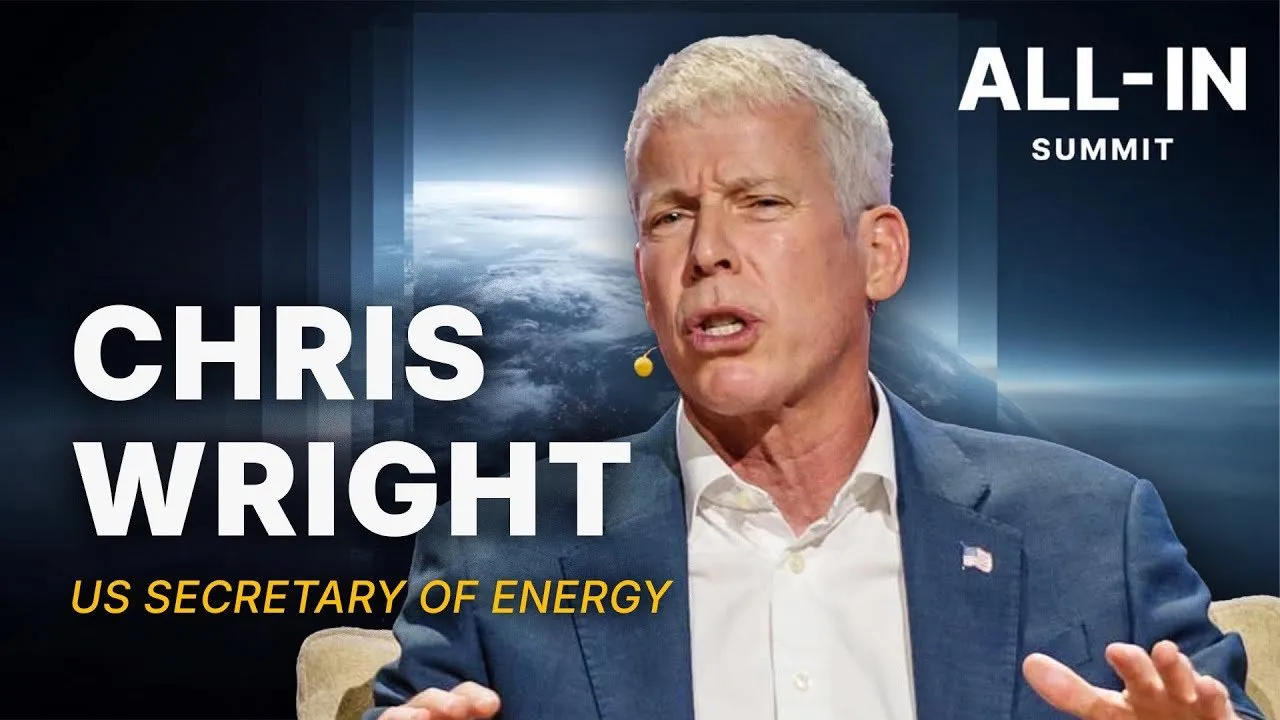
In a recent in-depth discussion, U.S. Secretary of Energy Chris Wright pulled back the curtain on the structural realities of the energy grid. From the hidden costs of renewable subsidies to the regulatory strangulation of nuclear power, Wright presented a data-driven argument for a pragmatic "humans first" approach to energy policy.
The following analysis breaks down the hard numbers behind global energy production, the engineering challenges of integrating renewables, and the administration's aggressive strategy to power the coming AI revolution through nuclear innovation and natural gas.
Key Takeaways
- The 85% Reality: Despite fifty years of transition efforts, fossil fuels (oil, coal, natural gas) still provide 85% of global energy, identical to the market share in 1973.
- Grid Economics: Rising electricity prices are largely attributed to the complexity of maintaining reliable backup power for intermittent sources like wind and solar.
- Nuclear Efficiency: Nuclear power offers unmatched energy density, turning roughly $12,000 of fuel into millions of dollars in electricity, yet remains stifled by fear-based bureaucracy.
- AI and Data Centers: To meet the massive energy demand of artificial intelligence, the Department of Energy plans to utilize federal land and natural gas "peaker" plants to rapidly expand capacity.
- Human-First Policy: The strategic shift moves away from a climate-centric framework toward prioritizing human flourishing, energy abundance, and economic growth.
The Stubborn Math of Global Energy Production
To understand where energy policy must go, one must first look at where the world actually stands. In 1973, following the Yom Kippur War and the subsequent oil shock, the global consensus was to move away from oil and gas. At that time, hydrocarbons provided 85% of total global energy.
Fast forward to 2024, and the data tells a surprising story: hydrocarbons still account for 85% of global energy. While the mix has shifted—natural gas has grown at a 3% compound annual growth rate due to its cost-effectiveness—the reliance on traditional fuels remains absolute.
Secretary Wright highlighted a stark statistic regarding the scale of renewables:
"Today, a little less than 3% of total energy comes from wind, solar, and batteries. The biggest component I didn't mention is traditional biomass—burning wood. That is twice the total global energy of wind, solar, and batteries combined."
This context is crucial for understanding grid reliability. While wind and solar industries have grown, they have not replaced the baseload capacity provided by coal, gas, and nuclear. Instead, they have been added on top of a system that must still maintain 100% readiness for when the weather doesn't cooperate.
Why Electricity Prices Are Rising
A primary concern for American consumers is the sharp increase in electricity rates. The retail price of electricity rose approximately 25% in recent years, with wholesale prices jumping over 50%. The cause, according to Wright, is not merely inflation, but the physics and economics of a changing grid.
The Cost of Intermittency
The electric grid is designed for peak demand—the coldest winter night or the hottest summer day when usage is highest. During a high-pressure system in winter, temperatures drop, wind often stops blowing, and solar generation ceases at night. In these critical moments, the grid relies entirely on dispatchable sources like natural gas, coal, and nuclear.
When intermittent sources like wind and solar are added to the grid, utilities must still maintain the traditional infrastructure to handle these peak loads. This creates a redundancy problem where consumers pay for two systems: the renewable infrastructure and the backup infrastructure required to firm it up.
The "Parasite" Effect
Wright argues that sources which cannot provide power on demand act as "parasites" on the grid. While wind producers might receive federal subsidies (up to 4 cents per kilowatt-hour) and utility payments, their contribution often forces efficient baseload plants to ramp up and down inefficiently.
"If you put them on a grid that has reliable dispatchable resources... they have to turn up and down as the wind blows. If you're not dispatchable, you're not adding to the peak capacity of a grid, you're just a parasite. Parasites are expensive."
This operational complexity requires new transmission lines and sophisticated management, costs that are ultimately passed down to the ratepayer.
Unlocking the Nuclear Renaissance
If the goal is clean, reliable, and dense energy, nuclear power is the theoretical winner. The economics of fuel density are staggering: approximately $12,000 worth of enriched uranium can generate between $3 million and $4 million worth of electricity. No other energy source competes with this margin on a raw material basis.
Overcoming the Fear Barrier
Despite these economics, nuclear power in the U.S. has stagnated. The hurdle is not technological, but bureaucratic. Wright suggests that nuclear energy has been a "victim of fear," resulting in permitting processes so long and expensive that they kill projects before they begin.
In contrast, China has taken a pragmatic approach, focusing on safety standards based on actual human risk rather than political pressure. This has allowed them to build reactors faster and cheaper, with over 30 plants currently under construction.
The Path Forward: SMRs on Federal Land
To break this logjam, the Department of Energy is accelerating the deployment of next-generation nuclear technology. The administration has set a target to have operational Small Modular Reactors (SMRs) demonstrated on federal land—specifically at the Idaho National Laboratory—by July 2025.
By streamlining the permitting process through the DOE and working in tandem with the Nuclear Regulatory Commission (NRC), the goal is to prove the commercial viability of these reactors and pave the way for widespread industrial adoption.
Powering the AI and Data Center Boom
A new pressure is mounting on the U.S. grid: the explosive growth of Artificial Intelligence. Data centers require massive amounts of "firm" power—electricity that runs 24/7 without interruption. Estimates suggest the U.S. will need dozens of new gigawatts of capacity in the coming years solely to support this sector.
Leveraging National Assets
To prevent this demand from driving up residential electricity prices, the Department of Energy is opening up its land assets. The 17 National Labs possess significant acreage and existing infrastructure. The DOE has received hundreds of responses from data center developers interested in partnering to build on-site power generation.
The Role of Natural Gas
While nuclear is the long-term play, natural gas is the immediate solution for AI's energy hunger. Wright noted that regulatory adjustments could unlock gigawatts of latent capacity almost immediately. This includes:
- Peaker Plant Optimization: Allowing natural gas plants, often restricted by environmental permits to run only limited hours, to operate more frequently.
- Backup Generators: Utilizing existing industrial backup generators during peak demand hours to offload stress from the main grid.
This strategy aims to isolate the industrial demand of data centers from the residential grid, ensuring that the race for AI dominance does not come at the expense of the American homeowner.
Conclusion: A Return to Trade-Offs
The overarching theme of the current energy strategy is a rejection of absolute ideologies in favor of economic trade-offs. The "Humans First" philosophy posits that while climate change is a physical reality to be managed, it should not dictate the deindustrialization of the economy.
By prioritizing energy density, reducing regulatory friction, and acknowledging the continued necessity of hydrocarbons, the U.S. aims to restore grid reliability and affordability. As the demand for electrons grows—from heating homes to training neural networks—the grid must evolve from a battleground of subsidies into a streamlined engine of national productivity.