Table of Contents
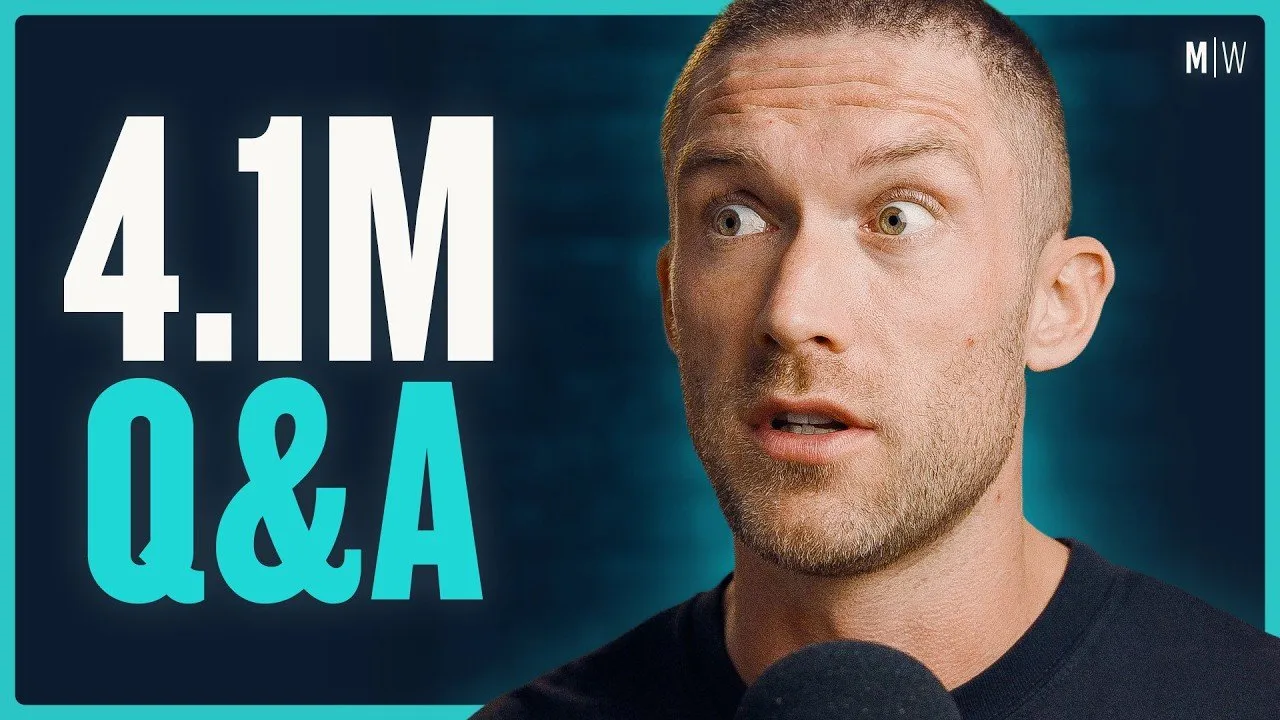
In a candid Q&A session, Chris Williamson offers insights spanning personal health battles, career fulfillment, dating dynamics, and future ambitions. Fresh from a haircut and celebrating 4.1 million subscribers, he dives deep into listener questions, revealing both vulnerability and unwavering determination. From the uncomfortable truths about pursuing success to the silent epidemics of chronic illness and modern loneliness, this discussion serves as a powerful guide for navigating the complexities of contemporary life.
Key Takeaways
- Success Demands Lifestyle Alignment: True success requires embracing the rigorous lifestyle inherent to achieving one's goals, or else relinquishing the desire.
- Holistic Health Navigates Complexity: Personal health journeys involve diverse dietary experiments, confronting chronic conditions like mold and fatigue, and integrating daily wellness protocols.
- Career Satisfaction Requires Agility: It's never too late to pivot careers, overcome sunk cost fallacies, and find genuine joy and satisfaction in one's work.
- Modern Dating Challenges Connection: The current dating landscape reflects societal shifts, high standards, and a struggle to find deep emotional and intellectual connection.
- Habit Formation Overwrites, Not Unlearns: Breaking bad habits is best achieved by actively building stronger, healthier new habits, rather than solely trying to "unlearn" old ones.
- Optimization Must Prioritize Enjoyment: Excessive optimization can detract from the joy and long-term compliance of activities like sleep and training; balance is crucial.
Aligning Aspirations with Lifestyle: The True Cost of Success
Before embarking on any quest for success, a critical, often uncomfortable question must be asked: "Do I want to live the lifestyle required to get the life?" This isn't merely about the end goal, but about the arduous, often unglamorous path. Williamson illustrates this with the vivid example of aspiring to be a rock star.
The Uncomfortable Question
Many romanticize outcomes without fully grasping the journey. The desire for a specific achievement can blind individuals to the demanding, sometimes isolating, reality of its pursuit. A rock star's life isn't just sold-out arenas; it's years spent learning chords in a bedroom, followed by grueling, low-paying tours in a van.
If you do not want to live the lifestyle, you have to release yourself of the desire.
This principle extends to any definition of success. If the route to your desired outcome—its daily grind, sacrifices, and inherent uncertainties—is not something you genuinely want to endure, then holding onto that desire only guarantees misery. It's a call to honest self-assessment, urging individuals to relinquish aspirations that clash with their willingness to commit to the necessary lifestyle.
Navigating Personal Health Journeys: A Holistic Approach
Williamson openly discusses his ongoing health struggles, particularly with mold toxicity and chronic fatigue, highlighting the often-invisible nature of such conditions and the public's varied responses.
Dietary Experiments and Health Metrics
Sharing his experience with a version of the carnivore diet (meat and fruit), Williamson notes positive mental effects, particularly in combating brain fog during mold detoxification. However, he also emphasizes the diet's detrimental impact on his cholesterol levels, revealing his sensitivity as a "hyperabsorber" of cholesterol. This underscores the personalized nature of nutrition and the importance of monitoring key health markers. His current approach favors intermittent fasting (16:8) with a more balanced diet.
Confronting Chronic Conditions
The host expresses surprise at the public's reaction to his health vlogs, particularly the skepticism and the notion that declining health in one's 30s is "just getting older." He refutes this "Stockholm syndrome for bad health," advocating against accepting preventable decline. He highlights the silent epidemic of chronic fatigue, mold exposure, and other elusive conditions (CMV, EBV, Lyme, H. pylori, candida, SIBO, heavy metals), noting the validation many listeners feel when someone publicly shares similar struggles.
I just don't accept that you're supposed to get slower, sadder, and more stupid as you get older in your 30s.
The sheer variety of suggested "cures" from his audience—ranging from spiritual interventions and psychedelics to goat milk cleanses and obscure bleach protocols—reflects the desperate search for solutions in a poorly understood medical landscape. Williamson commits to continuing to share his journey, recognizing the importance of authenticity.
Daily Protocols for Well-being
Amidst his health challenges, Williamson emphasizes foundational practices. These include daily morning sunlight exposure, a conscious reduction in caffeine intake, increased vegetable consumption while avoiding oxalates, regular exercise, staying hydrated, spending time with friends, and minimizing "doom scrolling." His morning routine, refined over years, stacks these habits: waking early, walking with light-therapy glasses, resonance breathing (likened to "hypertrophy training for your vagus nerve"), unguided meditation, and reading. He views this intentional morning investment as crucial for setting a productive and balanced tone for the day, arguing that front-loading self-care is more efficient than fitting it in later.
The Evolving Path of Career and Purpose
Many listeners grapple with career dissatisfaction and unfulfilled potential, prompting Williamson to offer encouragement for pivots and introspection on personal drivers.
Embracing Career Pivots
Responding to a 25-year-old feeling lost after dedicating years to a joyless career, Williamson emphasizes that it's "never too late." He shares his own journey of starting his podcast at 30 and moving to America at 33, highlighting the short memory of others and the power of recency bias in one's own perception of change. He encourages self-compassion for the difficulty of leaving a path once deemed important, but asserts the immense potential in pursuing a life one truly loves.
Reconciling Potential and Contentment
A listener's question about the tension between unfulfilled potential and contentment resonates deeply. Williamson acknowledges this as a "perennial personal growth challenge," rooted in the human wiring to always seek "more." He suggests two key strategies: actively celebrating "micro-wins" (e.g., career milestones, birthdays, promotions) to foster motivation and reward, and rigorously questioning the true desire for the "next level."
You are wired to always achieve more.
Sometimes, the lack of motivation to push harder isn't laziness, but an intuitive recognition that the current path, or its next iteration, won't bring true fulfillment. This introspection, while difficult, might reveal a need to change direction entirely rather than just work harder on the wrong goal.
Reflecting on the Academic System
Williamson reflects on his academic journey, admitting he "failed himself" by choosing a business degree out of perceived career necessity instead of his passion for philosophy and psychology. Yet, he doesn't regret his five years at university, valuing the negotiation of life skills (friendships, housing, bills) far more than the course content itself. He maintains a "contrarian" pro-higher education stance, believing the holistic experience can be invaluable, even if not directly through academic learning.
Modern Relationships: Challenges and Connections
The dating landscape, particularly in Australia, prompts discussion on the broader difficulties of finding meaningful connections in the modern Western world.
The Dating Landscape
While declining to comment specifically on Australia, Williamson frames dating struggles as a "modern West problem," stemming from shifting societal expectations for both men and women. He acknowledges the "socioeconomic tall girl problem" and other mismatch issues, emphasizing that individuals who are educated, driven, and introspective (like many of his listeners) often have higher standards for emotional and intellectual connection, narrowing their potential pool of partners. This "silent epidemic" of seeking profound connection, often overlooked by superficial online metrics, creates significant challenges.
Understanding Attraction Dynamics
Addressing the painful pattern of partners leaving when love becomes apparent, Williamson identifies it as an "undeveloped approach to understanding the value of humans"—a "playground dynamic" where value is only seen in what is hard to get. This, he argues, often reveals a person's own low self-esteem: if they don't value themselves, they question why anyone else would. He advises that such individuals are not suitable long-term partners, as the dynamic would resurface under other stressors. For those repeatedly experiencing this, he suggests scrutinizing one's own "selection criteria" to understand why such partners are continually chosen.
Finding Aligned Partners
For those seeking partners with "moral values and ambition," Williamson offers practical advice: go where such people are likely to be found. This means moving beyond dating apps and traditional social venues (like bars) to places that align with those values—a "modern wisdom live event," yoga or meditation classes, business masterminds, conferences, libraries, or run clubs. The key is active, intentional pursuit in environments that naturally attract the type of individual one hopes to connect with.
Mastering Habits and Avoiding Over-Optimization
From unlearning old habits to the perils of hustle culture, Williamson provides actionable insights into sustainable self-improvement.
Unlearning vs. Overwriting Habits
Williamson posits that "it is a hundred times harder to unlearn something than it is to learn something." He asserts there's no "neutral habit"; every action reinforces a pattern. The most effective way to eliminate an unwanted habit is not to "unlearn" it, but to "overwrite" it by building a stronger, deeper groove for a new, desired habit. This requires significant effort, especially initially. His golden rule: "Don't miss two days in a row because one day missed is a mistake, but two days missed is the start of a new habit."
The Pitfalls of Hustle Culture
Critiquing hustle culture, Williamson expresses concern for its "total disregard of how you feel over a long period of time." While ignoring emotions can be a "superpower" for short-term achievement, it often leads to "miserable successes." His definition of success precludes a series of miserable achievements. He also laments the transactional nature of relationships often promoted within hustle culture, advocating for authentic connections over commodity-based networking.
Optimization vs. Enjoyment
Optimization, while beneficial, can sometimes go "too far," especially when it removes enjoyment. Williamson highlights sleep and training as prime examples. Trying too hard to sleep, for instance, often backfires. In training, prioritizing a slight physiological advantage (e.g., morning workouts) over the enjoyment of training with a friend can lead to reduced long-term compliance. The broad rule, he suggests, is to get "close to right-ish" and then "exclusively optimize for enjoyment." Compliance, driven by enjoyment, ultimately yields better results than perfectly optimized but unsustainable protocols.
Trying harder makes going to sleep worse.
Overcoming Financial Debt
To a listener four years clean from gambling but still battling £60,000 in debt, Williamson offers strong commendation for overcoming addiction. While acknowledging the importance of reducing expenses, his primary advice is to "increase the inflow of cash." He suggests side hustles like personal training, especially during teaching holidays, as a practical way to accelerate debt repayment. This aggressive approach, he argues, combats anxiety with action and provides a greater sense of progress and motivation.
The Road Ahead: Projects, Growth, and Authenticity
Williamson shares exciting updates on his platform's evolution, his personal growth journey, and his commitment to authentic self-expression.
Upcoming Endeavors
Anticipation builds for Chris Williamson's upcoming tour across Australia, New Zealand, Bali, the UK, and Ireland. He's also thrilled about a new studio, promising diverse episode styles and the capability to record live performances. Collaborating with a designer known for Sleep Token's merchandise, new "Mostly Wise" merch is also on the horizon. The long-awaited book project, however, remains a significant challenge, struggling with the "idea set" and the desire to create an original thesis rather than simply repurposing podcast content. He invites audience suggestions for book topics.
Embracing Transitional Phases
Williamson delves into the inherent difficulty of forming intellectually engaging friendships during personal transitional phases. He describes these as "lonely chapters" where old connections no longer resonate, and new ones haven't yet formed. Reflecting on his own journey from "passive to active" and now "active to emotional," he notes how the tools and support systems of one phase may hinder the next. This constant state of "incongruence" makes personal growth a continuous challenge, though he is fortunate to have a close circle of friends on similar trajectories.
Authenticity Amidst Challenges
Recounting 2025 as "the hardest year of my life by far"—emotionally, professionally, and personally due to health and cognitive struggles—Williamson clarifies that his "good vibe" often masked immense internal difficulty. He admits to crying more in that year than the previous two decades combined. His commitment to professionalism and authenticity meant showing up despite feeling unwell, even when his brain struggled to form words. He expresses profound relief and gratitude at finally feeling "remotely close to me now," signaling a return of mental clarity and confidence, and thanks his audience for their unwavering support through his challenging period.
Conclusion
This Q&A session with Chris Williamson is a testament to the power of authentic inquiry and shared experience. From the practicalities of career pivots and habit formation to the deeper, often uncomfortable truths of health struggles and relational dynamics, Williamson provides a compass for navigating modern life. His candidness about his own journey – particularly his health challenges and the pursuit of a meaningful career – fosters a profound connection with his audience, reminding us that growth, even when arduous, is a continuous and rewarding endeavor. As he embarks on new projects and continues his personal evolution, his commitment to authenticity remains a guiding light for many.

![Is The Bottom In For Bitcoin? [Here’s Your Signal]](/content/images/size/w1304/format/webp/2026/02/is-the-bottom-in-for-bitcoin.jpg)