
Table of Contents
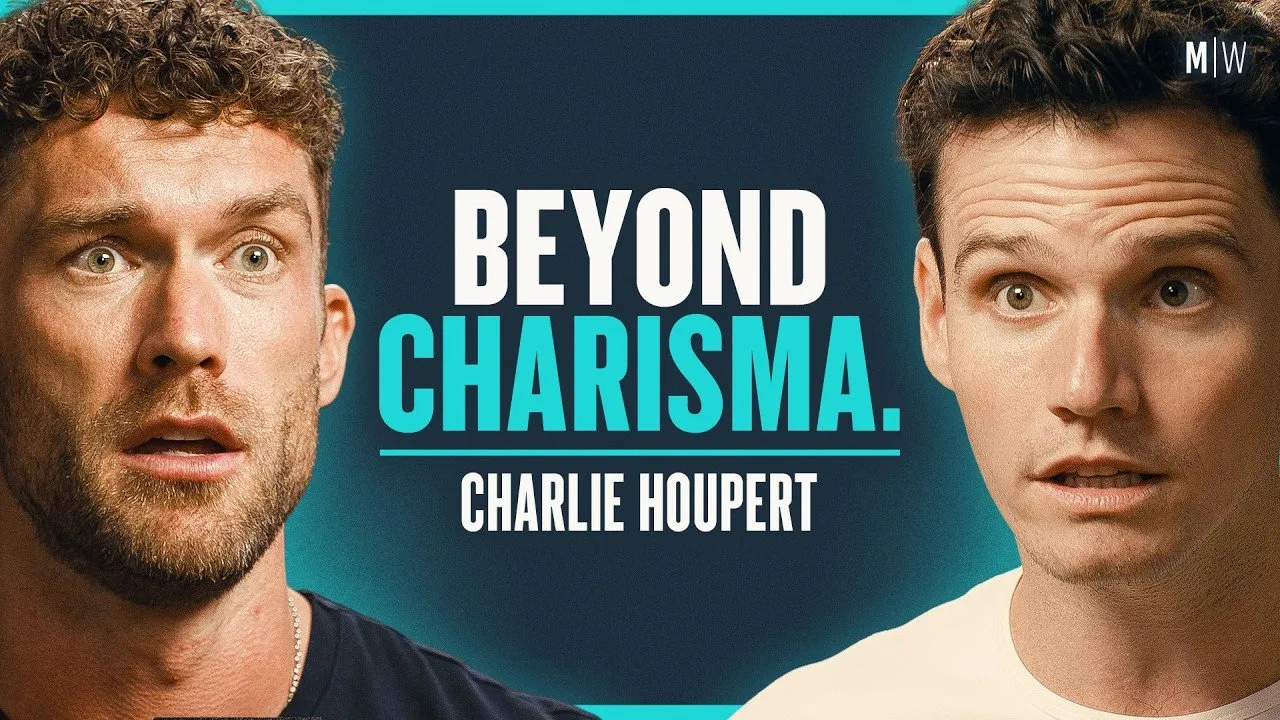
There is a specific, quiet terror that comes when you realize the story of your life no longer makes sense. You spent your twenties following the blueprint: you read the self-help books, built the business, got into shape, and finally secured the relationship you always wanted. Yet, upon reaching the summit of the mountain you spent a decade climbing, you find the void is still there. This is the "death of the old self"—a transitional period where the strategies that made you successful in the past become the very things holding you back from your future. Charlie Houpert, the creator of Charisma on Command, recently sat down with Chris Williamson to discuss this profound shift, moving from a life of hyper-optimization to one of emotional depth and spiritual alignment.
Key Takeaways
- The Four-Level Pyramid: Human development moves through four primary layers: Results, Behaviors, Emotions, and Spirituality.
- The Second Lonely Chapter: While the first lonely chapter involves leaving "average" friends to optimize your life, the second occurs when you outgrow the optimization phase to seek deeper meaning.
- Unteachable Lessons: Most of life's most important truths—like "money won't fix your self-worth"—cannot be taught; they must be lived and felt through "burning your hand" on the stove of experience.
- The Integration of the Feminine: True maturity requires balancing the masculine drive for order and agency with a "feminine" receptivity to intuition, feeling, and presence.
The Four Levels of Personal Development
Houpert describes a developmental hierarchy that most high-achievers navigate, often without realizing they are moving through distinct paradigms. This pyramid explains why a "grind-set" mentality eventually stops working.
Level 1 & 2: Results and Behaviors
Most people start at the top of the pyramid: Results. This is "victim consciousness," where you want the girlfriend, the money, or the status but have no idea how to get them. When you leap down to the second level—Behaviors—you gain agency. You start going to the gym, counting calories, and following business systems. This is the realm of discipline and the "first lonely chapter," where you often lose friends who aren't interested in self-improvement.
Level 3 & 4: Emotions and Spirituality
The plateau happens when your behaviors are perfect, your results are visible, but you still feel "crappy." This necessitates a drop into the Emotional layer. Here, you stop using rage or shame as fuel and start sitting with grief, helplessness, and joy. Beneath even that lies the Spiritual layer—a reconnection with the "soul" or a sense of belonging to life itself. As Houpert notes, this shift is often terrifying because it requires letting go of the control that made you successful in the first place.
"The common thread for me was that I try to attend to the greatest problem in my life and figure out who I can learn from to solve it."
The Two Lonely Chapters of Growth
Growth is rarely a linear ascent; it is a series of shed skins. Williamson and Houpert identified two distinct periods of isolation that occur during this process. Understanding which one you are in can alleviate the shame of feeling "disconnected."
The first lonely chapter is well-documented in the self-improvement world. It’s when you decide to stop "blending in" and start optimizing. You become the "loser" who stays in to work on a business while your friends are at the bar. This phase is characterized by a drive for congruence and conviction.
The second lonely chapter is far more confusing. It happens when you bottom out on optimization. You have the six-pack and the bank account, but you realize your "optimized" friends are still chasing ghosts. When you move toward emotional depth, you might appear "less effective" in the real world. Your business might shrink as you prioritize presence over profit. This phase is an ego death; you are trading your identity as a "winner" for a version of yourself you haven't yet met.
The Trap of the "Unteachable Lesson"
One of the most profound segments of the discussion centered on what Williamson calls Unteachable Lessons. These are the trite, eye-rolling clichés we hear from our elders: "Money doesn't buy happiness," "Fame is a prison," or "Worrying doesn't improve performance."
We disregard these warnings because we believe we are the exception to the rule. We think our unique "inner landscape" will allow us to dance through the minefield without tripping the wires. However, these lessons are unteachable because they require embodiment. You cannot intellectualize the emptiness of wealth; you must achieve it and feel the void for yourself. As Williamson explains, we don't learn these things until we "burn our hand on the stove."
"The fact that you supposedly know that it's going to happen, you disregard it, it happens—that is the lesson. The lesson is that everybody doesn't learn the lessons."
Balancing Masculine Agency with Feminine Receptivity
For most men, "masculinity" is defined as emotional control and order. We learn to create order out of chaos through analytical structures. This is a powerful tool, but it can become a cage. Houpert argues that high-achievers often turn their entire lives—even their hobbies and sex lives—into "businesses" that must be optimized and exited.
The Problem with Hyper-Optimization
When you are a hyper-optimizer, you are constantly peering over the shoulder of the present moment to see what’s coming next. You prepared for every outcome to collapse the "choice architecture" and reduce anxiety. But this hyper-vigilance is antithetical to self-trust. If you can only be okay if you’ve predicted the future, you aren't actually whole.
Learning to Be "Irrational"
The transition toward the "feminine" thread involves becoming receptive, intuitive, and present. This doesn't mean becoming a "tumbleweed" with no direction; it means integrating the ability to feel and flow with the ability to act. Houpert uses the metaphor of a video game: instead of doing the math to find the "best" upgrade, he started picking the "purple one" simply because it was beautiful. This "irrational" choice led to more fun, more inspiration, and ultimately, a better understanding of the game’s art.
From Strategy to Service: The Final Pivot
The ultimate goal of this "death of the old self" is to move from a place of self-service to a place of true service. Early in life, the question is: "Who do I have to be to get what I need from the world?" This is the foundation of charisma for many—it’s a performance designed to secure validation.
Maturity shifts the question to: "How can I return to the love that I am and radiate it outward?" When you are no longer desperate to get something from others, you can finally meet them where they are. You move from "people-pleasing" to "honesty." This is the highest form of charisma—the ability to be a transparent vessel for the divine, or "God," to move through. It is the move from Performance to Presence.
Conclusion
Surviving the death of your old self requires courage—the courage to be "weak," the courage to be "unproductive," and the courage to admit that the mountain you climbed wasn't the one you were meant for. Whether you are navigating your first or second lonely chapter, the goal is the same: Wholeness. By integrating your drive for results with a deep sensitivity to your own emotions, you move from being a "white belt" in the art of living to someone who can navigate the world with grace, authenticity, and a quiet, unshakeable peace.
If you're feeling the "volume" of life's lessons turning up, don't ignore the whisper. As Houpert and Williamson conclude, you can't go back—you've learned too much. The only way is through the forest, at the point that looks darkest to you.




)