Table of Contents
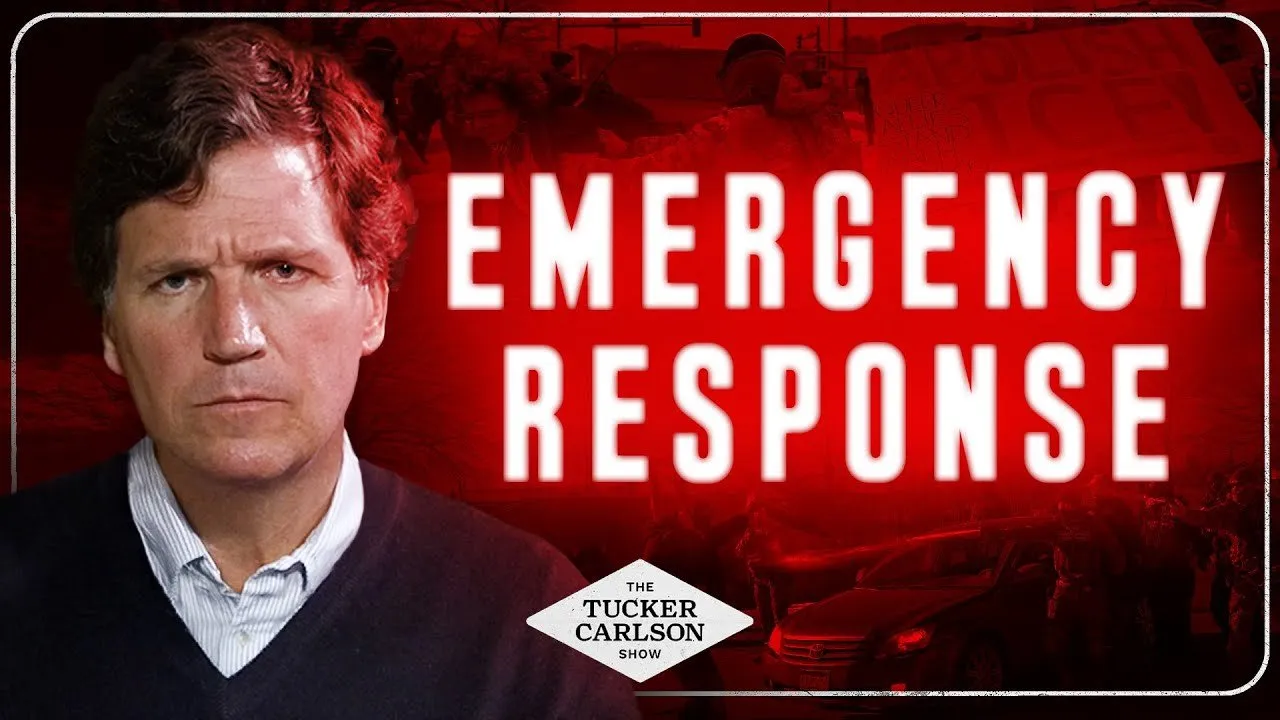
Recent footage emerging from Minneapolis paints a stark picture of a city—and potentially a nation—teetering on the edge of a breakdown. The scenes are not merely isolated incidents of civil unrest; they represent a fundamental conflict between federal authority and local governance. What began as controversies over immigration enforcement has evolved into a much broader narrative about the unraveling of the social fabric.
When federal agents find themselves besieged without support from local law enforcement, it signals a shift in the American political landscape. This is no longer just about policy disagreements; it is about the maintenance of order versus the propagation of chaos. To understand the gravity of this moment, we must look past the 30-second clips circulating on social media and examine the structural forces, political motivations, and ideological undercurrents driving this instability.
Key Takeaways
- The weaponization of chaos: Unrest is not merely a byproduct of grievance but is being analyzed as a deliberate political strategy to destabilize existing power structures.
- Federal vs. State deadlock: A dangerous precedent is being set where local officials are allegedly instructing police to ignore distress calls from federal agents, effectively nullifying federal authority.
- The "Color Revolution" theory: Critics argue that the current instability mirrors the tactics of color revolutions, where institutional disruption is used to force regime change outside of the ballot box.
- The human cost of ideology: Both law enforcement agents and protestors are becoming "foot soldiers" in a larger conflict, often leading to tragic, preventable deaths.
- Potential paths forward: Solutions range from invoking the Insurrection Act to financial quarantines of non-compliant states, though each carries significant risk of escalation.
The Strategic Use of Chaos
Chaos is rarely static; it is a dynamic force that either expands or contracts. In the context of the current unrest in Minnesota, chaos is being described not as a random occurrence, but as a political tool. The imagery of ICE agents trapped in buildings while local police stand down suggests a deliberate decision by state and local leadership to allow disorder to fester.
The Trump administration reportedly approached Minnesota officials—including the Governor and the Mayor of Minneapolis—with a compromise to de-escalate the situation. The federal request was straightforward: ensure 911 calls from federal agents are answered, protect agents when off-duty, and facilitate information sharing regarding violent criminals in state custody. in exchange, the federal presence would be scaled back. This offer was reportedly rejected.
This refusal raises a critical question: Why would state officials decline federal cooperation that could restore order? The prevailing theory suggests that entrenched political interests benefit from the turmoil. By fostering an environment of instability, political actors can frame the federal government as the aggressor, mobilizing their base and delegitimizing the opposition.
Chaos is the worst thing. Chaos is worse than illegal immigration. Chaos is worse than police brutality... Chaos equals death. The death of people, the death of the weak, the death of countries.
The "Color Revolution" and Institutional Power
Observers are increasingly categorizing these events as the beginnings of a "color revolution"—an insurrection against federal authority designed to make the machinery of government inoperable. Historically, revolutionary movements focus less on convincing voters through debate and more on destroying the system's legitimacy to justify a total reconstruction.
The Role of Local Leadership
The rhetoric coming from Minnesota’s leadership has been notably incendiary. Governor Tim Walz and Lieutenant Governor Peggy Flanagan have used historical analogies—such as comparing federal enforcement to the hunting of Anne Frank—to frame the conflict in existential terms. By encouraging citizens to "put their bodies on the line," officials are effectively sanctioning direct interference with federal law enforcement.
This leadership style transforms the role of the mayor or governor. Traditionally, these roles exist to improve the municipality and ensure safety. However, in the current climate, leaders appear to be rewarded for defiance and ideological signaling, even if it results in the physical deterioration of the cities they govern.
Bureaucratic Incentives
It is not only the political class that benefits from disorder. Institutional analysis suggests that government agencies often seek to expand their own power. Paradoxically, chaos provides an opportunity for security and intelligence agencies to justify increased budgets, broader surveillance powers, and tighter control. Thus, the perpetuation of unrest can serve the interests of both the revolutionary left and the entrenched deep state.
The Foot Soldiers of the Conflict
The individuals clashing in the streets—whether federal agents or protestors—are often pawns in a high-stakes game directed by unseen forces. The demographic profile of many protestors suggests a generation grappling with profound spiritual and psychological crises. These are often frustrated young people who, under different circumstances, might have been productive members of the middle class but have instead been radicalized by a culture that valorizes destruction.
While their actions can be dangerous and violent, it is crucial to recognize their humanity. They are often victims of a system that has failed to provide them with purpose or stability, leaving them vulnerable to manipulation by political organizers who view them as expendable assets.
What you have very obviously is a spiritual problem and these are perpetrators, but they're also victims... They're also your fellow Americans who are themselves dying in some true sense.
Analyzing the Tactics: A Shift to Guerrilla Warfare
Michael Shellenberger, a journalist and observer of the unrest, notes a disturbing shift in protest tactics. Unlike the tradition of non-violent civil disobedience championed by figures like Thoreau, Gandhi, or King—which prioritized safety and communication—the tactics seen in Minneapolis resemble guerrilla warfare strategies aimed at provocation.
The "Observer" Myth
Media coverage often portrays those involved in clashes as innocent observers or journalists. However, closer inspection reveals organized interference. Manuals and encrypted communication channels are used to coordinate the disruption of law enforcement operations. Tactics include blocking roads, filing false 911 reports to divert police resources, and physically impeding arrests.
This is not passive observation; it is active combat. The tragic deaths that occur in these scenarios are often framed as evidence of police brutality, yet they are frequently the result of a strategy designed to trigger an overreaction from authorities. This "overreaction" is then weaponized to further radicalize the population and justify escalation.
The Danger of Autonomous Zones
The push to create "autonomous zones" or areas where federal law does not apply represents a direct challenge to national sovereignty. Whether in Seattle or Minneapolis, these zones typically result in a spike in violence, often claiming the lives of the very demographics they claim to protect. The acceptance of such zones by local mayors constitutes an abdication of the state's primary responsibility: the physical security of its citizens.
Ideological Roots: The Rejection of Universal Principles
At the heart of this conflict is a rejection of the universal application of the law. The American legal tradition is built on the concept that rights and standards apply equally to all citizens. However, modern tribalism asserts that standards should be applied based on group identity and political affiliation.
This is evident in the selective enforcement of laws. Acts of intimidation against religious groups or political opponents are often ignored by prosecutors who view the perpetrators as allies. Conversely, technical violations by political adversaries are prosecuted with maximum severity. When the Attorney General of a state cannot comprehend applying the law neutrally, the judicial system ceases to be a tool for justice and becomes a weapon of political warfare.
Pathways to Restoring Order
Facing a state government that refuses to enforce the law, the federal administration has limited, albeit drastic, options. Each path carries significant risks and could potentially exacerbate the very chaos it seeks to quell.
- The Insurrection Act: The President could deploy the military to restore order, similar to the desegregation efforts of the 1950s. While legally sound, the visual of soldiers on American streets risks inciting further violence and providing propaganda victories to the opposition.
- Targeting Leadership: Rather than arresting foot soldiers, the Department of Justice could pursue conspiracy charges against state officials who actively coordinate with insurrectionists. While justified by the evidence of coordination, this would likely face nullification by local juries and outcry from the media.
- Financial Quarantine: The federal government could cut off funding to states that refuse to comply with federal law. By withholding federal tax dollars for programs in non-compliant sanctuaries, the administration could apply immense pressure. This "financial siege" might force a return to compliance without firing a shot, though it would undoubtedly face immediate legal challenges.
Conclusion
The events in Minneapolis serve as a microcosm for a nation at a crossroads. We are witnessing a battle not just over immigration or policing, but over the fundamental question of who rules. The normalization of political violence, the rejection of universal law, and the strategic use of chaos are pushing the country toward a fracture that could be irreversible.
Restoring stability will require more than just tactical maneuvers; it demands a reassertion of the principles that bind a civilized society together. As the conflict intensifies, the definition of American citizenship and the viability of the federal union itself hang in the balance.