Table of Contents
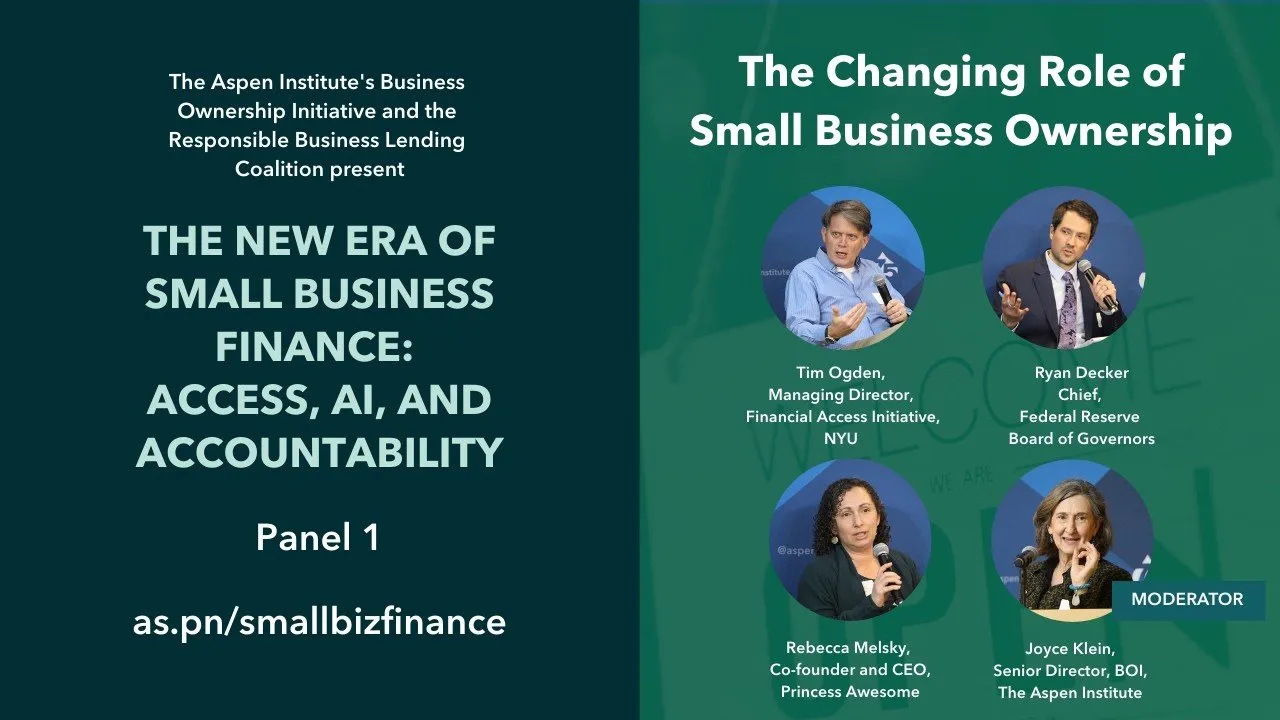
The small business landscape is undergoing a profound transformation. As technology lowers the barrier to entry and market dynamics shift, entrepreneurs face a complex environment defined by both unprecedented opportunity and stubborn systemic challenges. At a recent convening by the Aspen Institute, industry experts, economists, and entrepreneurs gathered to examine how access to capital, the rise of artificial intelligence, and evolving economic policies are reshaping the future of Main Street.
Key Takeaways
- The Paradox of New Business Growth: While small business formations have surged post-pandemic, especially in tech-intensive sectors, many remain in lower-margin industries that struggle to generate significant generational wealth.
- The Liquidity Gap: Traditional financing often fails to meet the needs of small businesses requiring rapid, short-term liquidity, leading many to rely on high-cost alternatives like merchant cash advances.
- The Burden of Complexity: Entrepreneurs are increasingly forced to navigate complex macroeconomic shifts, such as changing tariff policies and supply chain disruptions, often without sufficient resources or specialized guidance.
- Technology as a Double-Edged Sword: Digital platforms like Shopify have democratized market access, yet they have simultaneously tethered small businesses to opaque algorithms and fee structures that impact long-term profitability.
The Evolution of Entrepreneurial Motivations
Modern entrepreneurship is not merely about scaling high-growth startups; for many, it is a pathway to personal agency and household stability. Research suggests that the most successful founders often emerge from periods of career transition, such as being laid off from middle-management roles. These individuals possess the practical experience necessary to run a business, even if their initial goals are modest.
For many owners, the primary motivation is not explosive growth, but the ability to balance professional life with family commitments. "It has been really, truly life-changing to have, like, be my own boss, and to do something that feels important," noted Rebecca Melsky, co-founder of Princess Awesome. This highlights a critical tension: while small business is a primary driver of economic dynamism and job creation, the reality of running a small, independent firm often involves navigating narrow margins and immense personal responsibility.
The Role of Technology in Market Access
Technology has revolutionized the operational side of small businesses. Platforms that provide e-commerce infrastructure allow entrepreneurs to reach global audiences with minimal upfront capital. However, this reliance on large tech platforms—such as Amazon, Meta, or Shopify—introduces new risks. Entrepreneurs are often forced to pay for traffic, rely on opaque algorithms, and accept terms that fluctuate at the discretion of the platforms.
Furthermore, artificial intelligence is beginning to play a role in democratizing invention. By reducing the administrative burden of running a company, these tools allow owners to focus more on their core product. Yet, as noted by researchers, technology can also serve to entrench large incumbents who use their scale to compete more aggressively against smaller, newer entrants.
Financing: Balancing Liquidity and Sustainability
Perhaps the most pressing challenge for modern small businesses is the search for affordable, transparent capital. While traditional banking often overlooks small-scale liquidity needs, digital lenders have stepped in to fill the void. These providers offer rapid access to funds, but often at a steep price.
The financing challenge is more about liquidity than it is about funding assets, when so much of the community development capital is about funding assets.
The current lending landscape often forces businesses into cycles of high-interest debt. When a business experiences a cash flow crunch due to supply chain issues or market volatility, they may accept high-cost capital just to survive the month, ultimately eroding their thin margins. The challenge for policymakers and financial institutions is to develop innovative, responsible lending models that prioritize the long-term health of the business over short-term revenue extraction.
Macroeconomic Headwinds and Policy
Small businesses are disproportionately affected by macroeconomic policy shifts, such as fluctuating tariffs. These policies do not just move numbers on a spreadsheet; they force entrepreneurs to fundamentally redesign their supply chains and pricing strategies. Research from the Federal Reserve indicates that many businesses respond to such uncertainty not by "re-shoring" production to the U.S., but by scrambling to relocate supply chains to other countries, which incurs significant logistical and financial costs.
These challenges highlight why the Small Business Borrowers Bill of Rights is a vital initiative. By establishing industry standards for transparent pricing and responsible underwriting, the coalition aims to move the conversation toward ethical practices. Such frameworks are essential to ensuring that small businesses—the backbone of American prosperity—are not exploited by predatory market dynamics, but rather supported by a fair and efficient financial system.
Conclusion
The path forward for small business ownership requires a nuanced understanding of the intersection between human ambition and systemic constraints. While the surge in business formation offers a hopeful sign of economic resilience, the quality and sustainability of these firms depend heavily on better access to affordable capital and a supportive policy environment. By bridging the gap between technological innovation and consumer protection, stakeholders can help ensure that small business ownership remains a viable, empowering pathway to economic opportunity for all.