Table of Contents
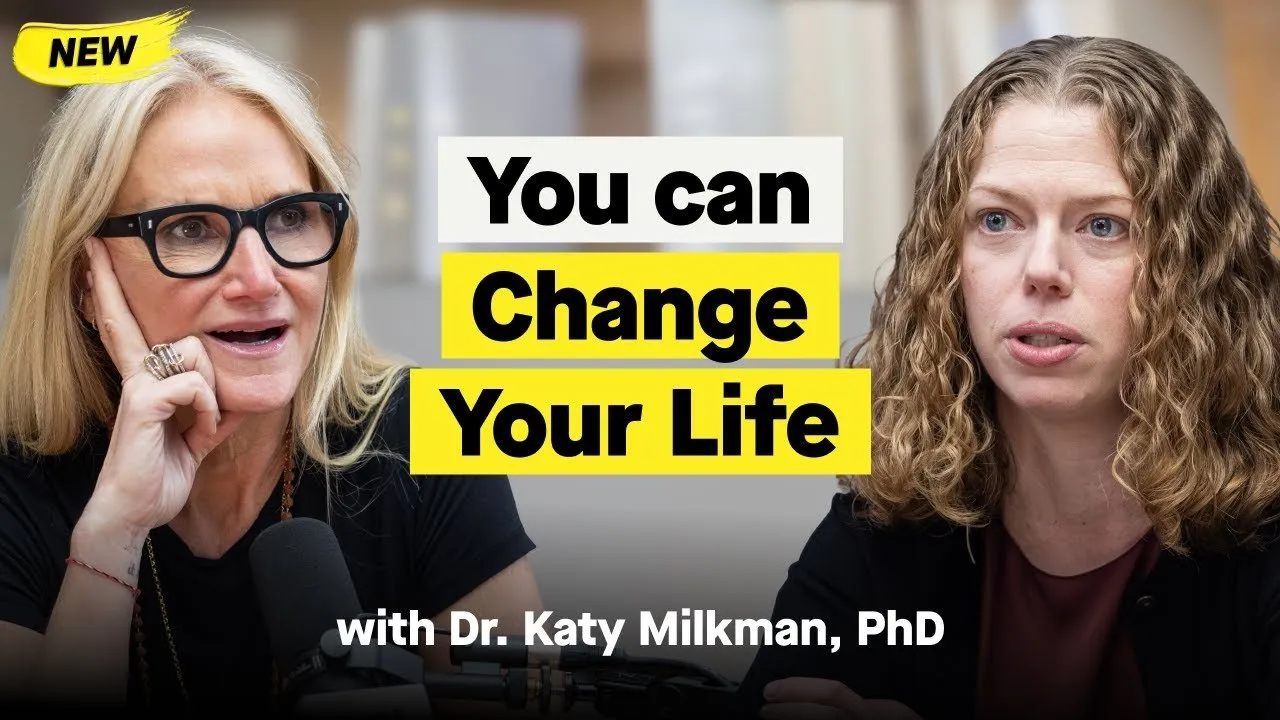
The biggest obstacle to meaningful change isn't lack of willpower—it's approaching transformation without a strategic framework. Professor Katie Milkman's groundbreaking research at the University of Pennsylvania reveals that learning how to change is actually a learnable skill, complete with evidence-based tools that work universally across all goals and demographics.
Key Takeaways
- Change requires strategy, not just willpower—there are seven predictable internal barriers that prevent lasting transformation
- The "fresh start effect" shows we're naturally motivated to begin changes at meaningful transition points like Mondays, birthdays, or New Year's
- Making goals instantly gratifying through techniques like "temptation bundling" dramatically increases success rates
- Concrete planning with specific cues (when, where, how) prevents forgetting and creates accountability
- Coaching others builds confidence and motivation through the "saying is believing" psychological effect
The Science Behind Why Change Feels So Hard
Most people approach change with a fundamentally flawed mental model. We believe struggling means something is wrong with us, that we simply need to "push through" with more willpower. This misconception sets us up for failure from the start.
The biggest lie is that you should just work harder or use your willpower and that there's something wrong with you if you can't push through the pain and achieve this challenging goal.
Milkman's research center, involving 180 behavioral scientists, has identified that successful change requires understanding the specific barriers holding you back—just like a doctor diagnoses what's causing a headache before prescribing treatment. This diagnostic approach produces dramatically better results than generic "one-size-fits-all" advice.
The Seven Internal Barriers to Change
Through decades of research, scientists have identified seven universal barriers that prevent lasting transformation. Everyone experiences these barriers regardless of age, gender, race, or cultural background—making the solutions equally universal.
Getting Started: The Fresh Start Effect
The challenge of beginning represents the first major hurdle. Research reveals that 40% of Americans make New Year's resolutions, tapping into a powerful psychological phenomenon called the "fresh start effect."
Our brains don't experience time linearly. Instead, we organize our lives into chapters with distinct breaks—major life transitions like new jobs, moves, or relationships, but also smaller transitions like Mondays, birthdays, or the start of seasons. These moments create psychological distance from our past selves and generate optimism about future possibilities.
At these transition points, we naturally step back and think big-picture about our lives. We feel like we're opening a new chapter, separate from the "old me" who struggled with previous attempts. This psychological separation is crucial—it allows us to set aside past failures and approach goals with renewed motivation.
Impulsivity: The Present Bias Challenge
We're hardwired to prefer immediate gratification over long-term benefits. Rather than fighting this tendency, successful change strategies work with our present bias by making goals instantly rewarding.
Consider two approaches to fitness: grinding through the most efficient but punishing workout versus choosing an enjoyable activity like Zumba with friends. Research consistently shows that people who prioritize enjoyment over efficiency persist longer and achieve better results. The key is persistence—you won't reach fitness goals in a single workout, so finding sustainable enjoyment becomes critical.
We need to be looking for ways to make things that are good for us in the long run, rewarding in the short run.
Procrastination: Creating Strategic Consequences
Procrastination stems from the same present bias as impulsivity. Effective solutions involve either making the activity more enjoyable (carrots) or creating meaningful consequences for inaction (sticks).
Commitment devices—putting money on the line that you forfeit for failing to meet goals—prove remarkably effective. One smoking cessation study found that simply having access to an account where participants could deposit money (forfeited if they failed urine tests) reduced smoking rates by 30%. Many participants didn't even use the account, but merely having the option created accountability.
Softer commitment devices include telling respected friends about your goals, removing temptations from your environment, or creating friction that makes undesired behaviors more difficult to access.
Forgetfulness: The Planning Solution
We consistently overestimate our ability to remember important commitments. Research from the 1800s showed that 70% of memorized information disappears within hours—and that was before modern digital distractions.
The solution lies in creating detailed, cue-based plans that specify when, where, and how you'll pursue your goals. These plans serve multiple functions: they provide memory triggers, create accountability, and help identify potential obstacles in advance.
You don't fail because you don't care, you fail because you forget.
Simple tools like checklists (used by surgeons and pilots for critical procedures) can dramatically improve follow-through on important goals. The key is moving from vague intentions to specific commitments with clear triggers.
Laziness: Engineering Better Defaults
Our preference for the path of least resistance isn't a character flaw—it's efficient mental processing. Smart change strategies make desired behaviors the easiest available option.
This involves thoughtfully designing your environment and defaults. Set up automatic transfers to savings accounts, keep healthy snacks prominently displayed, choose a gym close to home or work, and configure your devices to promote rather than hinder your goals.
Understanding habit formation becomes crucial here. Habits develop through consistent repetition of a simple loop: cue (consistent context), behavior (repeated action), and reward (positive outcome). Research suggests simple habits take weeks to form, while complex behaviors like regular exercise require months of consistent practice.
Confidence: Building Belief Through Action
Lack of confidence creates a self-fulfilling prophecy that prevents goal achievement. This barrier particularly affects people whom society has told "this isn't for you," but everyone struggles with confidence in some domain.
Adopting a growth mindset—viewing setbacks as learning opportunities rather than evidence of fixed limitations—provides one powerful solution. Additionally, research reveals that coaching others builds personal confidence and motivation through multiple mechanisms.
When struggling individuals are asked to advise others facing similar challenges, several beneficial effects occur: they gain confidence from being valued for their insights, feel accountable to follow their own advice, and internalize their recommendations through the "saying is believing" effect. Studies show that even eight minutes of giving advice to hypothetical younger students improved high school students' grades in targeted subjects.
Conformity: Choosing Your Influences
We unconsciously adopt the behaviors and expectations of people around us. Research at the Air Force Academy found that students randomly assigned to more studious roommates achieved higher grades, while those with less academic roommates saw their performance decline.
This powerful influence can become a barrier when surrounded by people not pursuing similar goals, but it transforms into an asset when you intentionally cultivate relationships with individuals achieving what you aspire to accomplish.
Seeking out mentors, joining communities of like-minded individuals, or even consuming content from people modeling desired behaviors can shift your sense of what's normal and possible. The most effective approach involves direct relationships where you can observe implementation strategies and ask specific questions.
Putting It All Together: Your Strategic Action Plan
Successful change begins with setting a concrete, measurable goal rather than vague aspirations. Instead of "get in shape," commit to "exercise three times per week for 30 minutes each session." Then create a detailed plan specifying when, where, and how you'll pursue this goal.
Layer in strategies that address your specific barriers. If impulsivity challenges you, find ways to make the process immediately enjoyable—perhaps through temptation bundling, where you only allow yourself to enjoy favorite entertainment while exercising. If confidence is lacking, seek opportunities to mentor others pursuing similar goals.
Consider the social dimension by finding accountability partners or joining communities aligned with your objectives. Research shows that coordinating goals with friends increases success rates by 35% compared to pursuing identical goals independently.
The Path Forward
The most crucial insight from decades of behavioral science research is straightforward: if pursuing your goal feels consistently painful, you'll eventually quit. Nearly every meaningful change requires sustained effort over time, making enjoyment not a luxury but a necessity for success.
Find ways to make your goals genuinely engaging—through social connections, immediate rewards, variety in approach, or choosing inherently enjoyable methods over maximally efficient but punishing alternatives. Remember that setbacks are normal parts of the change process, not evidence of personal failure.
Give yourself grace. Recognize that setbacks are just part of the journey. It doesn't mean there's anything wrong with you.
Build flexibility into your approach by setting stretch goals with built-in emergency reserves—if your goal is daily meditation, allow yourself two "skip days" per week while still counting success. This approach produces twice the success rate of setting identical but rigid targets.
Change is learnable skill that improves with practice and proper strategy. By understanding the seven barriers and implementing evidence-based solutions, you can transform your approach from hoping change will happen to engineering conditions that make success inevitable. The same tools that help you achieve personal goals can be shared with everyone in your life, multiplying the impact of your newfound change expertise.