Table of Contents
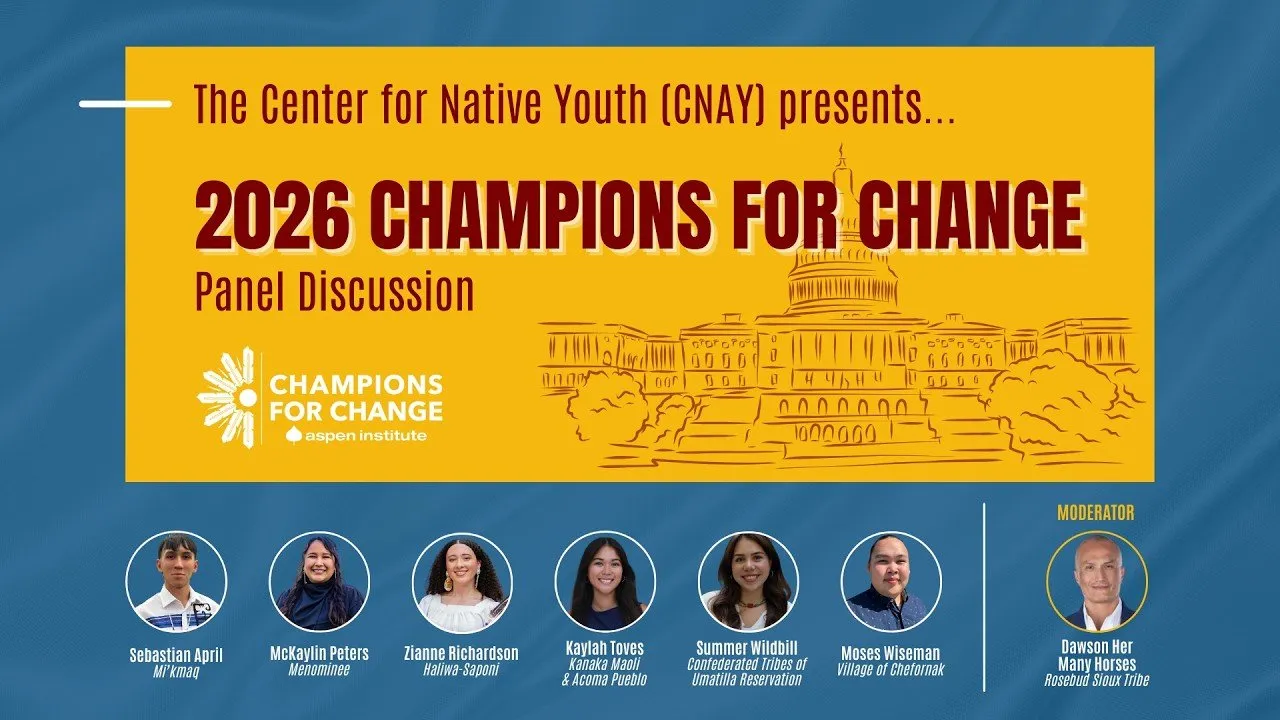
The definition of leadership is undergoing a profound transformation, driven by a generation that refuses to separate professional ambition from cultural identity. At the Center for Native American Youth’s (CNAY) 2026 Champions for Change panel, hosted by the Aspen Institute, a cohort of young Indigenous leaders gathered to dismantle the boundaries between tradition and innovation. These leaders, representing nations from the Wabanaki Confederacy to the islands of Hawaiʻi, demonstrated that the future of civic engagement is not just about holding office—it is about holding space for community, ancestry, and future generations.
The discussion, moderated by Dawson Her Many Horses, moved beyond standard talking points to explore the deep interconnectedness of sovereignty, education, and economic resilience. The panelists illustrated that for Native youth, leadership is rarely a solo endeavor; it is an act of service grounded in "kuleana" (responsibility) and the wisdom of those who came before. As these Champions for Change articulated, they are not merely inheriting a broken world; they are actively designing a more equitable one.
Key Takeaways
- Culture is a Leadership Competency: Indigenous youth view their cultural identity not as a barrier to professional success, but as a unique framework for navigating complex systems and "code-switching" between tribal and Western worlds.
- From Consultation to Creation: Institutions must move beyond asking youth to react to decisions already made. True inclusion involves inviting young leaders to build the table and shape policy from the outset.
- Education as Nation Building: Culturally responsive education and language revitalization are not just academic preferences; they are critical tools for sovereignty, mental health, and community continuity.
- Economic Sovereignty: The next generation is expanding tribal economic development beyond gaming, embracing industries like agriculture (hemp/cannabis) and prioritizing individual financial literacy to break cycles of poverty.
The Roots of Indigenous Leadership
For the 2026 Champions for Change, leadership is inextricably linked to cultural identity. Unlike Western models that often prioritize individual achievement and hierarchy, Indigenous leadership is rooted in relationality and humility. Zianne Richardson, a citizen of the Haliwa-Saponi Indian Tribe, described her leadership style as being led by her people rather than leading them. She emphasized that true authority requires "followership"—the humility to link arms with the community rather than standing above it.
This sentiment was echoed by Joshua Ching, a Native Hawaiian youth leader, who spoke of kuleana—a deep sense of responsibility. For these young leaders, the drive to advocate is not born from a desire for titles, but from a necessity to protect and uplift their communities. This cultural grounding provides a stabilizing force when navigating non-Native spaces.
"I do not believe that wisdom is equated to years lived, but lived experiences. We could have a 13-year-old that's seen and experienced so many things... I believe that we have a unique perspective in that we have access to and are the living testimonies of the efforts that the generations before us have made."
By framing their work through the lens of ancestry and survival, these leaders approach modern challenges with a resilience that is historical in nature. They recognize that their ability to stand on a stage in Washington, D.C., is the result of the sacrifices made by parents and grandparents who fought for survival and recognition.
Redefining Youth Influence: "Cultural Navigators"
A recurring theme of the panel was the unique ability of Native youth to bridge disparate worlds. Michaelen Peters, of the Menominee Indian Tribe of Wisconsin, shared that tribal elders often refer to youth as "cultural navigators." This term captures the agility required to understand deep cultural traditions while simultaneously maneuvering through Western political and educational systems. This duality is not a weakness; it is a strategic advantage.
Moving Beyond Tokenism
The panelists challenged institutions—from tribal councils to federal agencies—to rethink how they engage with young people. The consensus was clear: "a seat at the table" is the bare minimum. The goal is structural inclusion where youth are architects of policy, not just reviewers.
Michaelen Peters highlighted a powerful example from her own community, where she founded a youth council that was passed by tribal resolution. Her "kids," as she calls them, now sit on legislative committees and read recommendations into the official record. This is a shift from passive participation to active governance.
"Don't ask youth to react to decisions. Ask them to help you shape them... I'm not just trying to make leaders. I'm trying to make rooted leaders so they know their responsibility."
This approach transforms youth engagement from a "box-checking" exercise into a pipeline for genuine nation-building. When young people are treated as capable policymakers, they rise to the occasion, often addressing issues like food sovereignty with speed and innovation that bureaucratic systems struggle to match.
Education and the Power of Representation
The conversation turned critically toward education, highlighting the stark contrast between standard Western curricula and Indigenous ways of knowing. For many panelists, the lack of representation in the classroom was a source of alienation. Zianne Richardson recalled the profound impact of having a Native teacher for the first time in college, noting how shared dialect and cultural understanding created a psychological safety that allowed her to thrive.
Language as a Sanctuary
Moses Wiseman, a Yup’ik leader from Alaska, spoke passionately about language revitalization. He described language programs not just as academic exercises, but as sources of joy and connection. Learning and speaking one’s heritage language creates a space where youth do not have to be afraid or guarded; they are surrounded by the wisdom of their ancestors.
Kayla Tu added that early childhood immersion programs offer a different, often superior, pedagogical model. Unlike the rigid testing of Western schools, her experience in Hawaiian immersion focused on observation and connection to the environment—skills that are increasingly vital in a world facing climate crisis. The consensus is that Indigenous education is a vehicle for healing, allowing youth to reclaim their narratives and see themselves as the protagonists of their own history.
Economic Sovereignty and Financial Wellness
While culture and education provide the foundation, the panel also addressed the practical necessities of economic survival. The discussion highlighted a shift toward diversifying tribal economies and empowering individual financial independence.
Breaking the Cycle of Financial Trauma
Summer Wild Bill, from the Confederated Tribes of the Umatilla Indian Reservation, spoke candidly about the "financial trauma" prevalent in many Native households, where money is often viewed as a source of stress or even evil. Her advocacy focuses on financial literacy—teaching youth about compound interest, investing, and resource allocation. She argued that financial education is a form of self-determination. By healing their relationship with money, Native youth can build the stability required to support their communities long-term.
Diversifying Tribal Economies
Looking beyond the individual, Sebastian April of the Mi'kmaq Nation discussed the future of tribal economic development. While gaming has been a traditional revenue source for many nations, the next generation is looking toward agriculture and sustainable industries. Specifically, he pointed to the potential of cannabis and hemp cultivation as avenues for tribes—including state-recognized tribes without gaming rights—to generate revenue and assert economic sovereignty. This forward-looking approach demonstrates that Native youth are not just preserving the past; they are actively scouting the economic frontiers of the future.
Conclusion
The 2026 Champions for Change panel served as a powerful reminder that Indigenous youth are not merely waiting for their turn to lead; they are already leading. They operate with a "seven generations" mindset, making decisions that honor their ancestors while securing a future for those yet to be born. By integrating cultural values with modern advocacy, financial literacy, and policy innovation, they are offering a new model of leadership—one that is resilient, relational, and radically hopeful.
As these young leaders return to their communities—from Oregon to North Carolina—they carry with them the support of the Aspen Institute and the Center for Native American Youth, ready to continue the critical work of building a world where Indigenous peoples do not just survive, but thrive.