Table of Contents
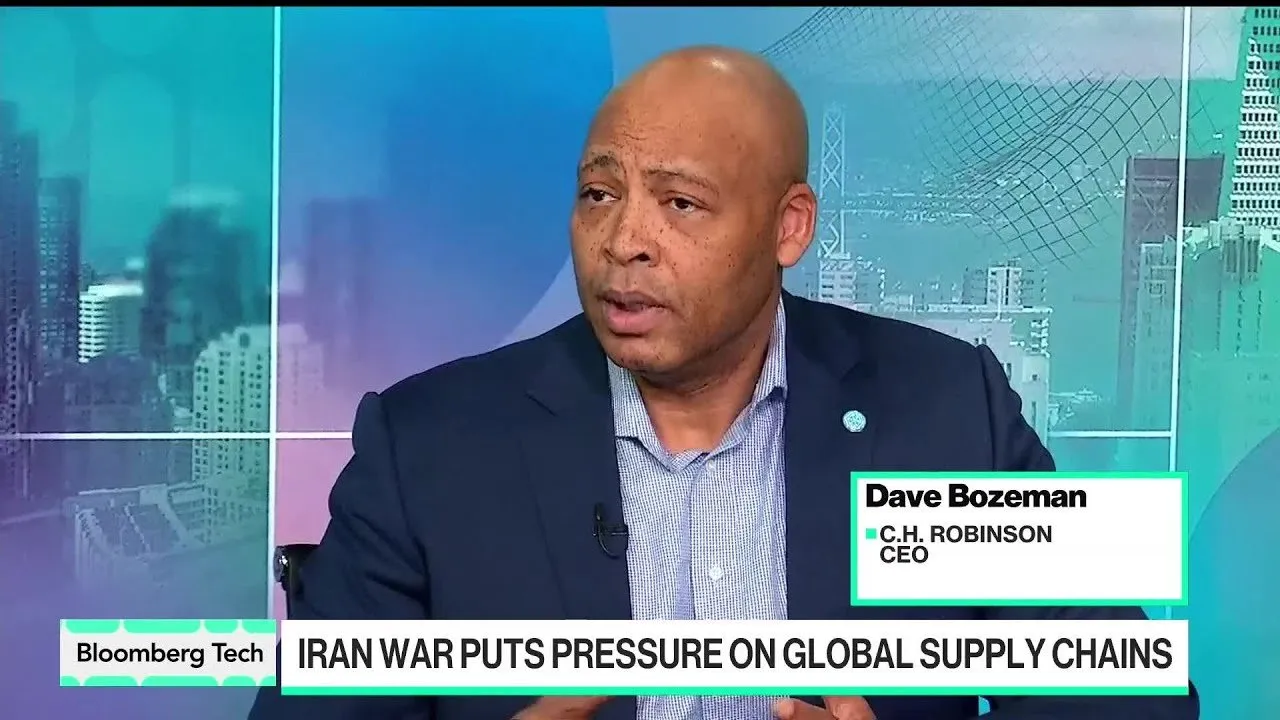
CH Robinson is navigating a complex landscape of global logistics disruption and rapid technological advancement, leveraging internal artificial intelligence tools to drive significant operational efficiencies. Despite regional conflicts in the Middle East and a cautious freight market, the company reports a 40% increase in productivity since 2022, effectively turning its proprietary data into a competitive financial advantage.
Key Points
- Productivity Gains: CH Robinson has achieved a 40% increase in productivity since 2022 by integrating AI into its core operations.
- Operational Efficiency: The company reports an 85x increase in AI usage while controlling costs, which have risen by only 1.5x.
- Market Disruption: Amidst global instability, including air freight capacity constraints in the Middle East and maritime rerouting, the company maintains that its data-driven logistics model remains resilient.
- Competitive Moat: By positioning itself as an internal "builder" of AI technology rather than a buyer, the firm is strengthening its defensive market position against industry newcomers.
Navigating Global Logistics Disruptions
The global supply chain faces ongoing volatility, most notably due to conflicts in the Middle East that have impacted air freight and maritime shipping routes. CH Robinson estimates that approximately 10% to 13% of air freight capacity out of the Middle East has been affected by airport shutdowns. Furthermore, instability near the Strait of Hormuz has necessitated the rerouting of ships around the Horn of Africa, a measure that adds transit time to shipments.
Despite these headwinds, the company’s leadership emphasizes that such disruptions are a recurring reality in the logistics industry. The focus remains on guiding customers through these challenges while maintaining visibility on broader economic indicators, such as fuel prices, which the company monitors as a "downstream" issue rather than an immediate operational threat.
AI as a Financial and Operational Catalyst
While industry peers have faced scrutiny regarding their ability to pivot toward automation, CH Robinson frames itself as an "end-user beneficiary" of AI. The company processes 37 million shipments annually, generating a massive volume of proprietary data that fuels its internal AI development. By focusing on "lean AI" and building tools in-house, the company has minimized marginal costs.
"AI is driving that efficiency, and that just gives us that more competitive moat that we have. It's a deeper and wider competitive moat. If you look at the numbers, being an end-user AI play, our usage is up 85x. Our costs are only up one and a half x. And so we get that benefit of that end-user. We don't spend a lot. Our token cost is a little less than a million dollars."
This approach has directly impacted the company's bottom line, helping to silence market skepticism that emerged earlier this year regarding the firm's capacity to innovate against tech-forward logistics startups. The company asserts that its reliance on tangible, real-world data gives it a distinct advantage over competitors who lack the same scale and relationship depth with carriers.
Future Outlook and The Freight Cycle
Regarding the broader freight market, CH Robinson reports a landscape characterized by customer caution. The company is closely tracking capacity, which has seen recent tightening, alongside demand metrics in key sectors including retail, automotive, manufacturing, and housing. Currently, the firm characterizes these sectors as "muted," with no immediate signs of a significant recovery.
Looking ahead, CH Robinson intends to continue investing in its technological infrastructure. Regardless of the broader economic cycle, the company maintains that its AI-driven systems are designed to capture value whether the market is at a low or a high, ensuring continued operational resilience as it prepares for potential shifts in global trade demand.