Table of Contents
The crypto world pulsed with activity this week, from high-stakes regulatory showdowns over prediction markets to shifting alliances among major Layer 2 solutions. Institutional players made their moves, and the ever-present specter of AI in Web3 continued to spark both excitement and concern. Dive into the whirlwind of developments shaping the digital asset landscape.
Key Takeaways
- The CFTC is asserting exclusive jurisdiction over prediction markets, drawing criticism from state officials who view them as unregulated gambling platforms.
- Major Layer 2 solutions like Base are charting independent paths, with Base opting to leave the Optimism OP Stack, signaling a potential shift in ecosystem dynamics.
- Institutional capital, including Harvard and Apollo Global Management, continues to engage with digital assets, diversifying portfolios and investing in DeFi protocols.
- The integration of AI with crypto presents both immense opportunities for information markets and significant challenges, including ethical concerns and community friction.
- Discussions around regulatory clarity are gaining traction, with figures like Brian Armstrong expressing optimism about a potential "market structure bill" that could benefit the industry.
The Prediction Market Regulatory Battle Heats Up
The regulatory landscape for prediction markets has become a focal point, as the Commodity Futures Trading Commission (CFTC) firmly staked its claim to oversight.
CFTC's Assertive Stance on Prediction Markets
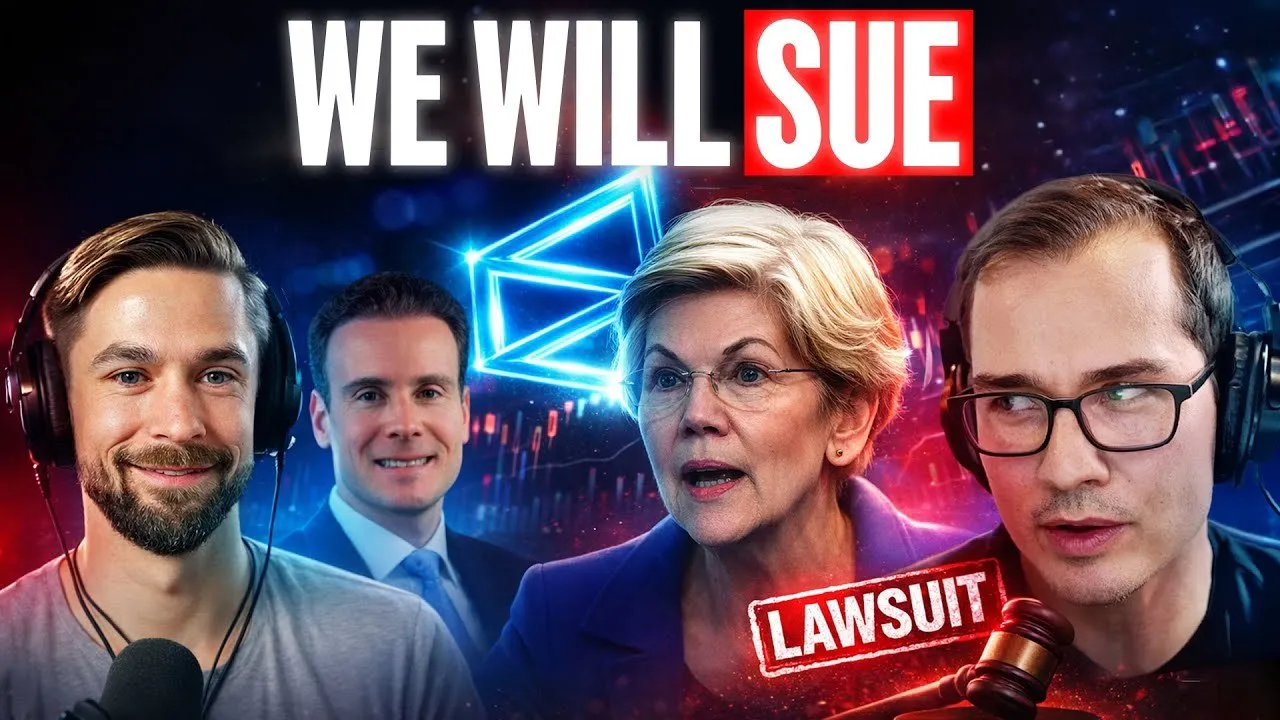
CFTC Chair Mike Celig recently declared prediction markets to be squarely within the agency's domain. In a public statement, Celig emphasized the CFTC's two decades of experience regulating these markets, highlighting their utility in hedging commercial risks and serving as a crucial check on information streams. He boldly asserted the CFTC's commitment to ensuring "integrity and resilience and vibrancy" for these markets in America, concluding with a stark challenge:
"To those who seek to challenge our authority in this space, let me be clear. We will see you in court."
This assertive move has ignited a fierce debate, drawing in a wide array of stakeholders.
State Opposition and the "Gambling" Dilemma
The CFTC's position has met with significant pushback, particularly from state officials and federal representatives who argue that prediction markets are essentially unregulated gambling. Critics, including former New Jersey Governor Chris Christie and Senator Elizabeth Warren, have voiced strong objections. Christie argued that the CFTC is "violating the rights of states who have been regulating sports betting," while Warren tweeted that "Trump's CFTC is trying to strip authority to regulate gambling within their borders and protect Americans from getting ripped off." Utah Governor Spencer J. Cox openly questioned the CFTC's authority over markets like "LeBron James rebounds," and Illinois Representative Sean Kassen pointed out that "sports betting accounts for 90% of the trading volumes on these platforms," asserting that Congress never intended for the CFTC to oversee such activities or interfere with state and tribal gambling regulations.
This negative response largely hinges on the perception that these platforms are "just gambling," ignoring their potential as information markets. The rising prevalence of sports gambling in recent years has contributed to a consensus that such platforms can be detrimental to public health, a sentiment that fuels the opposition to prediction markets.
Arguments for Market Legitimacy and the AI Frontier
Conversely, the CFTC's stance received support from prominent figures in the crypto space, including Coinbase CEO Brian Armstrong, who stated, "CFTC has exclusive jurisdiction over prediction markets in the US." Senators Bill Hagerty and Dave McCormack also backed the CFTC's authority. Notably, those with a direct stake in prediction market platforms, like Armstrong and Tyler Winklevoss, advocate for their regulated existence.
Proponents highlight that prediction market platforms operate on a market-based model, rather than a book model, which fundamentally alters their legal nature. They are seen as novel financial instruments providing significant value, with studies indicating their accuracy in forecasting events like Fed fund futures. Data from platforms like Poly Market shows high-volume markets often focus on elections, Federal Reserve policy, or geopolitics, not just sports.
The debate is further complicated by political nuances, such as the reported involvement of Donald Trump Jr. and the Trump family in platforms like Kalshi and Poly Market. This connection, some argue, makes it harder to discuss the merits of prediction markets without accusations of corruption influencing regulatory decisions.
Looking ahead, the convergence of prediction markets and Artificial Intelligence (AI) is seen as a powerful combination. AI's capacity for pattern recognition, comprehensive data ingestion, and rapid analysis, when coupled with the agency provided by crypto and prediction markets, could lead to what some call "perfect truth" in information markets. This synergy is envisioned as a new type of media institution, offering highly accurate, incentivized information that could surpass traditional news sources.
Shifting Alliances and Ecosystem Evolution
The crypto ecosystem is a dynamic landscape, and recent weeks have seen significant shifts in strategic alliances and technological directions, particularly within the Layer 2 space.
Base Departs the Optimism OP Stack
In a notable development, Coinbase's Base chain announced its departure from the Optimism OP Stack for its own native unified stack. Launched in February 2023, Base's adoption of the OP Stack was heralded as a major win for Ethereum, validating the Layer 2 roadmap and the OP Stack's technology, which subsequently inspired many other projects. However, Base cited a desire for greater control over upgrades and a lack of concern for certain OP Stack features as reasons for its move.
Behind the stated reasons, speculation suggests that financial considerations played a role. Base's original agreement with the Superchain included a revenue-sharing clause, committing a portion of its chain fees to the Optimism Collective for two years. As this contract phase concludes, Base's decision to fork the OP Stack technology—with its new stack reportedly 99% recycled code—could allow it to retain this revenue. At one point, Base represented 97% of the total Superchain revenue, making its departure a significant blow to the Optimism Collective's financial model.
The "Layer 1" Speculation for Base
While Base explicitly stated its continued commitment to being an Ethereum Layer 2, some observers, including crypto lawyer Gabe Shapiro, interpret elements of its announcement as signaling a potential move towards becoming a Layer 1-like entity. Shapiro points to Base's emphasis on client diversity and decentralizing the sequencer—features typically associated with Layer 1 blockchains and crucial for true decentralization. This could be a strategic move to avoid classification as a centralized exchange under proposed legislation like the Clarity Act, which defines non-decentralized finance trading protocols. Decentralizing the sequencer would likely require incentivizing external sequencers with a token, potentially leading Base down a path similar to existing Layer 1s that manage their own consensus layers.
The impact of these shifts is already being felt across the Layer 2 market. Optimism's token (OP) has seen a significant decline, reflecting the challenges of its Superchain strategy, which aimed to cohere multiple chains rather than concentrate value on the OP mainnet. This contrasts with Polygon, which recently generated more fees than Ethereum itself, partly due to activity from platforms like Poly Market.
Zora's Multi-Chain Strategy and Coinbase Wallet's Pivot
Adding to the shifting landscape, Zora, initially a favored "creator chain" on Base, is now expanding its attention market to Solana. While maintaining its existing creator economy features on Base, Zora's parallel launch on Solana highlights a trend of projects adopting multi-chain strategies to tap into diverse user bases and capitalize on different ecosystem strengths. This move has sparked discussions about potential "betrayal" within the Base community, though many argue that applications should be chain-agnostic.
Meanwhile, Coinbase is redefining its wallet strategy. Brian Armstrong clarified that the Coinbase Wallet is pivoting away from a "social network mess" approach, emphasizing a focus on self-custody. The new vision is to offer all the functionalities available on the custodial Coinbase platform—buying, staking, selling, lending—but in a self-custodial, DeFi-mullet style. This strategic shift aims to cater to users seeking greater control over their assets, though some question its appeal to the average, bankless-indifferent individual who might prioritize UX over self-custody.
AI's Expanding Footprint in Crypto and Its Challenges
The intersection of Artificial Intelligence and blockchain technology continues to evolve rapidly, presenting both transformative opportunities and complex new challenges for the crypto community.
Autonomous Trading and "Perfect Truth" with AI
The potential for AI to enhance prediction markets is becoming increasingly evident. Accounts like "Poly Market History" highlight how AI bots, such as "Cladbot," are already generating substantial returns by making intelligent trades on platforms like Poly Market's five-minute Bitcoin trading feature. This demonstrates AI's ability to act as a sophisticated pattern recognition tool, capable of ingesting vast amounts of information and connecting dots faster and more comprehensively than humans. When combined with the agency provided by crypto and prediction markets, AI could translate its knowledge into market prices, leading to a new form of "truth-finding mechanism" that some believe could be more accurate than traditional media. As one perspective suggests,
"What is AI fundamentally is just a pattern recognition tool... AI with arbitrageing and market making allow the knowledge of the world that they have on the internet to show up in prediction market prices."
The Double-Edged Sword: OpenClaw and Crypto's PR Problem
However, the enthusiastic embrace of AI within crypto has not been without friction. Peter Steinberger, the founder of the open-source personal AI agent project OpenClaw, shared a deeply frustrating experience with the "crypto community" during an interview on Lex Fridman's podcast. He recounted receiving harassment, front-running attempts (e.g., registering domains, spinning up meme coins related to his project), and aggressive speculative fervor that almost led him to delete his project. Steinberger attributed these "shenanigans" to crypto's culture of tokenization and speculation.
This incident underscores a broader problem: the crypto industry's current public relations image is at an all-time low. Many outsiders perceive crypto as toxic, extractive, greedy, or outright scamming, a narrative exacerbated by incidents like "Donald Trump grift campaigns" and the OpenClaw founder's experience. While individuals within crypto may not engage in such behaviors, the collective actions of a "smaller number of people who are very loud and very aggressive" heavily influence public perception. Despite this, there's a strong belief that AI developers will eventually converge with crypto, recognizing its inherent utility for property rights, self-sovereign agents, and permissionless transactions that traditional finance cannot offer.
As one argument posits, AI agents need crypto because they "cannot receive credit card transactions," making it impossible to sell their services to other agents without decentralized payment rails. Moreover, crypto's deep integration at the command line interface level offers an "AI-native" permissionless environment that traditional APIs or credit card systems cannot match, providing AI with unprecedented power and autonomy.
OpenAI's EVM Bench: AI for Security
In a more positive development for AI and crypto, OpenAI introduced EVM Bench, a benchmark designed to evaluate Large Language Models (LLMs) on their ability to understand and identify exploits on EVM (Ethereum Virtual Machine) chains. This tool leverages historical vulnerability data to assess how effectively LLMs can detect and potentially help repair security flaws. While the same skill set could theoretically be used for malicious purposes, the initiative signals a growing recognition of AI's critical role in enhancing blockchain security. The ongoing "arms race" between white-hat and black-hat AI applications highlights the urgent need to recruit and deploy LLMs for defensive purposes within the crypto ecosystem.
Key Developments in DeFi and Regulation
Beyond the headline-grabbing debates, the decentralized finance (DeFi) sector saw strategic institutional moves and continued efforts towards regulatory clarity, while core protocols sought better alignment.
Harvard's Strategic Shift to Ethereum
Harvard University, known for its substantial endowment, made a notable entry into the Ethereum market. The institution sold 21% of its Bitcoin ETF holdings and, for the first time, purchased an Ethereum ETF, reportedly worth around $90 million. This "switcheroo" from Bitcoin to Ethereum signals a growing institutional interest in ETH and its potential as an investment asset, representing a diversification of their crypto portfolio, which currently stands at about 1% of their total assets.
This move also sparked theoretical discussions about quantum computing's potential impact on Bitcoin. While some speculate that Bitcoin might face significant challenges due to quantum-related vulnerabilities, others believe Ethereum could "rise like a phoenix from the ashes" in a post-quantum world. Coinbase CEO Brian Armstrong, however, expressed confidence that quantum-related issues for blockchains are "very solvable" and that major players are already working on upgrades to post-quantum cryptography.
Signs of Life for the Clarity Act
There's renewed optimism surrounding the Clarity Act, or "market structure bill," as Brian Armstrong calls it. In a recent interview, Armstrong, a key advocate for comprehensive crypto legislation, indicated that after addressing previous issues with draft versions, there's now a "path forward" to achieve a "win-win-win outcome" for the crypto industry, banks, and consumers. While the specifics remain undisclosed, Armstrong's optimistic demeanor suggests a potential resolution regarding aspects like stablecoin yield. The Poly Market for the Clarity Act being signed into law by 2026 shows an 83% chance, hinting at growing confidence among informed market participants.
Institutional Engagement in DeFi Tokens
Institutional interest in DeFi governance tokens is also on the rise. Following reports of BlackRock's engagement with the Uniswap (UNI) token, Apollo Global Management, a private credit giant, has entered into an agreement to potentially acquire up to 90 million Morpho tokens (9% of the supply) over four years. While the exact terms, such as whether these are open market buys or private deals at a fixed price, remain unclear, this kind of institutional involvement is seen as a crucial step for DeFi token maturation. As large institutions invest, they are expected to demand greater investor protections and alignment, helping to solidify the asset class and potentially signaling significant long-term value for these tokens during market downturns.
Aave's Token Alignment Proposal
The Aave ecosystem is addressing internal alignment issues between Aave Labs and the Aave DAO. Aave Labs has proposed to sell all Aave-branded product revenue, including fees from the Aave.com interface, to the DAO. The proposed price for this consolidation is $42.5 million in stablecoins and 75,000 AAVE tokens (approximately $9 million). In return, Aave Labs seeks funding from the DAO to continue developing Aave, conditional on milestones. This proposal aims to unify revenue streams under the AAVE token, promoting greater alignment. While some investors view it as a "fantastic proposal" that aligns all revenue behind the token, key stakeholders like Mark Zeller of the Aave DAO express concerns about the steep price—representing 42% of the DAO's existing treasury—and the potential for centralizing too much power within Aave Labs. The discussion period for this "temp check" proposal has begun, and a negotiated outcome is expected to shape Aave's future governance and financial structure.
Autonomous Agents and the Future of Web3
The concept of truly autonomous life forms operating on blockchains is moving from theoretical discussion to nascent experimentation, challenging our understanding of AI's role and potential impact.
The Conway Project: Self-Sustaining AI
A project named Conway, founded by Sigil, claims to have built "the first AI that earns its existence, self-improves, and replicates without a human." This initiative involves an infrastructure platform that grants AI agents "right access to the world" via crypto rails, providing them with wallets, payment systems, and deployment hooks. The first AI agent deployed on Conway, called Automaton, was reportedly started with $50 in USDC. Its core directive is to generate revenue by developing and selling products, using the proceeds to pay for its own compute resources, thus ensuring its survival and continuous development. Deployed on Ethereum and integrated with smart contract mechanisms, these automatons operate almost like biological organisms, driven by a "survival of the fittest" ethos. The project envisions a future with hundreds of such semi-biological silicon agents, each with its own purpose, operating within a "Web 4.0" framework of exponential sovereign AIs.
Critiques and Vitalik's Warning
However, the Conway project has met with skepticism and significant ethical concerns. Critics label it as "AI slop" or an "infroponzy," questioning its true self-sovereignty given its reliance on cloud servers and existing LLMs like ChatGPT. More profoundly, Ethereum co-founder Vitalik Buterin weighed in, stating that "lengthening the feedback distance between humans and AIs is not a good thing for the world." Buterin's concern highlights the potential dangers of AI self-replication without human oversight, echoing fears of losing control over increasingly intelligent autonomous systems. This sentiment recalls earlier discussions about AI safety, where the creation of an "unstoppable world computer" with property rights and money systems (i.e., Ethereum) inadvertently laid the groundwork for AI agents to exert real-world agency—a realization that, for some, borders on the "grim."
Community Insights and the Road Ahead
As the crypto industry navigates complex regulatory, technological, and ethical landscapes, community sentiments and macroeconomic trends continue to shape its trajectory.
ETH Denver: Optimism Amidst Change
Despite the prevailing bear market, the atmosphere at ETH Denver 2024 was surprisingly upbeat. While attendance was smaller than in peak years, the Ethereum community demonstrated persistent optimism and a continued commitment to building. Notable figures, including SEC Commissioner Hester Peirce and new SEC Chair Paul Atkins (a significant contrast to his predecessor), shared the stage, signaling a potential shift in regulatory engagement. The general sentiment pointed to a transition from a "retail onchain" era to one dominated by "institutions doing the blockchain not bitcoin stuff," acknowledging a somber but persistent resolve to build out the future of Ethereum.
The Looming Threat of Wealth Taxes
A macroeconomic trend causing alarm in the crypto community is the rise of wealth taxes, particularly illustrated by a recent proposal in the Netherlands. This proposal suggests a 36% tax on unrealized gains across most assets, forcing individuals to liquidate portions of their holdings to pay taxes on paper profits. Critics denounce this as a "divide by zero policy" that would stifle capital formation, destroy compounding gains, and incentivize non-compliance. The requirement for the state to index all wealth sources, including bearer assets like gold, further highlights the impracticality and potential for capital flight. With similar wealth tax proposals surfacing in regions like California, this trend is seen as a significant threat to asset ownership and economic growth, requiring closer examination as global debt crises loom.
Conclusion
The past week has painted a vivid picture of a crypto ecosystem in constant flux. From heated regulatory battles defining the future of prediction markets to strategic realignments among major Layer 2 players, the industry is grappling with profound questions of governance, decentralization, and market structure. The inexorable march of AI into Web3 promises unprecedented opportunities for innovation and efficiency, yet simultaneously raises critical ethical and safety concerns that demand careful consideration. As institutional capital continues to flow into digital assets and regulatory clarity inches forward, the path ahead remains complex but undeniably dynamic. The unwavering optimism observed at events like ETH Denver, even amidst significant challenges, underscores a persistent belief in the transformative power of blockchain technology, as the community collectively pushes towards a future where autonomous agents and decentralized finance redefine global markets and information.