Table of Contents
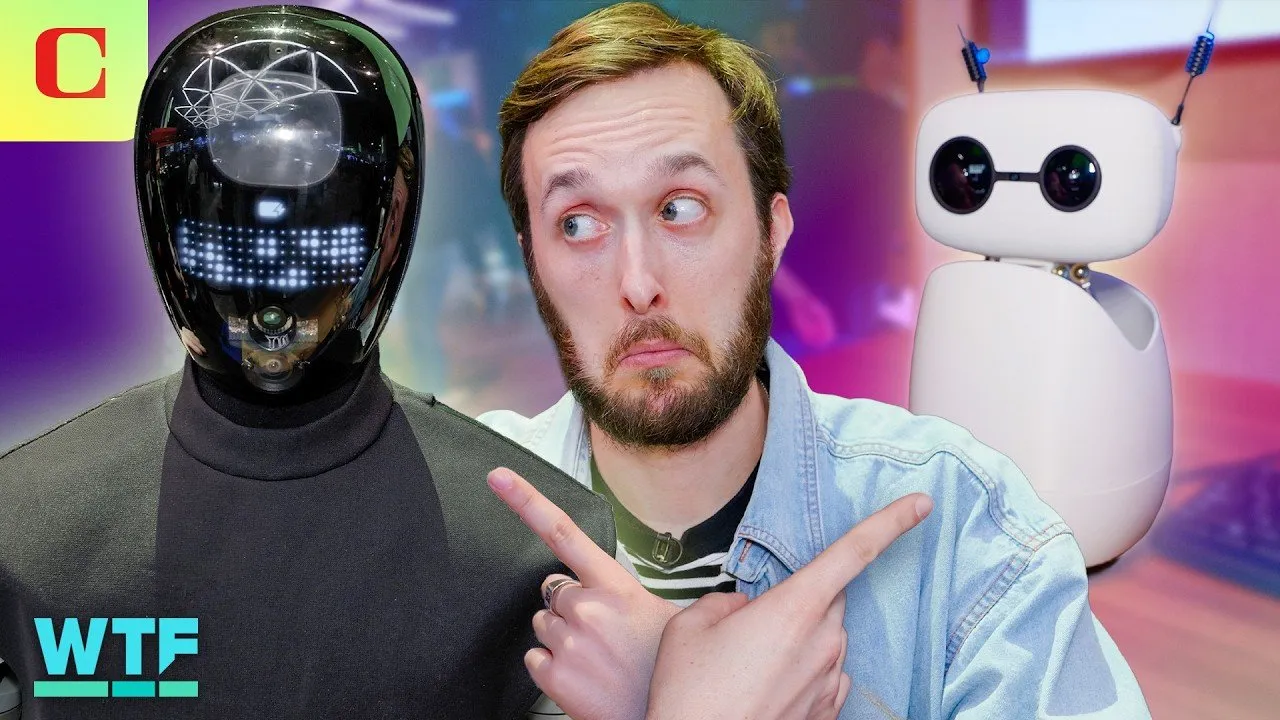
At the Consumer Electronics Show (CES) in Las Vegas, a distinct narrative has emerged that separates the maturity of hardware manufacturing from the nascent state of the software intended to run it. While the show floor is crowded with humanoid robots and experimental devices, industry experts report a significant disconnect between mechanical capability and practical utility. The Verge Editor-in-Chief Nilay Patel and Editor-at-Large David Pierce dissected these trends, highlighting a technology sector where "anyone can make anything," yet few devices have found a meaningful reason to exist beyond the spectacle.
Key Points
- Manufacturing Commoditization: Access to advanced supply chains, particularly in China, allows even small startups to produce complex hardware like humanoid robots, though software intelligence lags behind.
- The AI Gadget Gap: Manufacturers are aggressively integrating Artificial Intelligence into dedicated hardware, but these devices struggle to compete with the versatility and ubiquity of smartphones.
- Return of Form Factor Experimentation: The PC market is moving away from standard designs toward "weird" experimental laptops, while simultaneously prioritizing battery life as a premium feature.
- Ambient Computing: A shift toward "tech as furniture" is gaining traction, with companies disguising smart technology within home decor rather than emphasizing futuristic aesthetics.
The Hardware-Software Disconnect
The most pervasive trend at this year’s CES is the democratization of complex manufacturing. The barrier to entry for creating sophisticated hardware has lowered significantly, leading to a proliferation of robots and gadgets from relatively unknown companies. According to the editors, the show floor is populated by "acres of lenses and actuators," signaling that the components required to build advanced machinery are readily available at scale.
However, this hardware abundance has exposed a critical software deficit. While companies can easily construct a robot that walks, the artificial intelligence required to make that robot perform useful tasks—such as folding laundry or navigating a cluttered home—remains undeveloped. Patel noted the stark contrast between the mechanical readiness and the software limitations.
"All of this hardware is ready and none of this software is ready. If you can build a robot that can fall over, you're just waiting for someone to be like, 'I figured it out. I figured out how to make the AI make the robot useful.' ... The software to do the basics—stand up, walk around, move—is ready. The software to turn the corner and make them useful at human tasks is absolutely not ready."
This gap was illustrated by demonstrations at major booths, such as LG, where robots struggled to perform basic tasks like folding towels, highlighting that while the "body" of the robot is built, the "brain" is still largely theoretical.
The Struggle for Dedicated AI Hardware
Following the explosion of Large Language Models (LLMs), manufacturers are rushing to embed AI into standalone devices, ranging from smart glasses to desktop companions. However, analysts argue that these devices face an existential crisis: they must compete with the smartphone, a device that already successfully hosts AI assistants.
The core issue lies in the type of AI being deployed. Currently, the industry is heavily invested in LLMs, which excel at text and voice interaction but lack the "world models" necessary for physical interaction and spatial awareness. Until investment shifts toward these world models, AI gadgets may remain limited to glorified chatbots.
The "Weird" PC Renaissance
In the personal computing sector, manufacturers are pivoting away from the standard laptop clamshell design. CES has seen a resurgence of experimental form factors, including dual-screen laptops, rollable displays, and modular keyboards. This shift suggests a market testing phase where companies like Lenovo and Asus are willing to take risks on hardware design to differentiate themselves.
Concurrently, there is a notable retreat from aggressive "AI PC" marketing. Despite the push from silicon vendors to integrate Neural Processing Units (NPus), consumer interest remains lukewarm. Kevin Terwilliger, Dell’s head of product, provided a candid assessment of the consumer sentiment regarding AI-branded computers.
"What we've learned over the course of this year, especially from a consumer perspective, is they're not buying based on AI. In fact, I think AI probably confuses them more than it helps them understand a specific outcome."
Battery Life and Ambient Technology
Amidst the experimental designs, a pragmatic feature has emerged as a primary selling point: battery life. Driven by more efficient chips and mature supply chains for lithium-ion batteries, manufacturers are offering devices with significantly extended power reserves. From smartwatches claiming 13-day battery life to keyboards lasting hundreds of hours, the industry is responding to a long-standing consumer demand for longevity over thinness.
Furthermore, the "smart home" aesthetic is evolving. Rather than designing gadgets that look like technology, companies are increasingly embedding sensors and connectivity into objects that resemble traditional furniture or decor. This trend, exemplified by IKEA and makers of art-frame televisions, points toward a future of ambient computing where technology disappears into the background of the home.
Market Implications
The trends observed at CES suggest a transitional period for the consumer electronics industry. The rapid commoditization of hardware manufacturing means that innovation is no longer the exclusive domain of tech giants; small startups can now produce hardware that rivals established players. However, the value proposition has shifted entirely to software and ecosystem integration.
As the industry moves forward, the success of these new hardware categories—whether humanoid robots or AI wearables—will depend less on their physical construction and more on the development of world-model AI and seamless interoperability standards like Matter. Until software catches up to manufacturing capabilities, consumers are likely to see a continued influx of impressive, yet functionally limited, machinery.