Table of Contents
CES 2026 has officially commenced in Las Vegas, marked by an unprecedented surge in AI-integrated hardware that spans from humanoid robots to nostalgic smartphone revivals. While major manufacturers including LG and Samsung are leveraging the event to showcase ambitious home automation and display technologies, industry analysts are raising significant questions regarding the practical utility of this year’s "AI gadget explosion."
Key Points
- Robotics Reality Check: High-profile demonstrations of humanoid robots, such as LG’s "smart home agent," have struggled to perform basic tasks, highlighting the gap between AI promise and hardware execution.
- Mobile Nostalgia: The Clicks Communicator, a $500 mid-range Android device featuring a physical keyboard and headphone jack, has emerged as a standout product by rejecting modern minimalism.
- Smart Home Standardization: The widespread adoption of the Matter standard is finally driving competition and lowering prices for smart blinds and lighting, though AI voice integration remains inconsistent.
- The Art TV Dominance: The television market has pivoted from technical specification wars to aesthetic integration, with Amazon and others chasing Samsung’s "The Frame" success.
- AI Trust Crisis: Executive commentary from Microsoft and Meta, coupled with viral AI-generated hoaxes, underscores a growing consumer distrust in algorithmic content and corporate messaging.
The Robotics Reality Gap
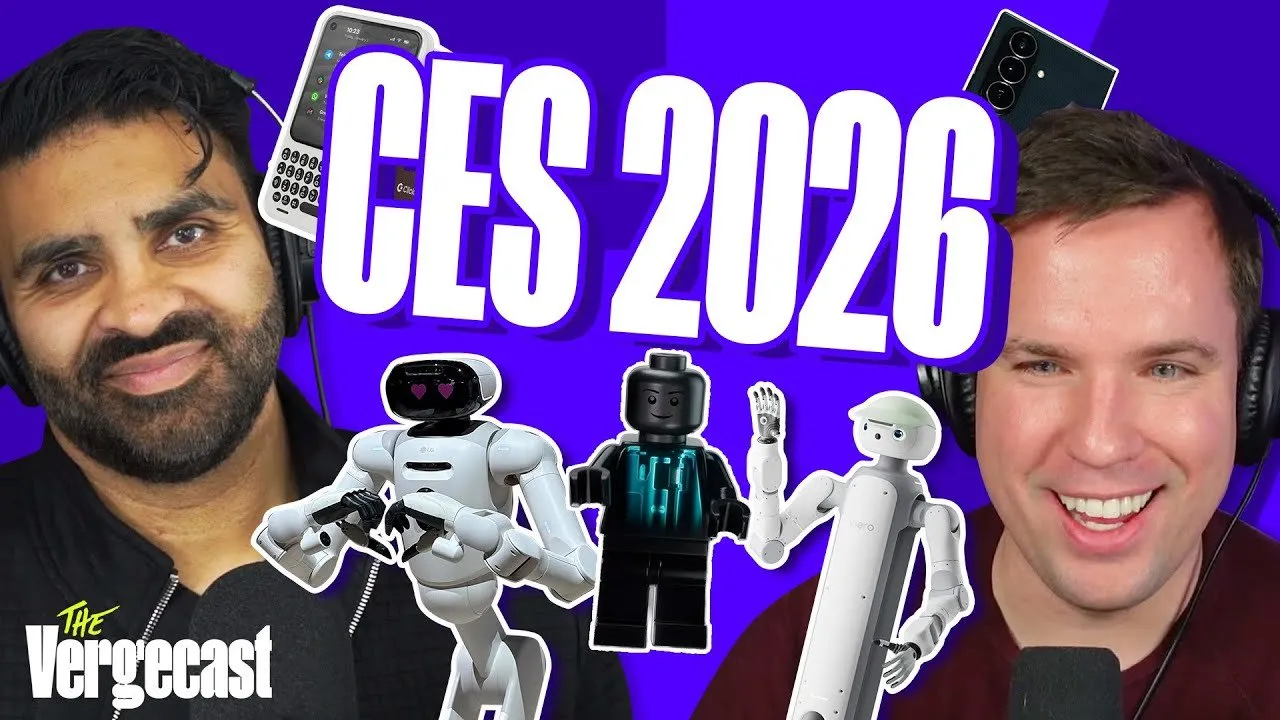
The central theme of CES 2026 is the integration of artificial intelligence into physical hardware, yet early demonstrations suggest the technology has not yet mastered the physical world. A focal point of this disparity was LG’s unveiling of its smart home robot, intended to orchestrate household chores. During live demonstrations, the robot struggled with basic interactions, such as opening a washing machine door—a task that required a specially modified appliance to function correctly.
Critics argue that the industry is over-engineering solutions for solved problems. Rather than specialized machines doing specific tasks perfectly, companies are attempting to build generalist humanoid robots that lack the necessary dexterity.
"If you were to blank-sheet design a machine to wash your dishes, you would invent a dishwasher. You would not design a humanoid robot. The problem is we have all those boxes in our houses and [companies] want one robot to use them all."
Other robotics announcements, such as Switchbot’s rebrand of the Onero robot, featured concept videos promising capabilities—such as cooking eggs or squeegeeing windows—that current hardware sensors and pressure sensitivity metrics likely cannot support. The consensus among experts is that while the underlying "world model" training for AI is advancing, the hardware implementation remains brittle.
Mobile Hardware and Smart Home Standardization
In the mobile sector, the event’s surprise highlight is the Clicks Communicator. Priced at $500, the device eschews the industry’s push for flagship specifications in favor of utility, featuring a physical keyboard, a headphone jack, and a focus on messaging. This "anti-smartphone" approach contrasts sharply with Samsung’s continued innovation in foldable technology, specifically the new Z Trifold, which expands into a three-pane tablet.
Simultaneously, the smart home sector is seeing tangible benefits from the adoption of the Matter interoperability standard. New entrants are introducing competitive pricing on traditionally expensive items like smart blinds. Lutron and GE Lighting have unveiled new product lines that integrate seamlessly across Apple HomeKit, Google Home, and Amazon Alexa platforms.
However, the injection of Generative AI into these appliances is proving divisive. Bosch’s introduction of "Personal AI Barista" functionality—powered by Alexa Plus—demonstrates a recurring issue: Large Language Models (LLMs) often overcomplicate direct commands. While legacy voice assistants excelled at specific keywords, new AI agents attempt to interpret conversational context, occasionally failing to execute simple binary tasks like brewing coffee.
The War for the Living Room
The television market at CES 2026 indicates a strategic pivot away from pure technical specifications—such as brightness (nits) and resolution—toward lifestyle integration. Manufacturers have recognized that consumers increasingly prioritize how a television looks when it is turned off.
Samsung’s "The Frame" has effectively defined a category that competitors are now rushing to fill. Amazon has entered this space with the Fire TV Ember Artline, a display designed to mimic a matte canvas rather than a high-gloss screen. While high-end innovations continue, such as LG’s wireless "wallpaper" OLEDs and Samsung’s transparent MicroLEDs, the mass market momentum has shifted toward "Art TVs."
Innovation is also visible in projection technology. The third-generation Samsung Freestyle projector now features spatial awareness capable of compensating for patterned wallpaper, effectively "erasing" the background texture to project a clear image.
The AI Credibility Crisis
Beyond hardware, the discourse at CES 2026 is heavily influenced by the societal impact of AI. Recent commentary from tech leaders, including Microsoft CEO Satya Nadella and Instagram head Adam Mosseri, reflects an industry grappling with the saturation of AI-generated content.
Mosseri recently suggested that the era of assuming digital content represents reality is over, pivoting toward a model where "who" is posting matters more than "what" is posted. This nihilistic view of content verification comes amid a backdrop of eroding consumer trust. A recent viral hoax involving a fabricated complaint about food delivery apps—entirely generated by AI—fooled thousands of users and forced companies like DoorDash and Uber to issue denials.
"The tech industry has lost the benefit of the doubt. These companies cannot say or do anything without immediate backlash because they have trashed their own reputations."
As CES continues throughout the week, the industry faces a dual challenge: proving that its new AI-powered hardware provides actual utility beyond the hype, and rebuilding consumer trust in an ecosystem increasingly flooded with synthetic content.