Table of Contents
Major PC manufacturers including Lenovo, Asus, Dell, and HP have unveiled their 2026 hardware roadmaps ahead of the Consumer Electronics Show (CES) in Las Vegas, revealing a sharp industry pivot toward extreme battery efficiency and next-generation AI processing. The pre-show announcements highlight a dual focus on correcting past design controversies and integrating powerful neural processing units (NPUs) capable of extending battery life well beyond the 24-hour mark.
Key Takeaways
- Battery Breakthroughs: Manufacturers are claiming unprecedented endurance, with HP citing up to 45 hours of battery life on new Snapdragon-powered models.
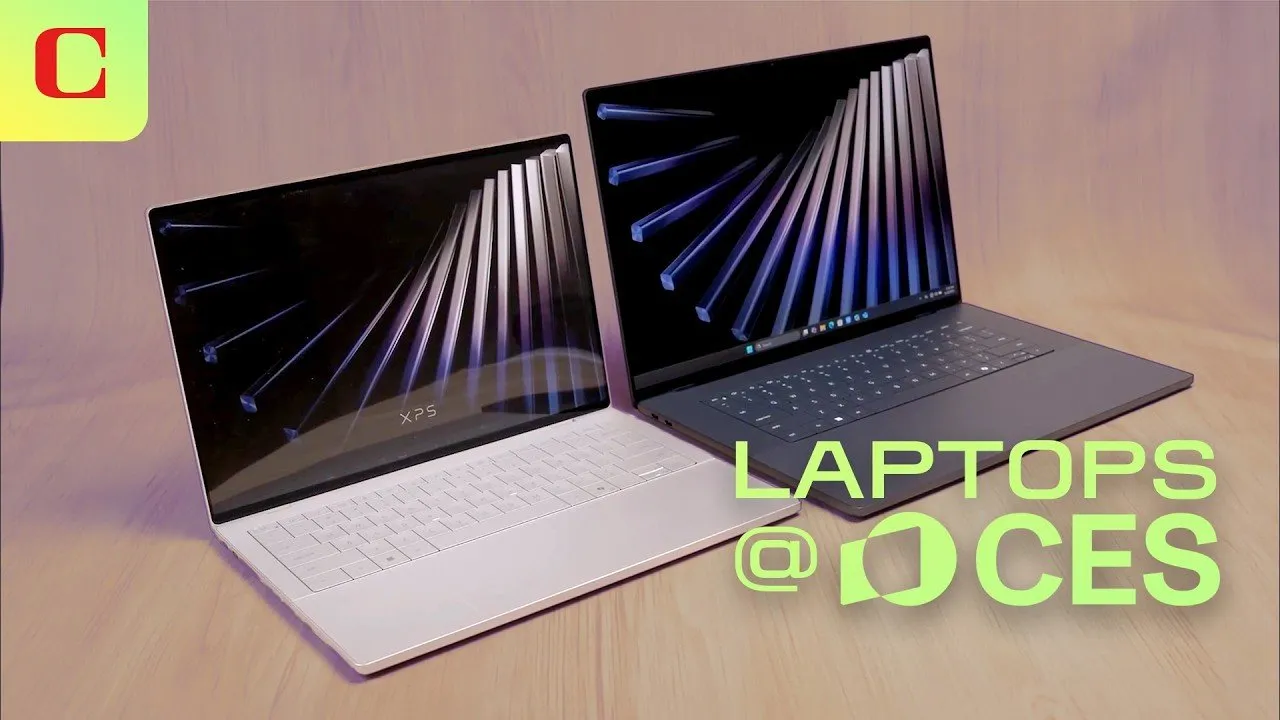
- Dell's Strategic Reversal: The company is reviving the classic XPS design, eliminating the controversial capacitive touch row and seamless trackpad in favor of traditional function keys.
- Performance Leaps: High-end gaming and creator laptops are adopting NVIDIA GeForce RTX 50-series GPUs and Intel Panther Lake processors.
- Experimental Form Factors: Lenovo and Asus continue to push boundaries with motorized rotating displays, rollable concepts, and dual-screen OLED setups.
Efficiency and AI Take Center Stage
The most significant trend emerging from the 2026 lineups is the aggressive integration of ARM-based architecture and AI-focused silicon to achieve multi-day battery life. As the industry moves beyond the initial "AI PC" hype of previous years, the hardware is finally catching up to the promise of untethered productivity.
Asus updated its ZenBook A14—previously a CES award winner—with a new Qualcomm chip that purportedly delivers over 28 hours of battery life while maintaining a chassis weight under one kilogram. However, HP has made the boldest claim of the season regarding its entry-level 16-inch Omnibook 3.
"The biggest boast was for [HP's] entry-level 16-in Omnibook 3, claiming up to 45 hours of battery life using a Snapdragon X processor."
For the high-performance segment, HP introduced the Omnibook Ultra 14, marketing it as the world’s slimmest consumer laptop. This device utilizes an exclusive version of the Snapdragon X2 Elite chip, featuring an NPU capable of 85 TOPS (trillions of operations per second), signaling a massive leap in local AI processing power.
Design Corrections and Strategic Pivots
Beyond internal specs, 2026 marks a year of significant course correction for hardware design, particularly for Dell. Following consumer feedback, the company announced a major overhaul of its premium XPS line.
Dell admitted the previous removal of physical function keys was a misstep. The new XPS 14 and 16 models mark a return to form, discarding the capacitive touch function row and seamless trackpad that frustrated users. The refreshed lineup features tandem OLED displays, Intel Core Ultra Series 3 processors, and Arc graphics, housed in lighter, thinner bodies with distinct tactile boundaries for the haptic touchpad.
On the branding front, HP is streamlining its gaming identity. The company is retiring the standalone "Omen" branding strategy in favor of its "HyperX" peripherals brand. The transition begins with the HyperX Omen Max 16, a high-refresh-rate gaming laptop powered by Intel Core Ultra 200HX series or AMD Ryzen AI processors.
Innovation in Form Factors and Displays
While Dell focused on refinement, Lenovo and Asus doubled down on experimental chassis designs. Lenovo showcased the ThinkBook Plus Gen 7 Auto Twist, a production model featuring a motorized hinge that automatically opens, closes, and swivels the display. The company positions this as both an engineering showcase and a functional business tool capable of tracking the user via AI.
Lenovo also teased the ThinkPad Rollable XD concept. Unlike previous slide-out iterations, this device features a screen that extends vertically from the lid, expanding from a 13.3-inch laptop into a 16-inch vertical workspace.
Asus continues to dominate the dual-screen market with a redesigned ZenBook Duo. The new iteration is smaller and lighter than its predecessor but increases total battery capacity to 99Wh. The company also unveiled the Zephyrus Duo for the gaming sector, featuring dual 16-inch OLED touchscreens and supporting up to an RTX 5090 GPU.
Collaborations and Niche Markets
Manufacturers are also leveraging high-profile partnerships to differentiate their flagship products:
- Asus x Hideo Kojima: The ROG Flow Z13 KJP Edition is a redesigned 2-in-1 gaming tablet developed in collaboration with the legendary game designer, powered by AMD Ryzen AI Max Plus silicon.
- Asus x GoPro: A special edition of the PX13 convertible features GoPro-inspired design elements and a dedicated function key to launch video editing software instantly.
Market Implications and What's Next
The hardware revealed offers a preview of the fierce competition expected in 2026. The widespread adoption of NVIDIA's RTX 50-series GPUs in laptops like the Lenovo Yoga Pro 9i and HyperX Omen Max 16 suggests a significant jump in graphical performance for mobile creators and gamers.
Furthermore, the emergence of "desktop-in-keyboard" form factors, such as HP's EliteBoard G1A, indicates a growing market for minimalist, BYOD (Bring Your Own Display) computing solutions. With Acer also announcing updates to its Swift and Predator lines—including a haptic touchpad that doubles as a drawing tablet—the definition of a standard laptop continues to blur.
As CES 2026 formally kicks off, industry analysts will be watching closely to see if production units can meet the lofty battery life claims made during these pre-show announcements. Pricing and concrete availability dates for these models are expected to be finalized in the coming weeks.